31 May 2009

Fix the land deals

Financial Times, May 26 2009 20:19

Food commodity prices remain near historic highs. Food riots destablised countries around the world last year – more than the financial crisis – and may well return. If food was ever a soft policy issue before, it now rivals oil as a basis of power and economic security.

Like all commodities on which power depends, food is dealt in with hardening self-interest. Fearing political trouble at home, countries with surplus food have imposed export restrictions. Food-importing nations have in reaction entered large farmland leases with African states. Most of the deals are murky, many are inequitable and some are rightly denounced as land grabs.

Importers worried about food security may not care. But if, geopolitically, food is the new oil, countries contemplating agricultural land deals– as investors or as hosts – should heed history’s lessons on natural resource exploitation.

Resource nationalists who shriek about all foreign investment in natural resource development are wrong-headed. For agriculture, just as for oil, poorer countries can benefit from outside know-how and capital. Agricultural productivity in most of Africa is vastly lower than that achieved by the kinds of companies involved in the land deals. In principle, therefore, cultivating African land with outside involvement could benefit all parties.

But such an outcome requires, first and foremost, a truly equitable sharing of the benefits – favouring the host country. Some oil-rich governments succeed in capturing more than 80 per cent of the profit produced by oil extraction, a much riskier and more capital-intensive business than agriculture. States renting out arable land in high demand should manage no worse.

Second, skill and technology must be transferred to the local population. Deals with foreign agribusiness should be used to raise the host nation’s own agricultural productivity. For that, it must demand, and investors must accept, a programme for using and training local labour and promoting research and technological development locally.

Third, agreements must be made with public scrutiny. Madagascar’s coup d’étatshows secrecy risks not just economic loss but also political disaster. Transparency on contracts must be matched by openness to markets: a well-functioning global food market is safer for all than the tangled politics of bilateral deals.

African governments, understaffed and cash-strapped, should not shoulder the burden alone. In a helpful first step, Japan will bring the issue to a Group of Eight summit. On food, the G8’s interests are deeply entwined with Africa’s.

Copyright The Financial Times Limited 2009

Read more... Sphere: Related Content

Namibia: Integrated Land Use Curbs Effects of Climate Change

Lienette Goosen, Namibia Economist in All Africa.com, 29 May 2009

Windhoek — Climate change and resulting sea conditions can financially cripple businesses - especially those relying directly on seawater. The evidence is clear. Several oyster farmers and other industries took a knock and some even went under during the extreme red tide outbreak in March 2008.

A recent seminar on climate change presented by the Ministry of Agriculture, Water and Forestry shed some light into the effects of climate change and practices that can curb its negative impacts. Literally being a weathercock may have its advantages when it comes to staying financially afloat. The arranged visit to the Salt Company in Swakopmund underpinned the necessity of taking climate change and extreme weather and sea conditions into account.

The secret of surviving these extreme conditions lies in you ability to contain the influences. Our integrated system of the salt industry with the two other complimentary enterprises, guano and oyster farming, have proven to be one way to curb the influence to a greater extent," said Jannie Klein, managing director of the Salt Company.

"When we started with the Salt Company in 1936 it soon became evident that producing guano can be introduced as a complimentary business. The saltpan formed small natural islands and these were used by the sea birds as a safe overnight spot, keeping predators at bay. The birds and guano in turn led to our starting oyster farming in 1990. The guano fertilizes the top layer of water providing excellent conditions for a natural food chain - algae, worms, shrimps and then also oysters," he added.

Oysters are very vulnerable. Extreme sea conditions can cause a lot of harm resulting in financial losses, as input costs go up. The Salt Company however exploited the advantages the saltpans offered. The first big pan proved to be ideal for oyster farming. The reasons, according to Klein, being:

  • the water of the pan being warmer than the seawater which enhances the growth of algae that serves as food for the oysters.
  • the quality of the water is higher and can also be controlled better.
  • during an outbreak of red tide, the pumping of the water into the dam puts back more or less all the oxygen that is lost in the sea.
  • costs are less due to the integrated system. Water is pumped for the saltpan and not specifically for the oysters.
  • breeding/cultivating their own oysters.
  • the guano enhancing the growth of algae therefore a shorter period (cocktail size in 9 months) for harvesting the oysters.

"However, as with any other enterprise, our integrated system cannot fully protect us against climate changes. For instance less sunny days can have an influence on salt production as the evaporation is slower than normal," said Klein. "The value of seminars on climate changes where recent research findings can be shared and input given and requests made cannot be underestimated. It serves as a platform to keep businesses informed and providing them with essential information to make informed businesses decisions that is an integral part of economic viable strategic planning."

Copyright © 2009 Namibia Economist. All rights reserved

Read more... Sphere: Related Content

Positive Feedback Hint Between Tropical Cyclones And Global Warming

ScienceDaily, May 29, 2009

Tropical cyclones could be a significant source of the deep convection that carries moist air upward to the stratosphere, where it can influence climate, according to Harvard University researchers David M. Romps and Zhiming Kuang.

Using 23 years of infrared satellite imagery, global tropical cyclone best-track data, and reanalysis of tropopause temperature, the authors found that tropical cyclones contribute a disproportionate amount of the tropical deep convection that overshoots the troposphere and reaches the stratosphere.

Their findings appear in a recent issue of Geophysical Research Letters.

Tropical cyclones account for only 7 percent of the deep convection in the tropics, but 15 percent of the convection that reaches the stratosphere, the researchers found. They conclude that tropical cyclones could play a key role in adding water vapor to the stratosphere, which has been shown to increase surface temperatures.

Because global warming is expected to lead to changes in the frequency and intensity of tropical cyclones, the authors believe their results suggest the possibility of a feedback mechanism between tropical cyclones and global climate.


Journal reference:

  1. David M. Romps and Zhiming Kuang. Overshooting convection in tropical cyclones. Geophysical Research Letters, 2009; 36 (9): L09804 DOI: 10.1029/2009GL037396
    Adapted from materials provided by American Geophysical Union, via EurekAlert!, a service of AAAS.
    Copyright © 1995-2009 ScienceDaily LLC  —  All rights reserved

    Read more... Sphere: Related Content

    Counting Sheep In Climate Change Predictions

    ScienceDaily, May 29, 2009

    Climate change can have devastating effects on endangered species, but new mathematical models may be able to aid conservation of a population of bighorn sheep.

    The effects of a changing climate on a population of bighorn sheep can be mathematically predicted, as described in a recent paper recommended by Faculty of 1000 Biology members Barry Brook and Lochran Traill.

    Researchers from Germany, the US, and Mexico studied a population of bighorn sheep introduced to Tiburon island, Mexico, in 1975. Here, the sheep are not at risk from disease or predators, and climate change is the only variable threat to the animals. In this new study, the researchers predicted the effect of climate change on the sheep population using a mathematical simulation. The sheep appear to be vulnerable to increased drought in the area - a side-effect of global climate change. More severe drought will eventually lead to a decrease in the sheep population.

    Being able to predict the effect of climate change before it happens is of great importance to the conservation of endangered species. Brook and Traill point out that their calculations can be adapted to other species, in other regions: "The work is therefore an important contribution towards [...] the continued conservation of small populations under global change."


    Journal reference:

    1. Fernando Colchero, Rodrigo A. Medellin, James S. Clark, Raymond Lee, Gabriel G. Katul. Predicting population survival under future climate change: density dependence, drought and extraction in an insular bighorn sheep. Journal of Animal Ecology, 2009; 78 (3): 666 DOI: 10.1111/j.1365-2656.2009.01528.x
      Adapted from materials provided by Faculty of 1000: Biology and Medicine, via EurekAlert!, a service of AAAS.
      Copyright © 1995-2009 ScienceDaily LLC  —  All rights reserved

      Read more... Sphere: Related Content

      U.S. says rich nations likely to miss carbon targets

      By Alister Doyle, Environment Correspondent, Reuters, Fri May 29, 2009 1:27pm EDT

      OSLO (Reuters) - Rich nations as a group are unlikely to reach the deep 2020 cuts in greenhouse gas emissions urged by developing nations as part of a new U.N. climate treaty, the top U.S. climate envoy said on Friday.

      China, India and other developing nations say the rich must do most to fight global warming to encourage developing countries to sign up for more action as part of a new U.N. climate pact due to be agreed in Copenhagen in December.

      "We...have been engaged in conversations with our European friends about how you might express an aggregate kind of goal," U.S. Special Envoy for Climate Change Todd Stern said in a telephone briefing before a round of U.N. talks in Bonn from June 1-12.

      "I don't think you are going to see a 25-to-40 percent aggregate number" for cuts by rich nations below 1990 levels by 2020, he said, adding: "It's possible when you add everything up that you won't be that far away from it."

      In 2007, the U.N.'s Climate Panel outlined cuts by developed nations of between 25 and 40 percent below 1990 levels by 2020 as a scenario to avoid the worst of climate changes such as floods, droughts, more powerful storms and rising ocean levels.

      France suggested this week that developed nations as a group should work out a way to guarantee overall cuts of 25-40 percent. Washington says such a goal is out of reach for its domestic emissions.

      Industrial Revolution

      But China, India and others say the rich have benefited from use of fossil fuels since the industrial revolution and should cut by at least 40 percent below 1990 levels by 2020. They say the poor still need to use more energy to end poverty.

      A key U.S. Congressional panel last week approved a plan that would cut U.S. emissions by 17 percent below 2005 levels by 2020 and by 83 percent by 2050.

      U.S. emissions have risen sharply in recent years so the 2020 goal works out as only a 4 percent cut relative to 1990. This week, U.N. Secretary-General Ban Ki-moon urged the United States to do more.

      The European Union has promised to cut emissions by 20 percent below 1990 levels by 2020, and by 30 percent if others rich nations follow suit.

      EU emissions have fallen since 1990 so, expressed as cuts from 2005, the EU's 2020 goals work out as reductions of 14 and 24 percent respectively. Stern said that made the EU's planned effort comparable to that of the United States

      He also said China, which has overtaken the United States as top emitter in recent years, and other developing antions would have to step up actions. "They are going to need to do more," he said.

      (Editing by Michael Roddy)
      © Thomson Reuters 2009 All rights reserved

      Read more... Sphere: Related Content

      Global Warming already costing $125bn a year in economic losses

      New report claims climate change is responsible for 300,000 deaths a year

      BusinessGreen.com Staff, BusinessGreen, 29 May 2009

      drought

      Global Warming is already responsible for 300,000 deaths a year and results in annual economic losses of $125bn, according to a major new study on the human impact of climate change.

      The report was released today by the Global Humanitarian Forum, a think tank run by former UN secretary general Kofi Annan, and is being touted as the first comprehensive assessment of the human impacts of climate change.

      It calculates that climate change is already having adverse effects on 325m globally, and warns that this number will rise to 660m, equivalent to 10 per cent of the world's population by 2030.

      It also warns that the annual economic cost of climate change impacts, such as droughts, heat waves, flooding and storms, will rise to around $300bn over the next two decades, while the yearly death toll is expected to rise to almost 500,000.

      Annan said that the report, which has been released just ahead of next week's latest round of international climate talks in Bonn, highlighted the urgent need for a global deal to tackle climate change.

      "Climate change is a silent human crisis. Yet it is the greatest emerging humanitarian challenge of our time," he warned. "Already today, it causes suffering to hundreds of millions of people most of whom are not even aware that they are victims of climate change. We need an international agreement to contain climate change and reduce its widespread suffering."

      The report also called for a drastic increase in investment in climate change adaptation measures, particularly in developing countries which currently account for 99 per cent of all climate change casualties.

      It calculates that a 100-fold increase in spending on adaptation measures is required to avert the worst impacts of climate change.

      The funding of adaptation measures is expected to be one of the most contentious areas of debate at next week's UN-backed talks.

      Developed nations have largely accepted that they have an obligation to help fund adaptation in the developing world they are reluctant to invest the sums being proposed by larger developing nations, such as China and India. There are also on-going debates over how such measures should be funded, with some countries proposing straight payments to poorer nations and others calling for the introduction of a global insurance-based system.

      © Incisive Media Ltd. 2009 Incisive Media Limited

      Read more... Sphere: Related Content

      100,000 Hectares of Atlantic Forest Lost in Three Years

      By Fabiana Frayssinet, Inter-Press Service, May 29

      RIO DE JANEIRO - Stretched out along the coastal zones of 17 of Brazil’s 26 states, an area marked by a high level of agricultural and industrial development, the Mata Atlântica or Atlantic Forest lost more than 100,000 hectares in the last three years, mainly due to urban expansion and economic growth.

      The "Atlas of Mata Atlântica Remnants", released May 26 by the Fundação SOS Mata Atlãntica and the National Institute for Space Research (INPE), studied the vulnerable ecosystem in 10 states.

      The report says that in the period studied, 2005 to 2008, 102,938 hectares of forest were cut down, maintaining the same deforestation rate as during the previous three-year pierod: an average of 34,121 hectares a year.

      Of that total, says the Atlas, 59 cases involved areas larger than 100 hectares, for a combined total of 11,276 hectares, while 76 percent of the cases involved less than 10 hectares.

      Mario Mantovani, the director of the São Paulo-based Fundação SOS Mata Atlãntica, blamed the loss of forest cover on urban growth. Some 112 million people live in the 10 states focused on by the study – around 61 percent of Brazil’s total population of 189 million, according to the Brazilian Institute of Geography and Statistics (IBGE).

      That population is distributed throughout 3,222 municipalities, 58 percent of the country’s total.

      The experts say only 11.4 percent of the original Mata Atlãntica, an ecosystem that includes tropical forests, semi-deciduous forests, dry forests and shrub savannahs, still survives today. And that remnant is increasingly fragmented in areas that are more and more isolated from each other.

      The report, presented at an online press conference, calls attention to three states that it describes as "the champions of deforestation."

      In first place is Minas Gerais in the southeast, where 32,700 hectares were destroyed between 2005 and 2008. The authors of the report attribute the deforestation there to growth of agriculture and real estate speculation, along with coal mining and the steel industry.

      The Mata Atlãntica originally covered 46 percent of Minas Gerais. But less than 10 percent is left. INPE official Flavio Ponzoni said the forest cover is now basically limited to the hilltops.

      According to Marcia Hirota, one of the heads of SOS Mata Atlântica, the Brazilian Environment Institute must be strengthened in order to curb the deforestation.

      "People must urgently be made to understand that our lives depend on the forests, and they must be drawn into participating in the effort to protect this seriously threatened ecosystem," said Hirota.

      In order to achieve that, effective government and legislative action is needed, said Hirota, the lead author of the Atlas, who explained that because of the growing threats to the forest, the publication would be coming out every two years from now on.

      The second-largest deforested area - 25,900 hectares – is in the southern state of Santa Catarina. The environmentalists attribute the destruction of the forest there to what they describe as "civil disobedience," because authorities in that state have failed to comply with national environmental regulations for the preservation of protected areas.

      The states of Bahia in the northeast and Paraná in the south are in third and fourth place, with 24,100 and 9,900 hectares deforested, respectively.

      The report underlines that these states are the most "critical" cases because they have the largest proportions of forest and thus have the largest areas deforested in absolute terms.

      Environment Minister Carlos Minc said a draft law aimed at protecting the Mata Atlântica is finally about to be signed into law, after it spent 15 years making its way through Congress.

      The law will provide a framework for establishing urban planning and zoning guidelines and for blocking, for example, the construction of roads in order to prevent further deforestation.

      But each specific development project involves complex negotiations, said Minc, because the regions in question have large urban populations and powerful economic interests.

      That is the case of the southern state of São Paulo, which has remnants of the Mata Atlântica. In that area, said Mantovani, environmentalists are worried that sugar cane plantations linked to industrial-scale production of ethanol fuel will encroach on areas currently dedicated to other agricultural activities or tree plantations, which are in turn expanding into forested zones.

      In the face of the "alarming" deforestation of the Mata Atlântica, environmental organisations, companies and local authorities have reached a pact to recuperate 15 million hectares of the ecosystem by 2050.

      The area to be reforested would be equivalent to 10 percent of the original Mata Atlântica, which is considered one of the most biodiverse areas in Brazil. Sixty percent of the ecosystem’s species are endangered. (END/2009)

      Copyright © 2009 IPS-Inter Press Service. All rights reserved.

      Read more... Sphere: Related Content

      The Arctic's oil reserves mapped

      BBC News, Friday, 29 May 2009 23:58 UK
      USGS oil reserves map
      Undiscovered Arctic oil reserves are largely under the ocean

      An estimated 30% of the world's undiscovered gas and 13% of its undiscovered oil may be in the Arctic, according to a map published on Friday.

      The map is the culmination of an assessment carried out by the US Geological Survey (USGS).

      Writing in the journal Science, its authors say the findings are "important to the interests of Arctic countries".

      But, they add, they are unlikely to substantially shift the geographic pattern of world oil production.

      According to the new map, the majority of oil is likely to be found underwater, on continental shelves.

      Russian flag on seafloor
      Russia has sought to claim its rights to the Arctic

      Surrounding nations, including Russia, United States, Canada, Denmark and Norway, have all already sought to assert their jurisdiction over parts of the Arctic.

      In 2007, two Russian civilian mini-submarines descended to the seabed to collect geological and water samples and to drop a titanium canister containing the Russian flag.

      BBC © MMIX

      Read more... Sphere: Related Content

      29 May 2009

      Controversial deal between US-based conservation NGOs and polluting industry slammed

      By Chris Lang, REDD-Monitor, 28th May 2009

      Photo by AMagill on flickr.com

      Last week, an organisation called Avoided Deforestation Partners launched what they blandly describe as “an agreement on policies aimed at protecting the world’s tropical forests”. Under this agreement, “companies would be eligible to receive credit for reducing climate pollution by financing conservation of tropical forests”. It is a loophole allowing industry to write a cheque and continue to pollute. This is another nightmare vision of REDD, similar to that recently proposed by the Australian government. Another similarity with Australia is the support received from what is at first glance a surprising source: big international conservation NGOs.

      REDD-Monitor received the following anonymous contribution about the agreement. We reproduce it in full in the hope of generating further discussion about this liaison between conservation NGOs and polluting industry.

      The following organisations signed the agreement: American Electric Power, Conservation International, Duke Energy, Environmental Defense Fund, El Paso Corporation, National Wildlife Federation, Marriott International, Mercy Corps, Natural Resources Defense Council, PG&E Corporation, Sierra Club, Starbucks Coffee Company, The Nature Conservancy, Union of Concerned Scientists, The Walt Disney Company, Wildlife Conservation Society, and the Woods Hole Research Center.

      The agreement is available here.

      When, in years to come, the history is written of how humanity came to lose the battle against climate change, May 20th 2009 will go down as the day that the tide decisively turned against planetary survival. For this was the day that those with the influence and power who could have taken a stand of moral principle, and who could have demanded the kind of action needed to reduce greenhouse gas emissions in the US, decided not to. Instead, they offered some of the biggest, filthiest planetary polluters an ‘easy out’, by lobbying the US Congress jointly with them, that US carbon emissions should be offset against oversees credits for ‘avoided deforestation’.

      Surprisingly, it was not the professional lobbyists, union leaders or government officials who demonstrated the loss of their moral compasses on May 20th. It was the big international conservation organisations who, we have all been led to believe, are supposedly looking after the planet’s wild places. In a statement issued alongside fossil fuel-burning power giants such as American Electric Power, and Pacific Gas and Electric Company, the conservationists – including The Nature Conservancy, Environmental Defence Fund, Conservation International and Wildlife Conservation Society – called for unlimited access for ‘avoided deforestation’ carbon credits in the American Clean Energy and Security Act (also known as the Waxman/Markey bill)- thereby potentially allowing major polluters not to make significant reductions in their own emissions for many years to come. In this, they were largely reaffirming what was already included in this desperately weak piece of draft legislation.

      The interests of the big US international conservation NGOs (let’s call them BINGOS) and large corporations have been converging for some years. The BINGOs have realised that the fat profits of mining, utility and financial services companies are a ready source of income for their fast expanding empires. The corporations have realised that the compliant BINGOs are potentially their best green public relations’ agencies, if paid the right amounts of money. The BINGO’s spiralling budgets have grown ever more dependent on hand-outs from the private sector, and the Boards of all the main US conservation groups are now stuffed with corporate executives.

      In fairness, the statement does recognise that the rights of indigenous peoples need to be respected in REDD programmes. However, the day before the BINGO-polluter love-note was announced, the chief scientist of one of the BINGO signatories – Peter Kareiva, of the Nature Conservancy – confirmed what many indigenous people and environmentalists already knew: that “the traditional protected areas strategy has all too often trampled on people’s rights”. Kareiva also said that “The key question is to what extent have we – and by “we,” I mean the big conservation NGOs such as The Nature Conservancy, Conservation International and WWF – mended our ways so that we no longer disrespect the rights of indigenous people in pursuit of our missions.” The fact that Kareiva still has to ask the question is telling in itself, in that the BINGOs have been told for many years that their anti-people approach is unacceptable and probably ultimately ineffective. TNC’s chief scientist rightly concluded that the entire protected areas strategy “warrants a critical re-examination”.

      Kareiva also asked the question “Should the conservation movement be proud of the 108,000 protected areas around the world it has thus far helped establish?” Many indigenous people know the answer to that question, and it is why they remain deeply concerned and sceptical about grand international plans by conservation organisations to ‘protect’ their forests in order to supposedly prevent climate change.

      Do the math, and it’s not hard to see why the BINGOs have finally sold their souls to the devil. Around 150 million hectares of tropical forests is in protected areas worldwide, much of it under the control or management of international conservation groups. Each hectare of forest contains around 100-200 tons of carbon, and each ton of carbon could be worth around $10 at the moment (and potentially much more in the future). The BINGOs know that they have a big stake in an asset potentially worth $150 billion and upwards.

      But there would have to be a buyer for this asset to actually be worth anything. Step in the big fossil fuel-burning power utilities, which, like most US businesses, have been cosseted and protected from global environmental realities by eight years of the Bush administration. If there is an easy way to avoid changing their business model, of avoiding the installation of more efficient technology, or of losing market segment to renewable energy producers, they will surely take it. Avoided deforestation offsets on a grand scale – brokered by their chums in the conservation groups – would be just the ticket.

      But as US environmental groups such as Greenpeace and Friends of Earth have pointed out, this is a sure route to climatic ruin. The terms of the Waxman/Markey bill as it stands – and as demanded by the BINGO-polluter axis – would allow the polluters to carry on polluting and will “lock in a new generation of dirty coal-fired power plants.”

      These groups – organisations that, unlike the BINGOS, have not allowed themselves to grow bloated and complacent feasting at the teats of mammon – point out that “the American Clean Energy and Security Act sets targets for reducing pollution that are far weaker than science says is necessary to avoid catastrophic climate change. They are further undermined by massive loopholes that could allow the most polluting industries to avoid real emission reductions until 2027.” That is, they can largely be offset against ‘carbon credits’ bought from overseas projects, such as for putative ‘avoided deforestation’ schemes.

      How has this potentially catastrophic turn of events come about? The decision-making process for the Waxman/Markey bill which will perpetuate the US’s addiction to fossil fuels was, we are told by the environmental groups “co-opted by oil and coal lobbyists”. Were the environmentalists slightly less polite, they might have added “and their trough-snouting apologists in the conservation BINGOs”.
      And as we all know, where the US leads, the rest of the world tends to follow. If the Waxman/Markey bill becomes law, it is likely to set a precedent that negotiators at the Copenhagen climate summit in December will look to for inspiration.

      So the May 20th statement is not just an act of egregious short-sighted greed and duplicity by the supposed conservationists; it is little more than an act of global environmental treachery. One of the coordinators of the joint statement, Jeff Horowitz of ‘Avoided Deforestation Partners’, describing the statement as a ‘landmark’, said “When environmentalists and major corporate leaders can agree, real change has come”. He is right, real change has indeed come, and it is a landmark: it marks the point that the conservation BINGOs finally abandoned any last pretence to be acting in the interests of the planet.

      The gravy train may well be headed the way of the BINGOs, but the cost could be dangerous climate change that will eventually wipe out many wildlife habitats, including tropical forests. But when the good ship Mother Earth does start sinking, at least we’ll now know who should be the first to be thrown overboard.

      Content written by REDD-Monitor on this site is licensed under a Creative Commons License

      Read more... Sphere: Related Content

      This silent suffering

      Few doubt the science of climate change – but its impact on the world's poor is largely ignored

      Rajendra

      Rajendra Pachauri, guardian.co.uk, Friday 29 May 2009 16.00 BST

      Science is now unequivocal as to the reality of climate change. However, one facet - its human face - has been dangerously neglected. Until now. Given what the science tells us about global warming, how many people around the world will be affected, in what way, and at what cost?

      These are the questions that a major new report attempts to answer for the first time. Its findings indicate that hundreds of millions of people are already permanently or temporarily affected, and half a billion are at extreme risk now. Because of climate change, each year hundreds of thousands lose their lives. All these figures are set to increase rapidly in as little as 10-20 years.

      This publication, from the Global Humanitarian Forum, of which I am a board member, constitutes the most plausible estimate of the human impacts of climate change today. The scale of devastation is so great that it is hard to believe the truth behind it, or how it is possible that so many people remain ignorant of this crisis.

      Four main factors have contributed to the silence. First, while the world has been coming to terms with the science of climate change, the problem has moved from being a future threat to a current danger. Climate change is an evolving concern, affecting people now.

      Second, 99% of the casualties linked to climate change occur in developing countries. Worst hit are the world's poorest groups. While climate change will increasingly affect wealthy countries, the brunt of the impact is being borne by the poor, whose plight simply receives less attention.

      Third, and worse, climate change hides its influence among a wide range of today's key global problems. It impacts heavily on nutrition and diseases such as malaria, and increases poverty. But that impact can be lost among the many contributing factors.

      That is why a fourth major challenge is the current inability to separate the impacts of climate change in specific situations. It is impossible to say, for example, how much the severity of any hurricane is due to climate change.

      It is time, however, to break the silence. It may not be possible to pin-point specific situations, or to achieve unequivocal global consensus. It took the Intergovernmental Panel on Climate Change (IPCC) 19 years to accomplish a consensus on the science in its 2007 report. But the general changes in the global climate system are clear: the number and intensity of extreme weather events, such as major floods and storms, has increased steadily in the last 30 years. Temperature changes show similar patterns, as do cyclone trajectories and rainfall patterns. From these changes it is possible to make good estimates about their global impacts on people.

      That tells us who is worst affected: the poor, who are largely unprepared, and unable to cope with climatic change. Of course, wealthy countries are affected: long-term drought in Australia has caused certain crop yields to plummet. But the poor lack the resources to prevent disasters or adapt to changed conditions. Many already subsist on the mere threshold of survival.

      Next week a series of UN talks will take place in Bonn – one of the last stepping stones in the effort to reach international agreement on how the world should tackle climate change, at the Copenhagen summit in December. Any post-Kyoto agreement must take into account the tremendous scale of suffering already being caused today.

      There is a great responsibility for major polluters to protect the poorest populations from a problem for which they cannot be held responsible. Their silent suffering must serve as a warning signal of the greater suffering that lies in store for the rest of us if we fail to tackle climate change together.

      guardian.co.uk © Guardian News and Media Limited 2009

      Read more... Sphere: Related Content

      Oil firms and loggers 'push indigenous people to brink of extinction'

      'Uncontacted' tribes forced to flee armed gangs and bulldozers in forests of Peru, Brazil and Paraguay, says Survival International

      John Vidal, environment editor, guardian.co.uk, Thursday 28 May 2009 13.29 BST

      Five "uncontacted" tribes are at imminent risk of extinction as oilcompanies, colonists and loggers invade their territiories. The semi-nomadic groups, who live deep in the forests of Peru, Brazil and Paraguay, are vulnerable to common western diseases such as flu and measles but also risk being killed by armed gangs, according to a report by Survival International, which identifies the five groups as the most threatened on Earth.

      Sixty members of the Awá tribe are said to be fleeing from gangs of loggers and ranchers on their land near Maranhão, Brazil. "Logging roads have been bulldozed through a part of their territory, where the uncontacted groups are living. The ranchers want land to graze cattle for beef. The loggers regularly block roads to prevent government teams from entering the area to investigate," says David Hill, a Survival researcher and co-author of the report.

      Little is known about the group of 50 Indians who live along the River Pardo in the western Brazilian Amazon, although there is plenty of evidence for their existence, including communal houses, arrows, baskets, hammocks, and footprints along river banks. "Loggers operating out of Colniza have forced them to be constantly on the run, unable to cultivate crops and relying solely on hunting, gathering and fishing. It is believed that the women have stopped giving birth," says the report.

      Perenco, an Anglo-French oil company working in a proposed Indian reserve in northern Peru, is endangering several uncontacted tribes, says the report. "The company plans to send hundreds of workers into the region. In recent weeks, indigenous protesters have blockaded the Napo river in order to prevent Perenco boats from passing. In response, a naval gunboat was called in to break the blockade."

      One group is believed to be a sub-group of the Waorani, and another is known as the Pananujuri. Perenco denies the tribes exist.

      Other tribes in trouble include several living near the Envira river in the Peruvian Amazon. "They are being forced to flee across the border into nearby Brazil. Despite being provided with evidence of their existence, Peru's government has failed to accept that uncontacted Indians are fleeing from Peru to Brazil. Peru's president, Alan Garcia, has suggested the tribes do not exist," says the report.

      Ranchers are bulldozing land where a fifth group lives – the Ayoreo-Totobiegosode in the Chaco forest of western Paraguay. This week a Paraguayan court ruled that a company had the right to log on their land, further endangering their existence.

      There are believed to be more than 100 uncontacted groups in the world. They are concentrated in Latin America, and aerial photographs of one uncontacted tribe in Brazil's Acre state captured headlines a year ago. But as many as 40 could live in West Papua, where vast areas of forest and mountain have been barely explored.

      "They remain in isolation because they choose to, and because encounters with the outside world have brought them only violence, disease and murder. They are among the most vulnerable peoples on Earth, and could be wiped out within the next 20 years unless their land rights are recognised and upheld," said Stephen Corry, director of Survival.

      guardian.co.uk © Guardian News and Media Limited 2009

      Read more... Sphere: Related Content

      Russia loses billions from decision delays in carbon trading

      Ria Novosti, 18:5028/05/2009

      MOSCOW, May 28 (RIA Novosti) - Russia has lost out on billions of dollars in investment and carbon trading payments due to government delays in considering environmental project applications, the head of an environmental investment group said.

      Under the rules of the Kyoto Protocol, Russia is able to sell unused carbon emission allowances to other countries.

      "Thirty-eight projects that were considered by Economics Ministry commissions but were not approved would have allowed us to cut emissions by 100 million metric tons per year, which would have provided with one billion euros per year," Mikhail Yulkin, director of the Ecological Investment Center in Arkhangelsk, told a roundtable meeting hosted by RIA Novosti.

      The money would have added up to 5 billion euros ($7 billion) since Russia joined the Kyoto Protocol, he said.

      A ministry expert, Alisher Aminov, said that the delayed applications include projects by Russia's state-controlled oil producer Rosneft, Russia's largest independent oil producer LUKoil and natural gas giant Gazprom.

      "There has not been a single decision on the applications, and there has not been a single session of the commission," he said.

      The Kyoto Protocol obliges the 35 industrial states that have ratified the document to cut emissions by 5% below 1990 levels by 2008-2012. Russia's obligations under the pact are far easier to meet than those of Western states, due to the drop in emissions that followed the collapse of industries at the end of the Soviet era.

      Read more... Sphere: Related Content

      27 May 2009

      World needs new economic system, says UN development chief

      Business Intelligence – Middle East, Wed May 27, 2009 9:24 am

      INTERNATIONAL. The current global economic crisis – the deepest in decades – has underscored the need for a “new deal” for development that addresses both climate change and poverty, the head of the United Nations Development Programme (UNDP) said today.

      The worldwide financial turmoil is exacerbating the effects of high food and energy prices which drove as many as 200 million people into extreme poverty in recent years, said UNDP Administrator Helen Clark.

      “Alas, those least responsible for the crisis stand to bear the brunt of its impact over the longer term,” she told the annual session of the Executive Board of UNDP and the UN Population Fund (UNFPA).

      Simultaneously, the world’s poorest are also bearing the brunt of climate change, linked to the world’s unsustainable use of natural resources, said Clark, the former Prime Minister of New Zealand.

      “These global problems reflect our interdependence, and they require global solutions,” she stated, calling for a multilateral system that will boost the standard of living for the most vulnerable people and ensure their voices are taken into account by decision-makers.

      The financial crisis, the Administrator said in her first address to the Executive Board since assuming her position earlier this year, is threatening to roll back gains made towards achieving the Millennium Development Goals (MDGs), eight ambitious anti-poverty targets with a 2015 deadline.

      For example, some sub-Saharan African nations are on target to meet some of the MDGs, but not all by 2015, and the recession could drive up the number of people living in extreme poverty in the region, she noted.

      Despite aid commitments for Africa made by donor nations, the pledges remain unfulfilled, Miss Clark said, voicing hope that this year’s meeting of the Group of Eight (G-8) industrialised nations will mobilize resources.

      The global response to climate change should also be folded into development, she said.

      Countries are expected to conclude a new pact on curbing greenhouse gas emissions, to replace the Kyoto Protocol whose first commitment period ends in 2012, at a UN conference in Copenhagen later this year.

      “To this end, UNDP must step up its work this year to support developing countries achieve an outcome at Copenhagen in December which is consistent with designing a sustainable path out of poverty and for achieving the MDGs,” the Administrator said. “The deal to be sealed at Copenhagen must be a development deal, too.”

      Copyright © 2009 Business Intelligence Middle East. All rights reserved

      Read more... Sphere: Related Content

      UN Permanent Forum on Indigenous Issues- Eighth Session May 19-29, 2009 Global Indigenous Women’s Caucus Statement

      temous.org, mardi 26 mai 2009

      Agenda Item 3 : Follow Up on the Recommendations of the Permanent Forum (a) Economic and Social Development

      Honorable Chairwoman, Members of the UN Permanent Forum, and distinguished representatives of Indigenous Peoples, sisters and brothers here today,

      Indigenous Women are the human embodiment of Mother Earth. Managing and protecting Earth’s nurturing gifts is our responsibility. Governments, market-based approaches, finance capital, multinational corporations and extractive industries continue to endanger life for the sake of profit. The recent global economic collapse, Climate Change, water and biodiversity depletion, wars, forced displacement, militarization, and violence against women, children, and Mother Earth provide clear and unmistakable evidence that this system does not work.

      Indigenous cultures expressed through Indigenous Women’s work, lives and experiences are in peril. We re-affirm that Indigenous Women bring worldviews, deep invaluable knowledge and tools to correct the global crises—stemming directly from and caused by unsustainable economies—and to carry out their communities’ self-determining development. Furthermore, it is our basic human right to articulate our distinct views of our interconnected relationships with the world around us, including all of our relations, human and non-human. Indigenous Women, as the culture bearers and progenitors of future generations of our Peoples, possess great responsibility in the transmission of this knowledge to our children.

      We reiterate our fundamental role in seed conservation, food production, and preservation. Indigenous Women, as the keepers and guardians of much of the world’s biodiversity, including many food and medicinal plants are alarmed by the ongoing expropriations by seed and pharmaceutical corporations—with governments’ complicity—to patent the seeds, genetic material, and/or the processes used in the genetic manipulation of the plants.

      Indigenous Women are deeply concerned that the Parties to the Convention on Biological Diversity (CBD) have not recognized Indigenous Peoples’ rights to our traditional territories, lands and waters in the negotiations of an international regime of access and benefit-sharing due for completion by 2010. We are concerned when the Parties assert their national sovereignty over both genetic resources and associated traditional knowledge necessary to our collective well-being and has cultural value. Indigenous Women oppose all forms of patenting of any form of life. We consider genetic modification and the potential contamination of land by genetically engineered technology a continuation of genocide upon Indigenous Peoples. We perceive these as both malicious and disrespectful acts towards our Mother Earth, ancestries, cultures and future generations.

      With regard to the reports of the Permanent Forum on social and economic development, on women, as well as the report on extractive industries, the Global Indigenous Women’s Caucus has the following recommendations :

      FOOD SOVEREIGNTY

      1. We recommend that all UN bodies and agencies and governments report on the implementation of Articles 26 and 31 of the UN DRIP related to the protection of Indigenous Peoples’ rights to their lands and territories ; and Indigenous Peoples’ rights to own, control, utilize and protect all aspects of their cultural heritage, including genetic resources. This includes associated traditional knowledge and trade practices derived from their lands and territories.

      2. We ask that the Permanent Forum endorse the Declaration of Atitlán (Atitlán, Sololá, Guatemala, April 17-19, 2002), which states, in part, “Food Sovereignty is the right of Peoples to define their own policies and strategies for the sustainable production, distribution, and consumption of food, with respect for their own cultures and their own systems of managing natural resources.” Therefore, we recommend that the Permanent Forum request the appropriate UN agencies to carryout their human rights obligations to guarantee Indigenous Peoples’ right to food sovereignty.

      3. We recommend that UN fora addressing issues impacting Indigenous Peoples’ right to food sovereignty, such as the FAO, IFAD and the CBD, report on their processes to protect Indigenous Peoples’ rights to hunt, gather, fish, and carry out their agricultural and other traditional livelihood activities. We call on the agencies to promote capacity-building, and programs and projects by and for Indigenous Women, which focus on the recovery and revitalization of food traditions, sustainable agriculture, and seed saving and free sharing among ourselves. These programs and projects should ensure the full participation of Indigenous Women.

      4. We recommend that the Permanent Forum request that the Parties to the CBD recognize Indigenous Peoples’ rights to our ancestral lands, territories and waters, including our genetic resources and associated Indigenous knowledge. Further, we recommend that the Permanent Forum request the Parties to recognize this ownership and right to protect and control our genetic resources and associated traditional knowledge, and Indigenous Peoples’ rights to free, prior and informed consent (FPIC), in the operational text of the proposed international regime on Access and Benefit Sharing. We request further action from the OHCHR Expert Mechanism on the Rights of Indigenous Peoples to examine the human rights implications of the current discourse on ownership of genetic resources and make recommendations to protect the rights of Indigenous Peoples.

      5. We urge the Permanent Forum to demand full and effective participation of the Indigenous Women in any and all UN for a affecting our rights, providing translators at all times and especially during international meetings so that participants can make recommendations based on a full understanding of each other’s concerns.

      6. We recommend that the Permanent Forum request the appropriate UN bodies and agencies to guarantee that Indigenous Peoples’ right to food sovereignty and that food security is not negatively affected by biotechnology, in particular genetically-modified organisms, genetically-modified crops, or any environmental release of genetic use restriction technologies (GURTs), commonly referred to as “terminator technology.”

      EXTRACTIVE INDUSTRIES

      7. We support the Anchorage Declaration (Anchorage, Alaska, USA, April 24, 2009) call for phasing out fossil fuel development and a moratorium on new fossil fuel development on or near Indigenous lands and territories. Furthermore, we support the Permanent Forum’s conclusion that Indigenous Peoples have “the right to say no to extraction or exploration.” We also support the call for a process that works toward the eventual phase out of fossil fuels, without infringing on Indigenous Peoples’ right to development.

      8. We also call upon the Permanent Forum to strengthen interaction with the Special Representative of the Secretary-General on human rights and transnational corporations and other business enterprises ; and to facilitate negotiating platforms with affected Indigenous Peoples, particularly in regard to extractive industries and their impacts on our ways of live, cultures and on our Mother Earth.

      9. We call on the Permanent Forum to cooperate with the Special Rapporteur on the Human Rights and Fundamental Freedoms of Indigenous Peoples to carry out a broad-based, global study on the activities of extractive industries that damage Indigenous Peoples, especially Indigenous Women, and their impacts in the context of the legal frameworks under which they operate.

      10. We recommend a creation of an inter-regional commission of Indigenous Peoples to review the activities of the major extractive industries and to report to the UN Universal Periodic Review (UPR) for each state review.

      11. We recommend the UNPFII to nominate a Special Rapporteur to prepare a report on the impact of the activities of major extractive corporations on the health of Indigenous Women.

      CULTURAL RESOURCES

      12. We call upon all relevant UN bodies and agencies to end the mining and marketing of water and to recognize free access to water as a basic human right in order to preserve cultural heritage, ways of life and self-development.

      13. Indigenous Peoples have the right to be properly informed in our indigenous languages and to have meaningful pre-decisional consultation in any development projects. Indigenous Peoples, including Indigenous Women, have the right to appoint their own experts to survey, to evaluate, and to determine if projects impacting on our lives and cultural resources can proceed. Indigenous Women must have equal participation and authority in this process. Indigenous experts’ knowledge, findings and recommendations have parity with those of others and must be given priority. The free, prior and informed consent of Indigenous Peoples, including Indigenous Women, must be obtained before such projects can proceed, especially in the case of mega-projects.

      14. We request an investigation by January 1, 2010, free from conflict of interest, focusing on the negative impacts and effects of water appropriation by multinational corporations from indigenous communities ; specifically the deterioration, depletion, lack of access and contamination of water.

      15. We recommend that UNESCO should take an active role in ensuring that access to sacred sites, genesis sites, and traditional cultural places be protected, and that privatization of land does not negate the right of Indigenous Women’s and their families’ free access to these sites to practice their spirituality, religion, and cultural ways of life for social and economic development.

      16. We recommend that the Permanent Forum support the preparation of procedural access to the International Court of Justice on the question of projects impacting our lives, tangible and intangible cultural heritage and resources of Indigenous Peoples, and Mother Earth. This would entail the enforcement of treaties, agreements, and other constructive arrangements between Indigenous Peoples and states.

      17. We recommend that the Permanent Forum monitor with UNESCO and other cultural bodies and agencies at the international levels the implementation of Indigenous Women’s rights to equal, full and effective participation and authority in all development processes that impact Indigenous Peoples, especially Indigenous Women.

      ENVIRONMENT

      18. We strongly support and endorse the Anchorage Declaration (Anchorage, Alaska, USA, April 24, 2009), which especially calls for action in paragraphs 6 and 13.

      a. Paragraph 6 : “We challenge states to abandon false solutions to climate change which negatively impact Indigenous Peoples rights, land, air, ocean, forests territories, and waters, including by not limited to nuclear energy, large scale dams, geo-engineering techniques, ‘clean coal’, ago fuels, plantations, market based mechanisms such as carbon trading, the clean development mechanism and forest offsets [REDD]. The human rights of Indigenous Peoples to protect our forests and forests livelihood must be recognized, respected and ensured.”

      b. Paragraph 13 : “In order to provide the resources necessary for our collective survival in response to the climate crisis, we declare our communities waters, air, forests, oceans, sea, ice, traditional lands, and territories to be ; ‘food sovereignty areas’, defined and directed by Indigenous Peoples according to customary laws, free from extractive industries, de-foresting, chemical-bases industrial food productions systems.” As such,

      19. We strongly recommend the full and effective participation of Indigenous Peoples, especially Indigenous Women in the planning and implementation of all strategies and agreements related to Climate Change. The conference of the parties of the UNFCCC in Copenhagen must include the full and effective participation of the Indigenous Peoples, especially participation from Indigenous Women and Youth.

      20. We recommend access to the International Court of Justice to raise our concerns, and to provide a space for Indigenous Women to denounce the abuse of the Indigenous Peoples’ land, water and forest.

      EDUCATION

      21. We ask the Permanent Forum to encourage UN bodies and agencies as well as governments to take action in order to establish policies that promote and foster the access to, development and maintenance of indigenous-centered education systems and culturally relevant curricula with the full engagement of Indigenous educators and culture bearers, paying particular attention to the education needs of women and girls, allowing them the achievement of education at all levels.

      22. Pertaining to UN Millennium Development Goal #2 - Achieving Universal Primary Education, we highlight the need to take a rights-based approach to form true partnerships in the implementation and monitoring of strategies to ensure effective achievement of this Millennium Development Goal (MDG).

      23. We support the Permanent Forum’s invitation to UNESCO and governments’ support for a world conference on linguistic diversity, Indigenous languages, identity and education. Furthermore, we welcome the PFII Report of the International Expert Group Meeting on Indigenous Languages and support its recommendations 40 (g) (h) (i) (j) and (k) to governments and ask for follow up on these in 2010.

      24. We ask the Permanent Forum to urge the governments to allocate the necessary funding to support our work to revitalize our Indigenous languages. This includes developing culturally appropriate pedagogic materials and curriculum, planning, and training and certification of teachers to teach our languages from our own culturally-specific methodologies and perspectives.

      25. We ask the Permanent Forum to urge Indigenous Peoples to use and speak our languages freely all the time. In this regard, Indigenous language learning nests and Indigenous schools and universities should be supported to build a bridge between school, family and community to keep our languages alive and vital.

      HEALTH

      26. We urge the Permanent Forum to request the UN bodies and agencies and governments to take actions to guarantee Indigenous Women’s full and uninhibited access to state health programs. Indigenous Women must also be enabled to have unrestricted and free access to their own traditional health systems and to develop health policies in full consultation indigenous and other health experts.

      27. We urge the Permanent Forum to ask UN bodies and agencies and governments that traditional and Indigenous healing systems must be respected as full and complete knowledge systems in their own right. Practitioners and teachers in these systems must be accorded the equivalent status of experts as other non-traditional or western medical and healing systems.

      28. We ask the Permanent Forum to request governments to guarantee Indigenous Women full access to their traditional medicines by implementing the rights to lands, territories, and natural resources established in the Declaration on the Rights of Indigenous Peoples.

      Thank you.

      Read more... Sphere: Related Content

      26 May 2009

      Rudd’s carbon trading — locking in disaster

      Climate scientists at the Massachusetts Institute of Technology released a disturbing new study on May 19. Without drastic action, the Earth’s surface temperature could rise by 5°C or more by 2100, they said.

      Green Left Weekly issue #796 27 May 2009

      This roughly doubles even the most pessimistic predictions made until now. A 5°C warmer world would herald big drops in food production and a rise in extreme weather events.

      It would send the planet well beyond key climate tipping points that, once crossed, will mean the planet begins to warm itself regardless of anything humans do. Five degrees means runaway global warming and the end of life on the planet as we know it.

      This dramatic warming can be avoided only if governments take “rapid and massive action”, the scientists said in a statement.

      Study co-author Robert Prinn said: “The least-cost option to lower the risk is to start now and steadily transform the global energy system over the coming decades to low or zero greenhouse gas-emitting technologies.”

      The Australian government’s policy flies in the face of this stark reality.

      The government’s planned Carbon Pollution Reduction Scheme (CPRS) is designed to protect the profits of the biggest polluters. It won’t help cut emissions to safe levels.

      Prime Minister Kevin Rudd made new changes to his ineffective CPRS on May 4 — making an impossibly bad scheme even worse.

      The revised scheme will hand a further $2.2 billion to Australia’s biggest polluters in free carbon permits. The scheme has been fiercely attacked by grassroots climate groups for its dangerously low unconditional greenhouse gas emissions target of a 5% cut by 2020. The start date of Rudd’s carbon trading scheme has been delayed until mid-2011.

      The complexities of the CPRS — as with other “cap and trade” policies — will create fertile ground for rorting by carbon traders who buy and sell the “right to pollute”.

      Green Left Weekly’s Margarita Windisch spoke to Kenneth Davidson co-editor of Dissent magazine and columnist for the Age. They discussed the failings of the Rudd government’s market-based climate policy and some possible alternatives.

      ***

      What are your main objections to Rudd’s CPRS?

      I have reservations about ’cap and trade’ schemes in general and the CPRS in particular. In general they are complex and complexity creates fertile ground for rorting.

      There is not one cap and trade scheme operating which has resulted in reduced emissions from the pollutants subject to the cap.

      The countries most successful in reducing emissions have been the Scandinavian countries, Holland and Italy which have adopted carbon taxes. Carbon taxes are simple and cheap to administer, are easy for the public to understand and can be varied easily to achieve the desired reduction in emissions.

      Do you think it is possible to have an effective CPRS?

      No. And I think the behaviour of the Rudd government shows that Australia will not be an exception to the rule.

      Could you elaborate on why you support carbon taxes instead of “cap and trade” policies to cut emissions. Do you see any potential problems with a carbon tax?

      The administrative cost of a carbon tax would be broadly the same as for other taxes — about 1-2% of revenue collected.

      [Carbon trading] will create a bonanza for those involved in the trading and create a new class of traders with a powerful vested interest in the continuation of trading the new derivative.

      The main problem with a carbon tax is getting governments to agree to a new tax. The effectiveness of the carbon tax has ensured that successive Australian governments never have it on the agenda as a serious alternative to cap and trade.

      What do you see as the key solutions to the climate change crisis?

      First, the Greens and environmentalists should push the Senate to block the corrupt CPRS legislation and hope Australia is forced to adopt a responsible greenhouse gas target based on the 15-45% carbon reduction framework agreement set for implementation at the Copenhagen meeting in December.

      A low carbon tax of say $10 a tonne should be introduced as soon as possible. This would hardly be noticed by final consumers (or the big polluters).

      The prime objective would be revenue raising to provide $1 billion a year for renewable energy development. The Mandatory Renewable Energy Target should be doubled to 40% by 2020.

      You have essentially argued for a “war economy” response to climate change in the Age. What kind of state investment and practical infrastructure do you think is needed?

      The developed countries need to adopt now a crash program in building base-load renewable energy generators. Governments should pick winners such as solar, thermal and hot rocks where heat can be stored and used to generate electricity to meet fluctuating demand.

      The history of technology shows that “learning by doing”, especially on an industrial scale, brings down production costs. The history of World War II shows that given the political will, human, financial and scientific and technical resources can be massively and quickly shifted from civilian to military purposes.

      Even in the absence of geo-sequestration, which could add 40% to the cost of coal-fired electricity, or a carbon tax, which would need to be at least $70 a tonne to compensate for the social cost of emissions, it is likely that renewable base-load electricity will be more than competitive with coal-fired power in a few years.

      Even at this late stage, it is unlikely that a crash program of investment of scientific, human and financial resources necessary to achieve renewable competitiveness would require more than a fraction of the 30% of GDP the US spent on defence at the height of World War II.

      What is your opinion on the demand for 100% renewables by 2020 that came out of Australia’s climate action summit in January?

      It might be better to think of a transition from coal (particularly in Victoria where there is plenty of Bass Strait gas to replace brown coal in existing power stations).

      What role do you see for ordinary citizens in pressuring government and achieving the necessary policy that saves humanity and the planet from destruction?

      Somehow politicians have to be made to see that not only is global warming a higher priority issue than the global financial crisis but that the solution to the global financial crisis requires a massive investment in renewable energy.

      Dissent regularly carries articles on global warming. Visit www.dissent.com.au.

      Read more... Sphere: Related Content

      Indonesia Sets Similar Oil Output Target for Next Year

      Xinhua News Agency in RigZone, Monday, May 25, 2009

      Indonesia's oil output target next year is set at 960,000 barrel per day (bpd), or similar to this year's, an Indonesian senior official said here on Monday.

      "We are still unable to set a higher target," the Jakarta Post online quoted Director General for Oil and Gas at the Upstream Oil and Gas Regulator (BP Migas) Evita H. Legowo as saying here.

      She conveyed it in a hearing with lawmakers from Commission VII in the parliament overseeing energy and mineral resources on Monday.

      Evita added that BP Migas also has set an oil and condensate output target of 1.05 million barrels per day (bpd) for next year, similar to this year's target.

      As of April, the realization of the oil output was at 956,000 bpd, less than the initial target, Evita said.

      For gas, she said that the government has set a target of 7.66 billion British thermal units of gas (Btu) per day for next year, up from this year's target of 7.53 Btu per day.

      Copyright 2009 XINHUA NEWS AGENCY
      Copyright © 2009 Bishop Interactive

      Read more... Sphere: Related Content

      'Thirty dead' in Calcutta cyclone

      BBC News, Tuesday, 26 May 2009 10:28 UK

      More than 30 people died when a cyclone lashed the Indian city of Calcutta and nearby areas, officials say.

      Cyclonic storm Aila has now weakened and headed north. Many people are still reported to be missing.

      The cyclone made landfall in south-western Bangladesh on Monday afternoon. Coastal areas were flooded and uprooted trees caused chaos in Calcutta.

      Hundreds of thousands of people in Bangladesh and India were evacuated to temporary shelters.

      West Bengal state's disaster management minister, Mortaza Hossain, told the BBC that more than 100,000 people had become homeless.

      "We have rescued more than 100,000 people and sent them to safer places. We are now arranging dry food packets and drinking water pouches for them."

      Fierce winds, measuring 100km/h (65mph), ravaged parts of Calcutta and adjoining districts. "We were in the eye of the storm," Mr Hossain said.

      The army and border guards were called out to rescue people and help provide relief in eight districts of the state hit by the cyclone, he said.

      Rescue and relief

      Twelve people died in the South 24 Parganas district that straddles the Sundarbans delta south of Calcutta.

      A woman walks through the flooded village of Minakhan, 50 km south-east of Kolkata on May 26, 2009.

      Some 100,000 people have been evacuated to safer places

      Most deaths occurred when the cyclone flattened mud houses.

      Six people died in Calcutta when huge trees uprooted by the cyclone fell on buses, cars and auto-rickshaws.

      The rest of the casualties were reported from the districts of Howrah, Hooghly, Nadia, Bankura, North 24 Parganas and East Midnapore.

      Calcutta police chief Gautam Moham Chakrabarty said teams from the municipal corporation were working to clear roads blocked by uprooted trees.

      Calcutta metro and train services were suspended after water flooded tracks in many places.

      Massive tidal waves ravaged scores of coastal villages and the seaside resorts of Digha, Mandarmoni and Kanthi throughout Monday.

      In Bangladesh, flooding and tidal surges hit coastal areas, with strong winds forcing the closure of the main ports of Chittagong and Mongla.

      About 400,000 people were moved from five districts to cyclone shelters and schools before the storm hit, Bangladeshi officials said.

      A further 300,000 people were stranded in coastal villages, they said.

      BBC © MMIX

      Read more... Sphere: Related Content

      New rainforest reserve in Congo benefits bonobos and locals

      By Jeremy Hance, mongabay.com, May 25, 2009

      A partnership between local villages and conservation groups, headed up by the Bonobo Conservation Initiative (BCI), has led to the creation of a new 1,847 square mile (4,875 square kilometer) reserve in the Democratic Republic of Congo (DRC). The reserve will save some of the region’s last pristine forests: ensuring the survival of the embattled bonobo—the least-known of the world’s four great ape species—and protecting a wide variety of biodiversity from the Congo peacock to the dwarf crocodile. However, the Kokolopori Bonobo Reserve is worth attention for another reason: every step of its creation—from biological surveys to reserve management—has been run by the local Congolese NGO and villages of Kokolopori.

      I. ‘To me the first thing, it’s very simple, you give the local people the control’.
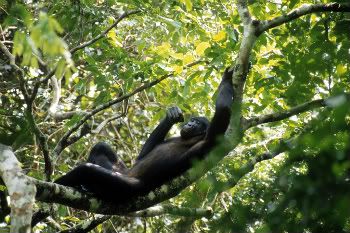
      Lounging bonobo in Kokolopori reserve. Photo by: Jeffry Oonk.

      The establishment of nature reserves often leads to conflict with local people, sometimes lasting generations. Traditionally governments and conservation organizations delineate park boundaries so that they avoid all human populations, or in some cases even remove people from the parks. Local people—who may have enjoyed traditional rights in the parks for centuries—are suddenly told they can no longer hunt, fish, or collect resources in the park. Programs are often established to aid local people or repay them for their losses, but many of these prove less-than-adequate.

      The situation in Kokolopori could not be more different. In partnership with BCI, locals have been involved in every decision regarding the new reserve. BCI, a ground-breaking conservation group, was also responsible for the establishment of Sankuru Reserve in the DRC. Larger than Massachusetts, Sankuru Nature Reserve made headlines in 2007 for its importance to conservation and its focus, like Kokolopori, on working with local communities. However Kokolopori has taken local community involvement to a new level.

      “To me the first thing, it’s very simple, you give the local people the control,” Michael Hurley, executive director and vice president of BCI, told Mongabay.com. “Give them the education and teach them modern conservation science to facilitate their doing it, but also give them the resources so they can take control, and that’s often the step that’s missed. I’ve heard it said so often, ‘well, we want to work with that group there, but they really don’t have the capacity to do the kinds of things we need to do’. And my response is, ‘well, there’s the problem, focus on building their capacity as opposed to just imposing conservation programs’.”

      One way in which BCI builds capacity is by crafting close partnerships with local NGOs, in this case Vie Sauvage.
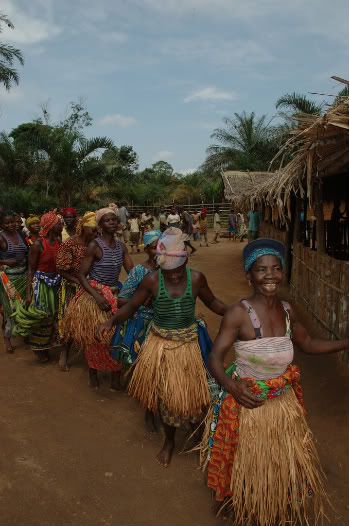
      Women dancing in Kokolopori village. Photo courtesy of BCI.

      “It is important to emphasize up front that BCI could not have accomplished this without the leadership of Albert Lokasola, a visionary leader, and President of Vie Sauvage, a locally based NGO,” says Hurley, “ An important aspect of BCI’s approach is to support, nurture, and facilitate local leaders, and commit to long-term partnerships.”

      The people of Kokolopori have long known what it is like to be ignored by the outside world. Suffering through the decade-long Congo war, they have never known steady access to health care or education. In addition, the war disrupted their ability to sell agricultural crops—a livelihood they had depended on. It was in the midst of this situation that the people of Kokolopori decided to protect their forests as a reserve rather than exploit them for profit. Albert Lokasola, President of Vie Sauvage, approached BCI in 2001 seeking support with local conservation efforts. The Kokolopori Bonobo Reserve became not only welcome news for conservation efforts but humanitarian ones as well, since innovative programs have given the people of Kokolopori the chance of a better life.

      During preliminary studies in the region it become increasingly clear that a nature reserve which did not directly benefit local people would not be viable or desirable to any party involved. So, BCI began to create its own version of forest reserves that incorporated local human communities. BCI sought partnerships not only with the local communities, but also with local NGOs, Vie Sauvage. During every step in the reserve’s creation BCI turned more-and-more to the strength and dedication of the Congolese.

      “The most important thing is [the Congolese] need to understand that they are the ones who have control. And that can only be done by building up relationships over the years and by constant proofs to the partners that you really are giving them control. And when that’s done, a foundation is built for real sustainability,” Hurley says.

      II. ‘People who live in the forest know the forest better’.

      From the very beginning, BCI solidified their relationship with locals. The first thing an organization must do before proposing a protected area is to survey the region’s biodiversity.

      Kokolopori Reserve lies south of the Congo River in DRC’s Cuvette Centrale, a region of lowland tropical forest and wetlands. The reserve was known to have bonobos, but the actual number remained a mystery. In addition other species in the reserve needed to be identified. But unlike most biological surveys, which are often conducted by foreign scientists, this survey was undertaken largely by the local Congolese.
      The forest of Kokolopori. Photo courtesy of BCI.

      “What we believe is that people who live in the forest know the forest better,” Hurley says. “If I were going to go to Montana to photograph elk, I’d hire a local guide. So, [the Congolese] generally can collect a lot more data, they really observe the forest and know it more, and if you combine that with the science and technical skills—which we provide the training for—then we get a lot more information.”

      Through training programs, BCI educated locals in GPS, surveying technology, and line transects. The training remained useful even after the initial surveys were finished.

      “Once [the locals] started working on surveys with us then we tried to keep funding them, so in a sense it’s their equipment, they’re doing the work, and they’re being paid for it. That money is being dispersed through the community as well,” Hurley says. “They continue to act as ambassadors for conservation, and then we…convert many of the survey team members into monitors.”

      Once a bonobo site is discovered, monitors are assigned to the area to protect the bonobos from hunters. Currently there are 70 local monitors overseeing a number of bonobo sites.

      III. ‘How do you tell these local people who are poor and starving they should not hunt A –B –and -C?’

      To work with the local people effectively, BCI developed the Information Exchange program, which facilitates a dialogue between the local people and conservationists. The Information Exchange program has been vital for identifying the true needs of Congolese in the region. As an example of the importance of Information Exchange, Hurley points to a water well that was almost built.

      “One of our folks was in the village and the women were carrying water…it was about 3 ½ hours of work starting at sunrise: trekking down to a river area, collecting water, and bringing back all these heavy, heavy containers of water on their head to the village. The idea was…we should look at getting investment to build a well in the village. Now traditionally, what might be done is a socio-economic study: take a look around, look at what the needs are, and then develop a project and go in and build that well. But in this process what we found was the women said…‘oh, wait a minute that’s the only time we all get together away from the village and get to talk about our husbands’—and they bring their kids and the kids play in the water and everyone washes and the women share stories…it’s their time away, and they said ‘you know that really would not be good for us’. It’s that kind of sharing, that kind of knowledge asopposed to imposing things that we think are best for them.”
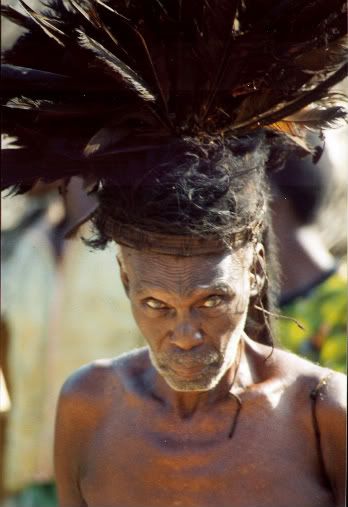
      Yetee elder in Kokolopori. Photo courtesy of BCI.

      Hurley believes the Information Exchange program could help conservationists around the world to learn how to really communicate with local peoples about their needs. According to Hurley, many conservationists “go in and do biodiversity studies and then do socio-economic studies and then they talk about stakeholder engagements, but what it usually ends up being is they hold some meetings and tell local people what they are going to do. Information exchange is about going in and working with local people first in a language they understand, sharing with them, and, most importantly, building upon their own systems of knowledge, beliefs, attitudes, and practices,” Hurley explains.

      Once trust is established between locals and the environmental organization through communication programs like the Information Exchange then much of the work that would traditionally be done by conservationists is taken on by locals.

      “Someone asked Sally [Jewell Coxe, co-founder and president of BCI] awhile ago, ‘how do you tell these local people who are poor and starving that they should not hunt A-B-and-C’. And her answer was ‘well, we don’t, their peers and their Congolese do’. That’s it. We build the local leadership and they are the ones that then do this, not us,” Hurley explains.

      IV. ‘You can’t ignore health care and education; those are not just extraneous things.’

      One of the most important aspects of working with the people of Kokolopori has been efforts to provide better infrastructure, along with education and health-care in a region that had known neither.

      BCI has sought to improve infrastructure in Kokolopori by providing an atmosphere of cooperative use of resources between locals and visiting conservationists, essentially instilling the philosophy of ‘we are all in this together’. The reserve’s conservation centers are open for the local people to use, providing the region with its first easy access to communicating with the outside world.

      “Even though the conservation centers are primarily to support the work of BCI and Vie Sauvage, they’re for the local people, who use them. So unlike parks where you have park headquarters but the people have to knock on the door and ask permission, these are really sites that are of and for the people,” Hurley explains.

      According to BCI’s strategic plan the access to radio and satellite phone has transformed the region: “Before BCI installed an HF radio at Kokolopori and provided a satellite phone to Vie Sauvage, the only means of long-distance communication was talking drums.”

      Young girls of Kokolopori. Photo courtesy of BCI.

      Providing better access to education, including higher education, has also been a vital component of BCI’s work in Kokolopori.

      “We have supported local schools with material and supplies and roofing,” says Hurley. “As well we have the ISDR-Djolu, the Djolu Institut Superieur de Developpement Rurale, which provides higher level training and education.”

      The creation of ISDR was led by Albert Lokasola. The technical college includes coursework in conservation, sustainable agriculture, community development, math, and rural administration.

      BCI and its partners have also built the first clinic in the area, called the Bonobo Health Clinic, which includes an on-staff doctor and nurses. The clinic is supported by the Indigo Foundation in Australia and by the Kokolopori-Falls Church Sister City partnership, the first sister cities between the USA and the DRC. The clinic has conducted nutritional studies in the region, which have revealed a protein deficiency in some of the population, a problem that the medical team is striving to correct.
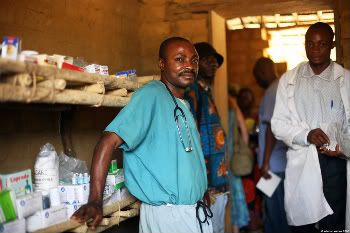
      The Bonobo Clinic. Photo courtesy of BCI.

      “It has to be a totally holistic approach that addresses things like health care and education, because you can give [local people] a little bit of livelihood support and help them protect their forest, but if their kids are dying of malaria or don’t have medicines, it’s not going to work. They need to have a base,” Hurley says. “You can’t ignore health care and education; those are not just extraneous things.”

      V. ‘They are the ones who are controlling this and that generates a huge amount of social capital.’

      When BCI entered the region in 2001, they found the villages of Kokolopori devastated by DRC’s long war. All access to markets for agricultural products had been cut, severing the villages’ economy. No products had been going in or out for years. This also led to an up-tick in bushmeat hunting by local peoples for subsistence. BCI and its partners created projects to work with locals to re-invigorate their sustainable agricultural systems and provide access to markets.
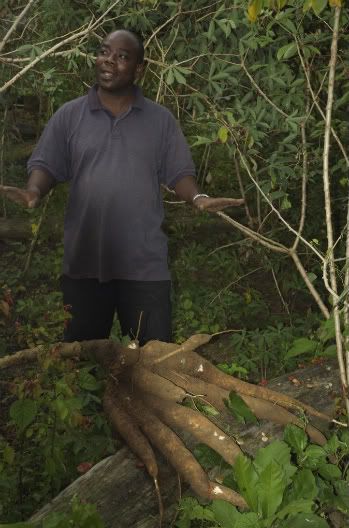
      New disease-resistant cassava. Photo courtesy of BCI.

      One successful program involved working with the region’s staple crop, cassava. When crops were devastated by mosaic disease, which destroyed up to 80 percent of yields, a partnership between BCI, Vie Sauvage, the South-East Consortium for International Development, and the local agricultural cooperative, CAPEC, introduced a new mosaic-disease resistant cassava variety.

      As Hurley describes, the new cassava cuttings have been important both for the local people and the forest: “In Kokolopori as in other areas [locals] are cutting into secondary and sometimes primary forests to expand agricultural fields, but they are able to now reduce that agricultural expansion and get higher productivity on smaller plots [with the new cassava cuttings], and then expand the multiplication fields and the other fields which are the people’s. The local people can then also sell the cassava cuttings to other communities and make revenues from that…We are starting to introduce other seed stocks and other crops as well in a planned, carefully phased program that reduces the impact on the forest.”

      Other programs have focused on aiding the villages’ women. Through micro-credit programs, BCI and its partners have provided local women with non-electric sewing machines and training. Women are currently selling making and selling dresses locally, while BCI hopes to expand the program internationally. As well, women have been trained in soap-making and salting fish. These micro-credit programs are meant to provide families with additional income and security.
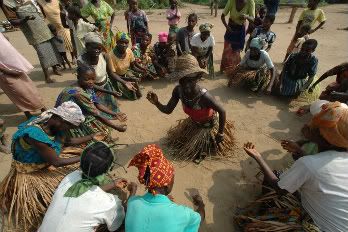
      Women telling stories in Kokolopori village. Photo courtesy of BCI.

      Hurley believes that BCI shows just how much a conservation organization can accomplish, so far, without long lists of wealthy donors by spending wisely and forging important partnerships. Part of the secret is to make certain that communities are aware of where the money is going.

      “What’s amazing…is that if the people know we don’t have a huge amount of funding, so even if it’s a little bit of money they know that it goes to them…and they also know…they will have control of it,” Hurley says. “So while they’re hoping for greater funding in the future for many of these programs, even with a small amount of funding it helps motivate and engage the people to be engaged in conservation. But it’s not just the funding, it’s local people’s understanding that they are the ones who are controlling this and that generates a huge amount of social capital.”

      VI. ‘It’s outsiders who come in and do commercial bushmeat hunting’.

      Wildlife in the DRC currently faces two major threats: habitat loss and hunting. Deforestation for agriculture and logging, including rampant illegal logging, has devastated habitat for many species in the DRC. However, hunting is also a large concern. Congo’s forest elephants have been decimated in recent decades by ivory poachers. Hunting for meat is also on the rise all over central Africa. This practice, known as bushmeat hunting, provides income and protein-rich foods in a part of the world that often lacks both.

      While Kokolopori has seen some deforestation due to expanding village agriculture, so far the reserve has avoided attention from logging companies. This has allowed the area to remain relatively pristine compared to other areas in the DRC. But Kokolopori’s wildlife has not been so lucky: “bushmeat hunting is the major threat, and really its commercial bushmeat hunting,” Hurley says.

      Hurley adds that although local people hunt, they are largely agriculturists by nature. This fact is something the Congolese have expressed to Vie Sauvage and BCI throughout their meetings in the Information Exchange program.
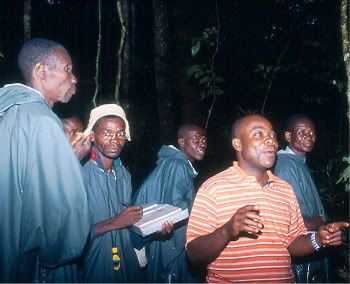
      Kokolopori trackers. Photo courtesy of BCI.

      “It’s logical,” Hurley explains. “While there are spiritual and cultural aspects to some traditional subsistence hunting practices, many locals would much rather get up in the morning and step outside their back door and work in an agricultural field and have improved livestock management, pigs, goats, and chickens. They’d rather have all that outside their back door than spend three or four days in the forest hunting something.”

      With increased education and awareness, including the re-establishment of outside markets for their agricultural products and enforcement of hunting regulations, bushmeat hunting by locals will largely become a non-issue. Commercial bushmeat hunting, however, remains a large threat facing the wildlife of Kokolopori.

      “In many parts of the Congo and in some parts of Kokolopori it’s outsiders who come in and do commercial bushmeat hunting, they come in and set up camps, they hunt out a forest, and then they smoke the meat, and they transport it, they leave on the river and sell it. And it’s not their forest,” says Hurley.

      BCI has increasingly discovered that the key to dealing with bushmeat hunters is reinforcing control by the local authorities. In other words, make the local people, at least in part, responsible for catching and punishing those who invade their forest.

      “There are many estimates on how many park guards you need per square kilometer in a certain area, but when you have an entire village, an entire traditional chieftainship, and a hierarchical structure that has certain belief systems and rights, when that whole village is …saying: ‘this is our forest, and we’ve agreed to it, we are agreeing to protect this land’, it’s an awful lot easier” to protect wildlife, according to Hurley. “You, in a sense, have thousands of people who are enforcing the law… [it’s] going to be a lot stronger and a lot more sustainable.”

      Kokolopori will also have traditional eco-guards monitoring the reserve through the Congolese Institute for Nature Conservation (ICCN), but, as Hurley says, “our work with the ICCN also recently has shown that they truly believe that this new model may be better.”

      At the same time, rules and regulations are still being set up across the reserve. Rather than the usual dogma of no hunting—ever—BCI is working on creating a model that incorporates zoning and traditional practices to allow for some sustainable hunting by the local people. However flagship and endangered species, such as bonobos, will remain under protection in all zones.

      “What we’ve learned in other protected areas, is that many local people use protected areas as their hunting zones…because they are frustrated by the fact that they have been thrown out,” explains Hurley. “So, we have to have a gradual transition process where certain sustainable hunting practices are allowed. The local people have traditional systems that have maintained sustainability in hunting, such as seasonality or rotating seasons, having certain areas of sacred forests or designated areas where no hunting is allowed. These ancient traditional systems tend to allow wildlife populations to be replenished. But there is still a lot of work to be done in Kokolopori, as there is even in all the old establish protected areas, to really figure out a good system.”

      BCI, its partners, and the local people are still working out the different zoning areas for the reserve, but the zones will be modeled on how the locals use different regions and not determined by non-Congolese.

      VII. ‘There is no place else like this in the bonobo habitat’

      A major goal of Kokolopori reserve is to protect one of the world’s largest remaining populations of bonobos, with well over a thousand thought to inhabit the reserve.
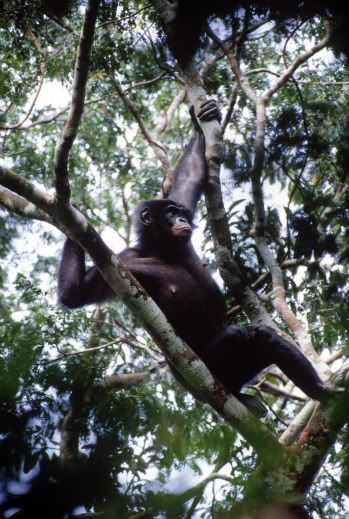
      Bonobo. Photo by: Jeffry Oonk.

      Categorized as Endangered by the IUCN Red List, bonobos are threatened by both habitat loss and bushmeat hunting. Total population estimates vary widely, from 5,000 to 50,000, but the records of bonobo habitat loss are not so variable. It is estimated that the bonobo has only 24 percent of its habitat remaining. While a United Nations study predicted that bonobo habitat would shrink to 4 percent in twenty years, the lowest for any great ape.

      Bonobos have become famous for their largely peaceful, egalitarian society, which contrasts starkly with the, at times, warlike nature of chimpanzees. While chimpanzee society is patriarchal and competitive, females actually hold the highest roles in bonobos society, with the top males chosen according to their mothers.

      Bonobos are also known for their bi-sexuality and, in turn, their employment of sex as more than just a procreative act. Sex among the bonobos can be used to relieve stress, establish bonds, and let off steam. Having spent decades in the shadow of their closest relative, the chimpanzee, the bonobos are finally getting the attention they deserve. And Kokolopori is arguably the world’s best place to study or see bonobos.

      “We’ve had visitors there. And according to ICCN they’ve never seen anything like this in bonobo habitat. Literally within hours of arriving visitors are looking at bonobos. There is no place else like this in the bonobo habitat,” Hurley says. “We have often heard of visitors to other protected areas in the bonobo habitat where it may take many days or be almost impossible to see bonobos. This is not the case in Kokolopori.”

      Hurley adds that although Kokolopori “is very rough, very rough, it is where you can see bonobos.” He attributes this to the fact that Kokolopori, unlike other reserves, has had salaried locals monitoring bonobos groups since 2003. Kokolopori is currently working on setting-up limited eco-tourism.

      Aside from bonobos, Kokolopori possesses a wealth of biodiversity. Unlike many forest regions in the DRC, Kokolopori has been relatively undisturbed, leaving healthy thriving ecosystems.

      Eleven primate species, not including bonobos, have been identified in the reserve. This includes the Salongo monkey Cercopithecus dryas, which has been discovered in the wild for the first time in Kokolopori. Prior to its discovery in the reserve, the species was only known from markets. In fact, its name, Salongo, means ‘market-day’ in the local language, Lingala. Thollon’s red colobus Procolobus tholloni also inhabits the reserves; this species is so little known that the IUCN has yet to determine its status.
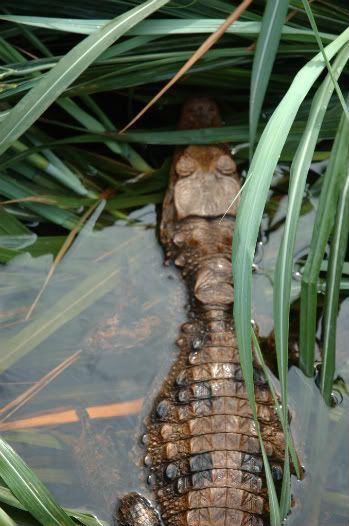
      The endangered dwarf crocodile. Photo courtesy of BCI.

      The park also includes the African golden cat Profelis aurata, the sitatungaTragelaphus spekii, the Congo forest buffaloSyncerus caffer nanus, the bongo Tragelaphus eurycerus eurycerus, the leopard Panthera pardus, and the endangered dwarf crocodile Osteolaemus tetraspis.

      Thirteen species of endangered birds have been recorded at Kokolopori, including the gray parrot Psittacus erithacus, which is highly threatened by the pet trade. The reserve also include five near-endemic birds: the Congo peacockAfropavo Congensis listed as Vulnerable by the IUCN Red List, the yellow-legged malimbe Malimbus flavipes, the Congo sunbird Nectarinia Congensis , and two martins: the African river martin Pseudochelidon eurystomina and the Congo martinRiparia Ongica.

      Forest elephants Loxodonta cyclotis have also been recorded in the reserve, but they “appear to be transient”, says Hurley, who explains that they apparently use Kokolopori as a migration route.

      VII. ‘You can’t solve the problem by using the same mindset that created the problem’.

      The philosophy of local community engagement and involvement is not only effective according to Hurley but its also relatively inexpensive: “What we have discovered, with so many other folks working in the Congo basin, is some of the big entities say, ‘you know our biggest problem is getting the local communities to work on our programs, to be engaged in our programs’—that’s their biggest problem. You know, we seem to have the solution. We don’t have all the answers, I won’t say that. But we have the solution to part of that problem, we found that we have ways of motivating and engaging local communities, and ironically it’s without much money at all.”
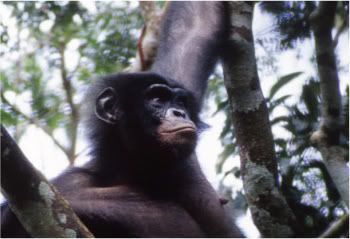
      Detail of bonobo. Photo by: Jeffry Oonk.

      Hurley believes that BCI’s philosophy should not constrained by geographic region, but could be useful in many parts of the world in solving the difficulties that have arisen between protecting nature and respecting the people who live there.

      “We have really developed a methodology could be replicated in other parts of the world. In some cases, people talk about it, but they don’t really do it. There’s an Einstein quote that says something like: ‘you can’t solve the problem by using the same mindset that created the problem’. And all too often one goes in with a western mindset geared to developing and designing programs that we simply impose,” Hurley says.

      One of the keys to BCI’s work—and one of its most surprising aspects—has been its capacity to spread without any additional effort from BCI.

      “We provided a training program in Kokolopori, a couple years ago, where we had NGOs and community association members from many different organizations from outside Kokolopori,” Hurley says, gearing up for a good story. “Now one participant took the training and…he went right back to another region far to the west where he worked under a BCI subcontract as part of an Information Exchange team. We learned later that he was so inspired that he went back to his community and utilized his earnings to register an NGO with regional authorities…to protect bonobos and to set the area aside for conservation, and this was without any investment from BCI. That is, it is self-replicating,” Hurley explains. “The local communities are emulating this model, so our projects are self-replicating…and we are promoting systems where they share communications, where the people we’ve trained are training other people.”

      One wonders why that same self-replicating process that has occurred on the ground in the jungles of the Congo, could not also occur globally, from the Amazon to Borneo, bringing locals villagers and conservationists together in a common purpose: for a better life and a better world.

      Copyright mongabay 2009

      Read more... Sphere: Related Content