Showing posts with label ecology. Show all posts
Showing posts with label ecology. Show all posts
03 January 2012
31 December 2011
Review: "The Wealth of Nature" by John Michael Greer
John Michael Greer takes on economics, a subject in desperate need of his characteristic, level-headed analysis. The usual growth oriented fantastical notions that have plagued the subject over the last half century were in particular need of such cool headed dispatching
by Amanda Kovattana | Energy Bulletin | Dec 30 2011
 The Wealth of Nature: Economics as if Survival Mattered
By John Michael Greer
263 pp. New Society Publishers – May 2011. $18.95
Read more... Sphere: Related Content
19 December 2011
Real wealth: Howard T. Odum’s energy economics
Money and market values cannot be used to evaluate real wealth from the environment - Howard T. Odum
by Rex Weyler | Energy Bulletin | Dec 18 2011
Read more... Sphere: Related Content14 December 2011
An outline of benefits from a lower energy civilization
The universe ultimately runs on an energy economy, not a market economy as the dominant economic ideology claims. Ecological damage is tied to energy use of any kind in our peculiar type of economy where the operating rules of the system require maximization of profits at any cost
by Karl North | Dec 12 2011 by Karl North Eco-Intelligence in Energy Bulletin | Dec 12, 2011
Read more... Sphere: Related Content11 October 2011
Forest Structure, Services and Biodiversity May Be Lost Even as Form Remains
A forest may look like a forest, have many of the same trees that used to live there, but still lose the ecological, economic or cultural values that once made it what it was, researchers suggest in articles in the Proceeding of the National Academy of Sciences.

Read more... Sphere: Related ContentManaged forests may appear healthy even though they are losing some of the ecological and biodiversity values they once had. (Credit: Photo courtesy of Oregon State University)
01 March 2010
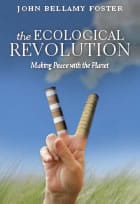
John Bellamy Foster on `Marx's Ecology' and `The Ecological Revolution'
John Bellamy Foster is editor of the US socialist journal Monthly Review and author of Marx's Ecology and The Ecological Revolution. Aleix Bombila writes for En Lucha (Spain).This interview first appeared in English at MRZine.
by Aleix Bombila | LINKS – International Journal of Socialists Renewal | January 2010
En Lucha: In your book Marx's Ecology you argue that Marxism has a lot to offer to the ecologist movement. What kind of united work can be established between Marxists and ecologists?
John Bellamy Foster: I think it is important to recognise that Marxists and ecologists are not entirely different groups. Of course it is true that there have been Reds who have been anti-ecological and Greens who have been anti-Marxist. But it is not uncommon for the two to overlap, and increasingly to converge. Many socialists are environmentalists and many environmentalists are socialists. Indeed, there is a sense in which Marxism and ecology, both classically and today, lead to the same conclusion. For Marx, the goal was the creation of a society in which the metabolic relation between humanity and nature (i.e. production) was rationally regulated by the associated producers. The original title of my book that you refer to was supposed to be Marx and Ecology, but I changed it to Marx's Ecology because of the depth of Marx's ecological conceptions.
I would argue that a critical Marxist approach, especially in our time, requires an ecological worldview, while a critical human ecology requires an anti-capitalist and ultimately socialist orientation (i.e., a Marxist one). In terms of united work that Marxists and ecologists can share, I would say social justice and environmental sustainability: saving humanity and saving the Earth. You can't expect to achieve one without the other, and neither is possible under the existing system.
Probably the strongest single voice for an ecological relation in the world today is Evo Morales, the socialist (and Indigenous) president of Bolivia. After the failed Copenhagen conference on climate change, Fidel Castro said that we used to think we were in a struggle simply to determine the society of the future, but we now know we are in a struggle for survival. We have reached a point where historical materialists are taking global leadership in defining the ecological needs of humanity.
The struggle against climate change looks kind of abstract at first sight. How can we organise campaigns against climate change with a real impact? Who should promote them?
Climate change, and the planetary ecological crisis as a whole, which is much bigger, is the greatest material threat that civilisation, and indeed humanity, has ever confronted. We are facing, if we don't change course, the demise of the Earth as a habitable planet for most of today's living species. But, as you say, it seems abstract. People can't feel it because it is not reflected consistently in the short-term weather conditions they experience on a daily or even a seasonal basis. Moreover, it is not a problem that grows gradually and smoothly, but rather one that will accelerate with all sorts of tipping points, issuing in irreversible changes.
So time is extremely short, and it requires a certain degree of education as to what is happening. Scientists are now almost unanimous on the threat, if not on all the details, but they do not have a direct line to the population. There are very few actual authoritative global warming deniers and their scientific claims, such as they are, been refuted again and again, but because of the power of the capitalist class, which sees any action to avert the problem as a threat to its immediate interests, the denial view is constantly amplified in the corporate media. Ordinary people are thus left uncertain as to what to think. Besides, they are hit with other material problems that seem more immediate: economic stagnation, the current extreme downturn, and the destructive effects of neoliberal policy. Workers are seeing their economic standard of living decline and are worried about their jobs; increasing numbers are unemployed and in poverty. So it is hard to concentrate on something as seemingly nebulous as climate change.
If we are looking for a massive revolt from below in this area I believe that it will emerge first not at the centre but at the periphery of the capitalist world. Toynbee in his studies of history used to talk about an internal and an external proletariat. On climate change, as well as in the revolts against capitalism in general, it is the external proletariat in the periphery of the capitalist world economy that will undoubtedly take the leading role. I have pointed in recent writings to the possibility of what I have called an "environmental proletariat" -- for whom resistance to environmental conditions broadly, and not simply industrial conditions, is the defining struggle. Those most oppressed in the world, who have nothing to lose, are to be found predominantly in third world regions. So this is where the environmental proletariat also is mainly to be found. This is especially evident in the effect that sea level rise will have on the Ganges-Brahmaputra Delta in Bangladesh and India and on the low-lying fertile areas of the Indian Ocean and China Sea -- Kerala in India, Thailand, Vietnam, Indonesia.
Some areas, like the low-lying delta of the Pearl River in China, correspond to the areas of fastest development (in this case Guangdong industrial region from Shenzhen to Guangzhou), and some of the sharpest class contradictions. So the world epicenters of environmental and class struggle may overlap. There are all sorts of signs -- as in the water, hydrocarbon, and coca wars in Bolivia, which helped bring a socialist and Indigenous-based political movement to power -- that the material bases of social struggle is being transformed, raising issues that are more all-encompassing.
Even in the centre of the system (the internal proletariat), there are a lot of ongoing struggles by environmentalists, and particularly the youth-based climate justice movement. Although there is no sign of a revolt from below from workers at present, and even though the labour movement seems to be entirely dormant in the United States in particular in the context of worsening economic (and environmental) conditions, there is hope that community-based, labour-environmental struggles will generate a new context for change. It is to be hoped that something like an environmental proletariat will eventually emerge in the centre too. If one reads classic works like Engels's The Condition of the Working Class in England one gets the sense in which environmental struggles were crucial to the making of the English working class in the classical era, in ways that belie a narrow productivist vision.
The truth is that when it comes to the dual contradictions represented by the economic and environmental failures of the system, it is only socialists that are able effectively to bring these issues together. Only historical materialists fully embody a theory and a practice that recognises that these are not separate issues but have a common basis in the capitalist mode of production. Indeed, I think we are increasingly seeing a convergence of socialist and ecological visions of the future, in a way that leads in a much more revolutionary direction than we have ever seen before. But we should not be blindly optimistic. This also requires organisation. And there are great dangers, such as the growth of ecofascism, and the delaying tactics of those in power that could spell "the common ruin of the contending classes."
How can we foster environmental justice without prejudicing the working class?
One might as well ask: How can we not foster environmental justice without prejudicing the working class? One of the first works on environmental justice, as I have already suggested, was Engels's The Condition of the Working Class in England, which focused on how the working class was subject to toxic living conditions and the consequences in terms of health, looking at how this has affected class divisions and urban structure. Such concerns were part of the working-class struggle in the beginning.
Environmental justice also includes health and safety within factories -- and in a broader sense than this is usually understood, encompassing such issues as length of working day, intensity of hours, etc. It is only the growth of a business-oriented trade union movement, and its segmentation from other working-class issues under contemporary capitalist systems of legal/political regulation, that has allowed people to think that the labour movement in particular and class struggle in general centres on a very restrictive set of issues, separated from environmental justice, which is in reality the measure of how inequality affects people in the multiple material domains of life.
Of course environmental injustice in the United States is understandably seen as related to race perhaps even more than class, since its greatest impact is on those individuals and communities that are subject to environmental racism. Toxic wastes, as is well known, are more commonly dumped in communities of colour. One then sometimes runs into the misconception that this is a race and not a class issue for that very reason. Often implicit in this is the false notion that the working class is white, and so, if the problem is one that primarily affects American Indians, blacks, Latinos, Asians, then it is not a class issue.
But of course the working class in the United States is predominantly made up of so-called "minority races". There is no sense in which the working class is a white working class, as is commonly supposed (and as contemporary whiteness studies teach us the whole issue of "white" needs examination). Environmental justice is thus a race and class (and indeed a gender) issue. It raises issues that the contemporary labour movement, with its limited "bargaining" position and the racial divides that it has often helped perpetuate, is not very well equipped to deal with, but that a socialist working-class movement could much more easily address.
Are taxes on polluting industries a solution?
If you mean an ultimate solution, the answer is No. The only real solution is to get rid of capitalism and put an egalitarian, sustainable society, run by the associated producers, in its place. But we have to face the fact that the environmental problem, including climate change, is accelerating, that this is a question of survival for humanity and most species on the earth. The time in which to act if we want to avoid irreversible environmental decline is incredibly short, with only a generation or so in which to implement a drastic change of course. That at least is what science is telling us at present. Under these circumstances we need both short-term radical responses and a longer-term ecological revolution. The first needs to help promote the conditions for the second.
The immediate, short-term response requires, I am convinced, a carbon tax of the kind proposed by James Hansen: a progressively increasing tax imposed at well head, mine shaft, or point of entry with 100 per cent of the revenue going back to the population on a monthly basis. The point of this set-up, as Hansen says, is to make sure that the carbon tax is imposed as much as possible at the point of production and falls on those with the largest carbon footprints (mostly the rich), with the majority of the population gaining from the distribution of the revenue from the tax, since they have less-than-average per-capita footprints.
Neither capital nor the governments controlled by capital would have their hands on the revenue, which would flow directly to the population. Implementing this in the kind of society that we have would of course be difficult. But once it was understood as having the effect of both protecting the earth (by making the price of carbon higher) and generally redistributing income toward those at the bottom of the society, it would gain strong popular support.
The truth is that as long as we are in a capitalist society a key means of controlling a pollutant -- and carbon dioxide has unfortunately become that -- is going to be increasing its price. More direct political forms of regulation should of course be used as well. For example, we need simply to ban the building of coal-fired plants as long as sequestration technology doesn't exist (and at present there are all sorts of obstacles), and existing coal-fired plants need to be rapidly phased out. To accomplish this on the necessary scale, however, requires a general ecological revolution affecting what we produce and consume and how our society is organised.
Is a collective solution to the ecological crisis possible within this system (renewable energies, improvement of public transport, cessation of big infrastructures, etc.)?
Again, there is no collective solution within the system. But we can promote collective solutions from within the system, which, going against its logic, will play a part in the transition to another, people-controlled system. The new society will emerge from the womb of the old.
Fred Magdoff and I have discussed the problem of capitalism and the environment in detail in an article that is appearing in the March 2010 issue of Monthly Review, entitled "What Every Environmentalist Needs to Know about Capitalism." The basic point, which needs elaboration of course, is the fact that the regime of capital is one of self-expanding value.
Capitalism requires for its very existence constant economic growth and, more explicitly, accumulation of capital. Such a system can clearly be very effective up to a certain point in promoting production and economic development. But it also is very exploitative and ultimately leads to the destruction of the environmental conditions of existence. The only real social and ecological solution is a society not focused on accumulation or economic growth per se, but on sustainable human development. No matter what measures you introduce to modernise capitalism ecologically, the system requires a constant growth of the treadmill of production. If we substitute public for private transportation, introduce renewable energies, and adopt other collective measures, it can help. But these themselves tend to be limited by the accumulation goal of the system. Reliance on renewable resources, for example, is important. But it requires a system that uses them only at the level at which they can be renewed. Capital pushes beyond all such boundaries.
What this means is not that we back off from promoting more social, collective, public solutions. But we need to recognise that going in that direction invariably means going against the logic of the system, so it requires radical organisation. What we are talking about is trying to create, in part from within capitalism, the infrastructure for a different kind of society. With constant pressure from below some things can be achieved, as long as they don't impinge substantially on the accumulation drive of the system.
But if accumulation itself is threatened capital fights back, and small victories are likely to be reversed. The only answer -- no longer to be seen simply as a question of justice but also one of survival -- is to push beyond what capital is willing to accept, i.e., to promote human and collective needs beyond the so-called "market system". In that case, you are talking, if you take it far enough to make a real difference, about an ecological and social revolution and the transition to another kind of society.
Some social movements believe it is possible to live apart from capitalism. Do you think this is possible, or does it just lead to the atomisation of the opposition?
The US socialist Scott Nearing, who wrote a regular column for many years in Monthly Review, was one of the leaders of the self-sufficiency and back-to-the-land movement. There is no doubt that this kind of separation of oneself from the main logic of the system and its effects (a kind of living apart from the system) constitutes a form of passive resistance (still a form of resistance).
Throughout history human beings, faced by repressive systems, have returned to the land, and cultivated their own gardens, so to speak. This can be a way of healing, regrouping, etc. Many of those who have gone in this general direction have pioneered in alternative forms of agriculture, including organic farming, community-supported agriculture.
We should not underestimate the degree to which such actions can sometimes create alternatives crucial to the development of a new society, within the various interstices of the system. But the real struggle to create a new society requires in addition an active resistance and political organisation: a direct revolt against the existing relations of production. So the new strengths that were gained during a period of retreat have to become a part of an active resistance. Complete withdrawal in a globalised capitalist system is largely an illusion. It is interesting how Nearing himself combined his life of self-sufficiency with continual, active resistance. He worked it from both ends. Today we need people who are active in their resistance. If they can combine this with various ways of freeing themselves from the rat race, so much the better.
The degrowth movement champions individual and collective initiatives in the search for alternatives to capitalism. What is your opinion about it? How can we decrease globally within the capitalist system?
Decrease globally within capitalism? We can't. Capitalism is all about accumulation. It is a grow-or-die system and on an increasingly global scale. When economic growth, particularly the growth of profits, is not taking place, the system goes into a crisis, as at present. This results in massive unemployment. There are a lot of good things to be said about the "degrowth movement," as articulated particularly in Paris in April 2008. But it is based on a voluntaristic approach to decrease consumption, and on the unreal assumption that you can have a stationary state (that is a no-growth economy), as envisioned by John Stuart Mill in the 19th century, somehow in the context of the present system. This is simply a misunderstanding as to the nature of capitalism. As Joseph Schumpeter wrote, a no-growth capitalism is a contradictio in adjecto.
It is certainly true that we need a new economic structure focused on enough and not more. An overall reduction in economic scale on the world level, particularly in the rich countries, could be accompanied by progress in sustainable human development, improving the real conditions of humanity by moving from possessive individualism to non-possessive humanism-collectivism. But this would require a socialist economy to make it possible (not inevitable).
If the alternative to capitalism is a democratically planned economy, how should this work so as to include environmental issues?
I think we need to remember Marx's warning in Capital about writing "recipes for the cook-shops of the future." It would be a mistake to try to write an actual blueprint for a socialist society, including one that incorporated environmental issues. Yet, I think that Paul Burkett has demonstrated in a brilliant article on "Marx's Vision of Sustainable Human Development" in the October 2005 issue of Monthly Review that Marx's notion of communism was one of sustainable human development, and that it is indeed only in those terms that we can understand what Marx's conception of a society of freely associated producers regulating their metabolism with nature was all about.
Hugo Chávez has defined the struggle for socialism in the 21st century in terms of "the elementary triangle of socialism". According to this view, derived from Marx, socialism consists of: (1) social ownership; (2) social production organised by workers; and (3) satisfaction of communal needs.
In my view, one can also speak of an "elementary triangle of ecology", derived directly from Marx, which takes the struggle to a deeper level. This can be defined as: (1) social use, not ownership, of nature; (2) rational regulation by the associated producers of the metabolism between human beings and nature; and (3) the satisfaction of communal needs -- not only of present but also future generations. All of this is spelled out in detail at the end of the introduction to my book The Ecological Revolution, as well as in the final chapters of that book.
Finally, why should we read your last book, The Ecological Revolution?
The opening words of the preface to The Ecological Revolution state: "My premise in this book is that we have reached a turning point in the human relation to the earth: all hope for the future of this relationship is now either revolutionary or it is false."
The reason to read the Ecological Revolution is to begin to approach this question, which is now obviously the most important question facing humanity as we go forward into the future.
Read more... Sphere: Related Content24 February 2010
Kenya losing wild animals at alarming rate
The number of carnivorous animals in the country is on the decline and the government is worried
By DAVE OPIYO | Daily Nation | February 22 2010
From cheetahs, lions (above) and leopards to stripped hyena’s and African wild dogs, the dwindling population of carnivorous animals has been blamed on climate change, loss of food, and increased human population. Photo/FILE
From cheetahs, lions and leopards to stripped hyena’s and African wild dogs, their population has been dwindling at an alarming rate, a trend that is now being blamed on climate change, loss of food, and increased human population.
On Monday, Forestry and Wildlife minister Noah Wekesa said it was a matter of serious concern that needed urgent attention.
“The number of the large carnivores is on the decline throughout the world and Kenya’s is no exception,” said the minister in a statement.
Dr Wekesa asked communities not to kill lions and hyenas and pledged that KWS would do everything possible to protect them and their livestock.
“I know there are plans to build lion-proof bomas. Let us all strive to preserve this important heritage,” he concluded.
Statistics from the Kenya Wildlife Service, for instance, indicate that the population of lions in the country had declined from an estimated 2,749 in 2002 to about 2000 in 2008.
Receding numbers
But despite their receding numbers, the minister said the remaining animals were still a major source of problems especially to those living near national parks and reserves.
Attacks on livestock by large carnivores, he said, had increased and this consequently led to the killing of the wild animals.
“The just ended prolonged drought was the worst that had ever been felt in the area. The number of herbivores was reduced from as many as 7,000 to just 300,” he said while launching an ambitious strategy to conserve the carnivores.
Added the minister: “Already, the communities had lost over 80 per cent of their livestock to the drought. When the lions and hyenas turned to the remaining livestock, the communities were distressed and attacked them in return.”
Dr Wekesa continued: “The drought took a heavy toll on both wild animals and the habitats we care for. Besides, it also adversely affected the livestock of communities living adjacent to national parks and reserves. One of the consequences of the drought was increase in human wildlife conflict.”
The minister cited the ongoing translocation of 7,000 zebra and wildebeests at a cost of Sh103 million to restore the Amboseli ecosystem by the Kenya Wildlife Service as a show of government commitment to community welfare.
It is expected that the exercise will, in the long run, provide food to these animals, thus alleviating the human-wildlife conflict and ecological imbalance.
Dr Wekesa said the success of conservation efforts in the country largely depended on the goodwill of communities living adjacent to national parks and reserves.
“This means we have to protect the livelihoods of these communities and promote harmonious co-existence with wildlife,” the minister said.
The strategy is to provide a road map for the conservation of the animals.
It prescribes actions that need to be taken by various stakeholders and coordinated by the KWS to reverse the declining wildlife population.
Separately, the world’s 25 most endangered primates have been named in a new report.
Mankind’s closest living relatives — apes, monkeys, lemurs, and other primates — are on the brink of extinction and in need of urgent conservation measures, according to Primates in Peril: The World’s 25 Most Endangered Primates, 2008-2010.
The report reveals that nearly half of all primate species are now in danger of becoming extinct from destruction of tropical forests, illegal wildlife trade, and commercial bush meat hunting.
The list includes five primate species from Madagascar, six from Africa, 11 from Asia, and three from Central and South America, all of which are the most in need of urgent conservation action.
Compiled by 85 experts from across the world, the report was launched at Bristol Zoo Gardens last week, with guests from national and international conservation and research organisations.
Conservationists want to highlight the plight of species such as the golden headed langur (trachypithecus p. poliocephalus), which is found only on the island of Cat Ba in the Gulf of Tonkin, north eastern Vietnam, where just 60 to 70 individuals remain.
Similarly, there are thought to be less than 100 individual northern sportive lemurs (lepilemur septentrionalis) left in Madagascar and just 110 eastern black crested gibbons (nomascus nasutus) in north eastern Vietnam.
The list has been drawn up by primatologists working in the field who have first-hand knowledge of the causes of threats to primates.
One of the editors of the report is Dr Christoph Schwitzer, head of research at the Bristol Conservation and Science Foundation (BCSF), a sister organisation of Bristol Zoo Gardens.
Alarming reading
Dr Schwitzer, who is also an adviser on Madagascan primates for the IUCN/SSC Primate Specialist Group, contributed the chapter on the Endangered Sclater’s lemur (also called the blue-eyed black lemur).
Dr Schwitzer said: “This report makes for very alarming reading and it underlines the extent of the danger facing many of the world’s primates. We hope it will be effective in drawing attention to the plight of each of the 25 species included. Support and action to help save these species is vital if we are to avoid losing these wonderful animals forever.”
Almost half (48 per cent) of the world’s 634 primate species are classified as threatened with extinction on the IUCN Red List of Threatened Species.
The main threats are habitat destruction, particularly from the burning and clearing of tropical forests (which results in the release of around 16 per cent of the global greenhouse gases causing climate change), the hunting of primates for food, and the illegal wildlife trade.
Terms
Read more... Sphere: Related Content08 February 2010
Coal exploitation threatens ecology in East Kalimantan
ANTARA News | January 18, 2010
Samarinda, E Kalimantan (ANTARA News) - Business oriented coal exploitations in East Kalimantan are threatening the local ecology, environment observer Abrianto Amin said here on Sunday.
"Ecological balance will be seriously threatened if coal exploitations are exclusively oriented to commercial aspects while ignoring the social and environmental sectors," he said.
He said that regional government heads (district heads/mayors) were authorized to issue mining exploitation permits enabling them to secure a license easily.
"However, if the companies ignore the social and environmental aspects, they will pose a serious threat to the environment," he said.
The collapse of forest and timber industries has caused companies to switch their business to the mining sector in East Kalimantan, particularly to `black gold` (coal) mining, owing to the fact that the market for this commodity is stable both at home and abroad.
Abrianto Amin, who is also a former chief of the Indonesian Environmental Forum (Walhi) for East Kalimantan, said that actually mining companies had the obligation to restore and preserve the environment.
One of the programs that had to be carried out by the mining companies was to reclaim and plant trees in the areas where they had carried out excavations.
But the reclamation program was not running well because the companies were reluctant to meet their obligation as they had to spend a lot of money on carrying out the program, he said.(*)
COPYRIGHT © 2010
Read more... Sphere: Related Content04 February 2010
Wetland warning
Global warming could lead to Palisadoes going under water if Jamaicans do not take care of the wetlands, an expert from the Port Royal Marine Laboratory has warned
Laura Redpath, Senior Staff Reporter | The Gleaner | February 3, 2010
Raz Barnea (left), volunteer with the United States Peace Corps, explains the biodiversity of Port Royal to students taking part in a tour of the Marine Lab and the Port Royal mangrove forest in Kingston during yesterday's observance of World Wetlands Day. - Rudolph Brown/Photographer
The National Environment and Planning Agency (NEPA) yesterday used Jamaica's observance of World Wetlands Day as an opportunity to increase the public's awareness of wetlands.
The agency and lab officials provided attendees with insight into wetlands, also known as swamps, during a visit to the University of the West Indies (UWI) Port Royal Marine Lab and the Old Naval Hospital.
"We take climate change and global warming into consideration when issuing permits," Ava Tomlinson, NEPA's senior public education and community outreach officer, said.
"[Jamaica] is our home, this is our rock. We have a God-given responsibility to take care of it for future generations," she said.
The lack of mangroves, along with global warming, would lead to the sea rising.
Mona Webber, academic coordinator of Port Royal Marine Lab, who outlined the dangers facing Palisadoes, said climate change affects Jamaica's coastal wetlands and coral reefs.
She also said bigger countries, including the United States and Russia, are not the only nations responsible for global warming through their burning of fossil fuels.
"A lot of what we do and our practices are part of the problem," she said.
Students listened, staring with unwavering eye contact, to Webber as she outlined the problems with common Jamaican practices.
Dumping plastic and other household waste into gullies creates problems for the wetlands, she explained.
Rubber tires and refrigerators are some of the objects found among the man-groves. Burning garbage in the mangroves also has a destructive effect on the wetlands.
Twelve-year-old Akeem Prawl gingerly accepted a tiny crab from Navicula boat captain, Terrance Hall.
When putting the creature and others back in their habitat, among the dark roots of the mangrove vegetation, Hall made certain to tell his passengers "be careful, don't throw them down hard".
Built to recover
The ecosystem has a hard time recovering from damage when the destruction is by man's hands.
"The natural system is built to recover," Webber said, referring to natural disasters.
Citizens can do their part in protecting the environment by reporting the lawbreakers to NEPA game wardens.
According to NEPA's Ava Tomlinson, these wardens are trained by the environmental planning agency and are based in communities across the island.
A 1990 estimate outlined US$462 million as the cost 10 years ago to protect Jamaica from the rising sea, Webber said.
Inspector Christopher Murdock, said he found the information session "very informative".
"A lot of persons will destroy the mangroves to make fish pots," he said.
"Persons will cut these and we are working with NEPA in terms of enforcement," he said.
Boating across the harbour, one is greeted with many sights including pelicans diving for fish, fishermen picking away at objects for clams. Moving at a very slow speed allows persons to glimpse signs of underwater life such as sea creatures that resemble sponges.
"This is the real Spongebob," the guide said.
Webber said no species lives in isolation.
"You lose one and the others get affected.
"We have a habit in Jamaica of killing anything that looks strange. We need to stop that," she said.
laura.redpath@gleanerjm.com
© Copyright 1997-2010 Gleaner Company Ltd
Read more... Sphere: Related Content31 January 2010
East Timor Declares War on Leprosy
Chad Bouchard | VOA News | 30 January 2010
East Timor is one of the few remaining countries where leprosy is endemic, and one of only two in Asia where it has yet to be eliminated. The government has declared war on leprosy, and vows to eliminate it this year.
Florindo di Silva started feeling pain in his eyes four years ago. The 60-year-old father of six says he went to a doctor in the East Timor capital, Dili, but no treatment was available. The disease that caused di Silva to lose vision, and his hands and toes to go numb - turned out to be leprosy.
He says he can walk a little bit, he can chop wood, but it hurts. Right now, his hands cannot do anything. Di Silva says his eyes and head hurt every day, and he is not strong enough to cut coconuts with a knife.
According to the World Health Organization, di Silva is one of about 1,300 new cases of leprosy that have been detected in East Timor since 2004.
Health officials say the number of undocumented people living with disabilities caused by leprosy is likely three times higher.
Some progress has been made. In 2004, the overall ratio of infection was 4.7 per 10,000 people. In 2009, that fell to 1.3 per 10,000.
The decline is due in large part to a program that blanketed the country with hundreds of health ministry staff members able to diagnose and manage the disease.
One of those health workers, Jose Pereira, works at a clinic where he monitors di Silva and about 12 other patients with leprosy.
Pereira says if his patients do not come to the clinic to get medicine, he goes to their houses in the villages to give them medicine. But, he says, they often ask for food, and he does not have any to give, and it is very difficult.
Leprosy is relatively easy to treat with a cocktail of antibacterial drugs known as multidrug therapy. After taking the medicine for one month, patients are no longer contagious, and damage from the disease stops for good after a few months.
Poverty - a key challenge
But poverty is a key barrier to eliminating the disease. Natalie Smith, the country leader for the Leprosy Mission in East Timor, says the bacteria that causes the disease is endemic here, and flourishes in a population that is largely isolated, malnourished and living in unsanitary conditions.
"It really thrives where there's poverty, poor sanitation, poor diet and poor hygiene and those sort of contribute to affect the people living in that environment's immune system, so when their immune system is compromised, they're more susceptible to catching leprosy," said Smith.
In rural East Timor, where about three quarters of the country's 1.1 million residents live, diagnosing patients and ensuring treatment remains a challenge. Smith says failing to identify the disease and treat it perpetuates a crushing cycle of poverty.
"I think it needs to be a priority because of the disability that it produces. And there's been a lot of studies on the burden of disability now and the fact that if people with disabilities are assisted and helped they can actually add to a country's economic viability rather than economic demise. But the longer we delay in treating someone, the more likely they're going to get nerve damage and that's going to lead to long-term disability," she said.
Leprosy campaign
The government has vowed to eliminate the disease this year. The head of East Timor's Leprosy Program at the Ministry of Health, Jose Liu Fernandes, says to do that, the government has begun a radio and television campaign about the disease and how to prevent it.
He says East Timorese do not yet know enough about the disease, so they are surprised when they contract it. Fernandes says they need to teach people that if they start feeling numbness in their hands, it could be leprosy.
In many countries, people with leprosy are shunned and face a lifetime of isolation.
But Salvador Amaral, with the World Health Organization, says there is no such stigma in East Timor. Salvador says traditionally here, leprosy is not considered to be a disease, but a result of eating certain foods, like fish, or a curse from God.
Back in the outskirts of Dili, 22-year-old Joao Godinho Sarmento recounts how he started noticing light patches on his arms six years ago. It turned out to be early signs of leprosy. Doctors caught the disease before it caused serious disability.
Sarmento says his life is pretty normal. He does not have problems at school, and no one considers him to be different or disabled. He hopes other people who have this disease can realize they are not different from anyone else.
Sarmento studies mathematics at the national university, and hopes to become a teacher or an engineer.
You are welcome to use any material that is published by voanews.com, or you may link to any of the web pages that Voice of America has published on the internet. There is no need to request further permission
Read more... Sphere: Related Content27 January 2010
Growth is good … isn't it?
Expansion has progressed so far that key resource boundaries have been broken: we're teetering on the edge of an ecological cliff
Andrew Simms | guardian.co.uk | 25 January 2010
Like a patient waiting for hospital scan results, this week the government nervously anticipates new growth figures for the economy. Any sign of an increase and relief could quickly lead to self-satisfaction about its handling of the recession. Approving nods may be seen later this week inDavos at the World Economic Forum. Why? Because among political and business classes, growth, measured by rising GDP, is considered always a "good thing". But is it?
The banking crisis taught us that when things look good on paper, if the underlying accounting system is faulty, it can conceal high risk and imminent disaster – as Jared Diamond put it in Collapse, his book about societies throughout history that fell by wrongly estimating the resilience of their environmental life-support systems. What looks like wealth might just be a one-off fire sale of irreplaceable natural capital. Ecologically speaking, he writes, "an impressive-looking bank account may conceal a negative cashflow".
To avoid collapse the economy has to operate within thresholds that do not critically undermine the things that we depend on on a daily basis. They're often interconnected, like a sufficiently stable climate, productive farmland, fresh water and a healthy diversity of plants and animals.
On climate change, a new piece of research by the New Economics Foundation thinktank looks at which rates of global economic growth are compatible with prevention of a dangerous level of warming.
It shows that, even with the most optimistic likely uptake of low-carbon energy, it is seemingly impossible to reconcile a growing global economy with a good likelihood of limiting global temperature rise to 2C, the agreed political objective of the European Union, and widely considered the maximum rise to which humanity can adapt without serious difficulty.
In this context, Adair Turner, chair of the Financial Services Authority and the Committee on Climate Change, refers to the pursuit of growth for its own sake as a "false god". Other work by Professor Kevin Anderson of the Tyndall Centre for Climate Change Research at Manchester University concludes that: "Economic growth in the OECD cannot be reconciled with a 2C, 3C or even 4C characterisation of dangerous climate change."
The problem is that growth drowns out the gains from increased efficiency and technological innovation. The New Economics Foundation study looks at by how much growth would need to be delinked from fossil fuels – the so-called carbon intensity of the economy – to reach the mark of climate safety suggested by Nasa climate scientist James Hansen.
Having improved steadily in the late last century, "carbon intensity" changes flatlined over the last decade and even worsened in some years. Against this trend, to avoid dangerous climate change the fall in carbon intensity would need to improve by more than two hundredfold. The economic doctrine of growth collides headlong with the laws of physics and thermodynamics. Only so much energy efficiency can be squeezed from a system. The other problem is the counter-intuitive rebound effect spotted by William Stanley Jevons in 1865 when he wrote, "It is a confusion of ideas to suppose that the economical use of fuel is equivalent to diminished consumption. The very contrary is the truth." Increased efficiency tends to lower costs and perversely drives up overall resource use.
Writing in the science journal Nature last year, a multidisciplinary group of scientists identified nine key safe-use planetary resource boundaries, three of which had already been transgressed (climate change, biodiversity and the nitrogen cycle to do with farming). We are on the cusp of several others.
So, this week, if you find yourself cheering a return to growth, you may be inadvertently celebrating our acceleration toward an ecological cliff edge and an opportunity missed to find a new, better direction. For example, the economist Herman Daly points out that full employment could be easier to achieve in an economy not addicted to growth because it would reverse "the historical trend of replacing labour with machines and inanimate energy".
Both the desirability and possibility of never ending growth goes unquestioned in mainstream economics. It's odd, because the world would be a very strange place if the same was applied in nature. For example, from birth until around six weeks old, a hamster doubles its weight each week. If, it didn't stop and continued doubling each week, on its first birthday, you would be looking after a very hungry nine billion-tonne pet hamster. There is of course one thing in nature that grows uncontrollably. It's called cancer and tends to kill its host. So when those growth figures come out, let's hope the government scans the results for what they really mean.
guardian.co.uk © Guardian News and Media Limited 2010
Read more... Sphere: Related Content17 January 2010
How Wetlands Worsen Climate Change
By BRYAN WALSH | Time | Jan. 14, 2010
An American bittern hides in the marsh in Naples, Fla. (Sam Greenwood/Getty)
Big, bad carbon dioxide gets most of the attention when it comes to greenhouse gases, but it's not the only one that's warming the earth. Methane — a gas that is found in everything from landfills to cow stomachs — also plays a big role. Although global methane-emissions levels are much lower than CO2 emissions, pound for pound methane is a more powerful greenhouse gas; a ton of it has 23 times the warming effect of a ton of CO2. And methane, like CO2, is on the rise thanks to us: about 60% of global methane emissions come from man-made sources, and the atmospheric concentration of methane has increased by around 150% since 1750, according to the Intergovernmental Panel on Climate Change. Now there's new focus on a pair of methane sources that we usually don't think of as natural polluters: wetlands and rice paddies.(See pictures of the effects of global warming.)
Separating the factors that contribute to climate change from the things that help reverse it is not always easy because sometimes they're one and the same. Trees sop up CO2, for example, but when they die and decay they release it back into the air. Wetlands and rice paddies serve a similarly dual role for both CO2 and methane, acting as sources and sinks simultaneously. The challenge has been trying to tease out how those two functions balance out, but a new paper in the Jan. 14 issue of Science has provided some hard numbers. Using satellite data, investigators determined that wetlands contribute from 53% to 58% of global methane emissions and that rice paddies are responsible for more than a quarter of that output. The study could help make climate-change models more accurate, and help scientists understand whether increasing temperatures will lead to even higher methane emissions down the road. "It's all about more accurately describing climate in these models," says Paul Palmer, a geoscientist at the University of Edinburgh and a co-author of the Science paper.
The warm, waterlogged soil of wetlands is prime habitat for the anaerobic microbes that produce methane — and in general, the warmer and wetter, the more the methane. Since rice paddies are kept underwater during the wet growing season in Southeast Asia and other major rice producing areas, paddies too serve as ideal factories for methane. "[The farmers] use controlled floods, and that's guaranteed to produce methane," says Palmer.
The data Palmer and his colleagues used came from the Envisat satellite, launched by the European Space Agency, which gave them a rough picture of methane concentrations across the entire atmosphere. They then combined that with measurements from the multinational Gravity Recovery and Climate Experiment (GRACE) satellite, which gave them a broad estimate of planet-wide groundwater levels. Finally they added surface-temperature data from the U.S. National Center for Environmental Prediction/National CENTER for Atmospheric Research, because heat can increase methane emissions from wetlands as well.(See the top 10 scientific discoveries of 2009.)
This not only yielded the raw numbers on the amount of methane being produced, but also some information about emission trends. There has been a steady increase in wetlands methane emissions from 2003 and 2007 — and most of that increase was due to wetlands in the temperate regions north or south of the tropics. Moreover, emissions from Arctic wetlands — they do exist — were increasing fastest of all, up more than 30% between 2003 and 2007. That could be due to overall warming. "Most climate models say the surface is going to warm at higher latitude, and this is going to have serious implications for emissions from wetlands," says Palmer.
Indeed, many scientists worry that we could reach a tipping point at which warming could begin to melt the Arctic permafrost and unleash masses of buried methane — which would then further warm the atmosphere, releasing more methane and continuing in a dangerous feedback cycle. But if we're going to prevent that from happening, we're going to have to find a way other than reducing methane emissions from wetlands. Global food requirements mean that we can't cut back seriously on rice paddy cultivation, and wetlands are far too important to the environment as groundwater filters and buffers against coastal floods. "I just don't see any way to control methane emissions from wetlands," says Palmer. Instead, we'll need to focus on methane emissions from man-made sources — like landfills or natural gas drilling — and cut what is still greenhouse gas No. 1: CO2.
© 2010 Time Inc. All rights reserved
Read more... Sphere: Related Content01 January 2010
German scientists discover rate of evolution - in cress
Earthtimes | 01 Jan 2010
Tuebingen, Germany - German scientists have for the first time measured the rate at which the basic process of evolution - genetic mutation - naturally occurs in plants, the journal Science reported Friday. The team of researchers from the Max Planck Institute for Molecular Biology in Tuebingen studied genetic mutation in a species of cress (Arabidopsis thaliana), and found that each gene in the plant will mutate on average once in every 143 million generations.
This rate of genetic change was much faster than expected, and could explain how species adapt to changing surroundings quickly, and gave the example of weeds becoming resistant to specific weedkillers within just a few generations.
The same speed of genetic change, wrote the researchers, could in theory be expected in human DNA, meaning that with six billion people on earth each form of human gene would be permanently mutating somewhere on the planet.
"Everything that is genetically possible is therefore worked through in a very short time," said project leader Detlef Weigel.
© 2009 www.earthtimes.org, The Earth Times, All Rights Reserved
Read more... Sphere: Related Content09 August 2009
Ecological revolution for our time
Book Review by Simon Butler | Cultural Dissent, Green Left Weekly issue #806 9 August 2009
The Ecological Revolution: Making Peace with the PlanetBy John Bellamy FosterMonthly Review Press, 2009328 pages, $37.95
Karl Marx and Frederick Engels famously urged the world’s workers to unite because they had a world to win, and nothing to lose but their chains.
Today, the reality of climate change adds a further vital dimension to this strident vision of human liberation. We still have a world to win — but we also have a world to lose.
With his previous books such as Marx’s Ecology and The Vulnerable Planet, John Bellamy Foster established a reputation as one of the most persuasive voices arguing for fundamental social change to tackle the looming ecological catastrophe.
His new book, The Ecological Revolution, argues that a solution to the ecological crisis “is now either revolutionary or it is false”.
Foster draws on the warnings from leading environmentalists such as Bill McKibben, James Hansen and Lester Brown among others.
General awareness of the extent of environmental decay is more widespread than ever — even among the world’s elites. The upshot is that two distinct versions of ecological revolution have emerged.
The first tries to paint business as usual economics green. The second, following Che Guevara’s maxim, holds it must be a genuine eco-social revolution or it’s a make-believe revolution.
“The conflict between these two opposing approaches to ecological revolution,” writes Foster, “can now be considered the central problem facing environmental social science today.”
The dominant view says a new green industrial revolution can unleash the technological changes to allow sustainable capitalist development and end environmental destruction.
Foster looks at the work of some of the most well-known promoters of a green industrial revolution including the US economist William Nordhaus and the British economist Nicholas Stern.
The Australian government’s main advisor on the economics of climate change, Ross Garnaut, also fits into this broad category.
All assume continued economic growth, the expansion of markets and the unlimited accumulation of capital.
As a way to deal with the planetary emergency, such market-based responses are absurd, irrational, dangerous, self-defeating and destined to fail. They have also been warmly welcomed by the world’s pro-capitalist governments and provide much of the basis of false responses to climate change such as carbon trading and “clean coal”.
Foster aptly sums up the economics of a market-based green industrial revolution as “the economics of exterminism”.
We need “a more radical, eco-social revolution, which draws on alternative technologies where necessary, but emphasises the need to transform the human relation to nature and the constitution of society at its roots”, Foster says.
The goal of such as revolution must be “to return to a more organic, sustainable social-ecological relations [requiring] a civilisational shift based on a revolution in culture, as well as economy and society”.
He argues that a key point of difference between ecological revolution and a green industrial revolution is the involvement and mobilisation of ordinary people in the process of change.
“Green industrial revolution is conceived … as a top-down attempt at a technological shift ... The goal of the vested interests is to keep social change in relation to the environmental challenge contained within the limits acceptable to the system, even at the risk of endangering the entire planet …
“In contrast, a genuine ecological revolution … would be associated with a wider social, not merely industrial, revolution, emanating from the great mass of the people,” Foster says.
Foster argues that if we are to make peace with the planet we have to take political and economic power away from the privileged minority who now hold it. Otherwise, they will lead us all to oblivion in a vain attempt to preserve their system.
“A revolutionary turn in human affairs many seem improbable”, he says. “But the continuation of the present capitalist system for any length of time will prove impossible — if human civilisation and the web of life as we know it are to be sustained.”
Foster describes modern capitalism as a system of ecological imperialism.
“At the planetary level, ecological imperialism has resulted in the appropriation of the global commons (i.e. the atmosphere and the oceans) and the carbon absorption capacity of the biosphere, primarily to the benefit of a relatively small number of countries at the centre of the capitalist world economy.”
Along with the stark prospect of new wars and invasions, imperialism’s response to climate change has been to try to push most of the costs of climate change onto the global South.
This analysis is important for environmental movements in the developed world. The politics of the movement against climate change must be anti-imperialist, anti-war and demand the repayment of the ecological debt to the Third World, if it is to succeed.
In the landmark work Marx’s Ecology, Foster explored Marx’s often neglected contributions to ecological thought. The Ecological Revolution includes several chapters that further build on an understanding of Marx as one of the most perceptive environmental thinkers of the 19th century. His insights are of lasting significance today.
The two core ecological concepts in Marx’s writings are the “treadmill of production” and the “metabolic rift”.
The treadmill of production refers to capitalism’s impulse to unlimited expansion without regard to natural limits on growth set by the biosphere. This impulse makes the process of capital accumulation inherently unsustainable and anti-ecological.
The metabolic rift refers to Marx’s theory that capitalist production necessarily creates a sharp break in the relationship — the metabolism — between nature and human society. Marx used the concept of metabolism to describe the complex and co-dependent union between humanity and the environment.
In Marx’s time, the rift was most apparent in the biggest ecological crisis of the 19th century: the depletion of soil fertility by large-scale capitalist agriculture.
Foster argues Marx used the concept of the metabolic rift more broadly than just agriculture. The task of healing the rift and building a truly sustainable society was a central goal in Marx’s vision of a democratic socialist future.
The entire thrust of The Ecological Revolution is that “the transition to socialism and the transition to an ecological society are one”.
Read more... Sphere: Related Content13 July 2009
Class struggle and ecology: An ecosocialist approach
…we with flesh, blood and brain, belong to nature, and exist in its midst, and… all our mastery of it consists in the fact that we have the advantage of all other creatures of being able to learn its laws and apply them correctly — Friedrich Engels
By Socialist Resistance (Britain) | LINKS – International Journal of Socialist Renewal | 9 July 2009
Ecology as crucial as imperialism
For socialists in the 20th century imperialism was the great dividing line between those who accepted the logic of capitalist society and those who were willing to challenge it. In the first decades of the 21st century it is apparent that imperialism and war will remain inherent features of late capitalism. To these threats we must add the genuine and serious risks of severe ecological degradation and climate change caused by the capitalist economic model as factors that will shape socialist politics in the coming decades.
The biosphere and us
Humanity exists in an enclosed finite biosphere from which we draw everything we need to stay alive. We can define the biosphere as our planet’s ecological system which includes not just us but all other living organisms and their interaction with the lithosphere, the hydrosphere and the atmosphere. Underpinning the Marxist view of the world is the idea that human beings take from nature – or the biosphere — the things that we transform through labour power to give us what we need and want. By doing so we are also creating our own relationship with nature. If you drive anywhere in Britain you will see that the landscape has been modified beyond all recognition from its original forest covering by agriculture and urbanisation. A more extreme example is the Mediterranean basin. The agriculture of the area transformed it from fertile farmland in the Classical period into a region which is now arid and deforested.
How does capitalism destroy the environment?
Capitalism’s dominant goal is the maximisation of profit. Capitalists must exploit people and the environment to this end. This form of economic growth requires vast amounts of energy and raw materials every day and these have to be extracted from the biosphere. The ecological costs do not figure on the balance sheet even though 50-75% of all physical inputs into manufacturing end up as waste within one year.
But while capital seeks infinite expansion this is self-evidently a contradiction within an environment that is finite. The scale of this transformation of raw materials and energy is now rivalling natural processes. Our species is adding carbon to the atmosphere at a rate equivalent to at least 7% of the natural exchange between the atmosphere and the ocean. This is a process that can only increase under capitalism and it is simply beyond debate that carbon dioxide and methane trap heat and so cause the planet to warm.
Global industrial production increased at an average rate of 3% annually between 1970 and 1990. At this rate world industry doubles in size every 25 years, by a factor of 16 in a century and 250 fold in two centuries. All the materials and energy for this expansion come from the biosphere. For capitalism this is necessary if more commodities are to be produced and more profits made.
Yet it is clear that the planet cannot submit to many more doublings of productivity and increases in greenhouse gas emissions without succumbing to an environmental catastrophe. Much of what is produced under capitalism is unnecessary for a fulfilling human existence and in many cases actively detrimental to the environment. Cars are an obvious example but the high streets are full of shops selling disposable clothes shipped from the far side of the world.
This pattern of consumption is encouraged by a massive advertising industry which sets out to create false needs in people. According to John Bellamy Foster 60% more money was spent on advertising than on education in the United States in 1992. This expenditure shapes mass consciousness in a very profound way but the essential problem is the manner in which commodities are produced rather than the way in which they are consumed. The phone or soft drink manufacturer that told its customers not to buy their product unless they absolutely need it would quickly find itself out of business. The manufacturer in capitalism has to make a profit rather than meet a need or take into account the irrationality of a system based on waste and exploitation.
The science is beyond doubt
The Intergovernmental Panel on Climate Change (IPCC) drove the final nail into the coffin of climate change scepticism with its 2007 4th Assessment report. It confirmed what environmentalists had been saying for years in terms that left no doubt: “Eleven of the last twelve years (1995-2006) rank among the twelve warmest years in the instrumental record of global surface temperature (since 1850)... The temperature increase is widespread over the globe and is greater at higher northern latitudes. Average Arctic temperatures have increased at almost twice the global average rate in the past 100 years. Land regions have warmed faster than the oceans… Carbon dioxide (CO2) is the most important anthropogenic GHG (greenhouse gas). Its annual emissions have grown between 1970 and 2004 by about 80%, from 21 to 38 gigatonnes (Gt), and represented 77% of total anthropogenic GHG emissions in 2004… Changes in the atmospheric concentrations of GHGs and aerosols, land cover and solar radiation alter the energy balance of the climate system and are drivers of climate change.”
The IPPC recommends stabilising the emissions of CO2 at 450 parts for every millions parts of atmosphere (ppm) and says that 550ppm gives a 77-99% chance of a 2° global temperature rise or worse. On the basis that the latter figure would cost 1% of global GNP to implement this is what was proposed by the Stern Report, which was the most authoritative capitalist attempt to come to terms with the problem. Stern made a hard calculation between what he thought industry and governments would be willing to pay and the human cost. As one would expect from a business orientated solution it will be left to the world’s poor to pick up the bill.
The scientific evidence makes it plain that climate change, caused by human activity is likely to result in sudden and dramatic changes to some of the major geophysical elements of the Earth if global average temperatures continue to rise as a result of the predicted increase in emissions of man-made greenhouse gases and that this is irreversible on a human timescale. There is a sliding scale of damage that is caused by each rise in global temperature above pre-industrial levels. An increase of 2.5° will result in the extinction of 25-30% of species rising to 40-70% at 3.5°. Water shortages will become chronic for up to 4.4 billion people and crop yields will drop concomitantly As the earth heats sea levels may rise by up to 7 metres displacing hundreds of millions of people in the world’s cities. There are nine major elements of the biosphere that could potentially change abruptly once they pass a certain threshold of change.
-
Arctic sea ice: some scientists believe that the tipping point for the total loss of summer sea ice is imminent.
-
Greenland ice sheet: total melting could take 300 years or more but the tipping point that could see irreversible change might occur within 50 years.
-
West Antarctic ice sheet: scientists believe it could unexpectedly collapse if it slips into the sea at its warming edges.
-
Gulf Stream: few scientists believe it could be switched off completely this century but its collapse is a possibility.
-
El Niño: the southern Pacific current may be affected by warmer seas, resulting in far-reaching climate change.
-
Indian monsoon: relies on temperature difference between land and sea, which could be tipped off-balance by pollutants that cause localised cooling.
-
West African monsoon: in the past it has changed, causing the greening of the Sahara, but in the future it could cause droughts.
-
Amazon rainforest: a warmer world and further deforestation may cause a collapse of the rain supporting this ecosystem.
-
Boreal forests: cold-adapted trees of Siberia and Canada are dying as temperatures rise.
In the light of current scientific opinion, the Stern Report’s conclusions and the weaknesses of the solutions it proposes demonstrate just how extensive capital’s influence on government is. This should come as no surprise in a world where seven of the top 10 corporations (by sales) are either oil companies or auto manufacturers. So while not even George Bush any longer denies anthropogenic climate change he, representing the United States' ruling class, in common with most business opinion, now insists it is best addressed through voluntary measures undertaken by business, and by the development of techno-fixes, rather than by setting limits on emissions.
A survey in the Independent showed that climate change is eighth in the concerns of big business in Britain. This will not be any better in any other capitalist economy because the environment is going to come at the end of a list that includes increasing sales, reducing costs, developing new products and services, competing for staff, securing growth in emerging markets, innovation and technology. In any case every single previous advance in technology under capitalism has been used to increase production. As manufacturing costs are reduced more commodities are made, sold and scrapped so adding to the stress on the biosphere. This is not an argument in favour of arresting technological innovation but it does oblige us to consider how technological solutions are used. Increasing production under capitalism has not eliminated poverty. That is not its purpose.
Private and market solutions
Some governments, including New Labour [in Britain], claim to take climate change seriously and they primarily rely on market mechanisms to solve the problem combined with a low intensity campaign to make individuals feel responsible for the global situation. Both approaches are wrong. We have already demonstrated that the logic of capitalism makes it incapable of developing a globally sustainable economy and the privatisation of individual responsibility is straightforward neoliberalism.
For example many families rely on cars because they do not have accessible to convenient cheap public transport. The destruction of the public housing stock obliges millions of people in Britain to waste a fortune every year on heating shoddily built, privately owned homes. The focus on individual responses serves the interests of capital. It’s not so much a conspiracy as a diversion, an attempt to divert our attention from those who are truly responsible for this crisis to encourage an individual response to climate change.
The working class does not choose its own conditions of life. A reliance on market mechanisms is not confined to governments and business. Many activists in the environmental movement have accepted the myth that the market can resolve this crisis. The US Clinton administration wanted carbon trading, which is supported by some envrnomentalists, included in the watery weak Kyoto Agreement. This was at a time when industry in Eastern Europe was collapsing and US and Western European companies would be permitted to buy the “right to pollute” from states which reduced their emissions.
Carbon trading is now a well-established market in which hundreds of millions of dollars of profit are made to facilitate the pumping of greenhouse gases into the atmosphere. Other market-based approaches are unacceptable to socialists. As water becomes scarcer in many parts of the world it will become unaffordable to the poor. Food prices, which are already rising sharply, will cause global malnutrition and starvation. This is one of the primary objections to bio-fuel. In richer parts of the world the greater frequency of extreme weather events will disproportionately affect the less well off and pricing mechanisms will be used to modify people’s behaviour.
Planning and collective action
It is becoming increasingly clear to growing numbers of people that capitalism not only generates war, poverty and insecurity but that it also potentially threatens our survival as a species. As socialists we must explain that only by collective action will we be able to develop solutions to climate change.
The key terrain for this debate in Britain is in the trade unions but traditionally trade unionists have tended to regard environmentalism as a threat to jobs, and environmentalists distrust the unions because they defend even most polluting industries. The union bureaucracy has always allowed capital free rein to direct production as long as it provided their members with jobs. Union members or leaders rarely questioned what is produced or how it is produced and while some unions are now talking of "greening the workplace” the question of the social utility or environmental implications of what is produced are still not a subject of real discussion.
While many environmentalists have taken managerial jobs within the big corporations to “reform them from within” and others continue to advocate pro-capitalist solutions to the environmental crisis socialists and trade unionists must start thinking about developing alternative plans of production. Trade unions are not obliged to be defenders of wages and conditions within the confines of capitalism and our comrades are taking a leadership role in developing a trade union network to make the issue of climate change a campaigning priority in the organisations that represent million of workers in Britain.
Our activity in the coming years must, as a central priority, aim to make the unions an enthusiastic participant in a mass movement against climate change. We will never build a mass movement on the basis of arguing for self imposed austerity. The changes we need to make would greatly enhance the quality of life for the vast majority of us. Instead they would release millions of people from the stress of the car and traffic jam by replacing it with free public transport, by significantly shortening the working week, by socialising domestic labour. We can only solve the problem of climate change through rationally planning what we produce and how we produce it, not by clinging to the anarchy of the market.
An ecosocialist approach
An ecosocialist approach to the economy radically challenges the capitalist assertion that we always need more commodities by saying that we need enough to live comfortably. The first priority is not the creation of profit but the satisfaction of human need. As internationalists we insist that this is true on a global scale and we reject any solution which leaves a world in which:
-
2.5 billion people, nearly half of the world’s population, survive on less than two dollars a day.
-
Over 850 million people are chronically undernourished and three times that many frequently go hungry.
-
Every hour of every day, 180 children die of hunger and 1200 die of preventable diseases.
-
Over half a million women die every year from complications of pregnancy and childbirth. 99% of them are in the global south.
-
Over a billion people live in vast urban slums, without sanitation, sufficient living space, or durable housing.
-
1.3 billion people have no safe water. Three million die of water-related diseases every year.
Putting these issues at the heart of our politics helps us establish a Marxism that is both humane and ecological and which frees it from the anti-humanist, Stalinist, ecocidal distortions that the Soviet bureaucracy introduced.
The internationalist and explicitly revolutionary implications of ecosocialist politics will be attractive to the radicalising new generations of activists who have shown themselves capable of impressive feats of organisation. They have no memory of the defeats suffered by the working-class movement in the last three decades but equally they have not seen evidence that convinces them that the real power to change the world lies in the working class. It is part of our responsibility to demonstrate that this is so.
Our demands
The environment is already an object of intense class struggle on the international level. In some parts of the world it is taking the form of disputes over agricultural land, access to water and food supply. Our strategic objective is that the working class resolves capitalism’s impending and actual ecological catastrophes in its own interest beginning with collective struggle, mass struggle, and leading, if we are successful in our struggle, to collective planning, to collective control over the resources of the planet. That is the only outcome which will enable humanity to allocate the biosphere’s resources not to generating profit for the few but to the satisfaction of real human need.
As we argued in the Socialist Resistance document Savage Capitalism: ecosocialists have to start from a class analysis, an analysis that can unite the largest possible number of people to make the rich, not the poor, pay. We support the building of a mass movement, nationally and internationally to impose the types of demand below.
-
For a unilateral reduction of greenhouse gas emissions in Britain of 90% by 2030, with similar reductions in other developed countries;
-
For an international treaty to cap global carbon emissions, not because we think this is an easy option, or even likely to be achieved (this depends on the balance of forces), but because it is necessary and can unite the movements internationally against the failures of the capitalist system;
-
For international rationing of air travel, any market in rations to be made illegal;
-
Opposition to nuclear energy and the building of any new nuclear power stations;
-
For a massive expansion of renewable energy;
-
For subsidies from national and local government:
— to replace the use of cars by providing cheap, accessible and frequent public transport;
— to ensure all new buildings are zero-carbon;
— to provide insulation, energy conservation, etc. for all homes to make them energy efficient.
-
On climate change we should campaign around the following transitional and immediate demands which are designed to halt and reverse the global warming process and thus prevent climate chaos and rising sea levels.
-
These should include a 90% reduction in fossil fuel use by 2050, based on a 6% annual target, monitored by independent scrutiny. The industrialised countries, who have caused the problem, must take the lead in this. The most impoverished peoples are paying the highest price for the actions of the advanced countries. There is no point in asking then to take measures not being taken in the industrialised countries.
This means:
-
Cancellation of the Third World debt. There is no point on calling on impoverished counties to tackle climate change if they are saddled with debt.
-
A massive increase in investment in renewable energy including solar, wind, wave, tidal and hydro-power (with the exception of destructive mega-dam projects). These should be monitored for anti-social consequences. No nuclear power.
-
End the productivist throwaway society: production for use and not for profit.
-
Tough action against industrial and corporate polluters.
-
Free, or cheap, integrated publicly owned transport systems to provide an alternative to the car.
-
Nationalisation of rail, road freight and bus companies.
-
Halt airport expansion, restrict flights and end binge flying. Nationalise the airlines.
-
Redesigned cities to eliminate unnecessary journeys and conserve energy.
-
Scrap weapons of mass destruction and use the resources for sustainable development and renewable energy.
-
Massive investment to make homes more energy efficient. Moves towards the collectivisation of living spaces.
-
Nationalisation of the supermarkets, localised food production and a big reduction in food miles.
-
No GM crops for food or fuel.
-
End the destruction of the rainforests.
-
Defend the rights of climate change refugees and migrants. Protect those hit by drought, desertification, floods, crop failure and extreme weather conditions.
-
Renationalise water and protect water reserves. End the pollution of the rivers and the waterways.
[This resolution was adopted by the Socialist Resistance conference on June 4, 2009. It first appeared on Socialist Resistance website.]
Read more... Sphere: Related Content07 July 2009
A Stormy Time for Indigenous Wisdom
By Stephen Leahy* | InterPress Service | Monday, July 06, 2009 22:05 GMT
Native farmers from Paru Paru in Cuzco's "Potato Park". Credit:Milagros Salazar/IPS

VIENNA, Jul 6 (Tierramérica) - Indigenous peoples risk losing control over their traditional knowledge if the World Intellectual Property Organisation (WIPO) insists on strict standards for managing access to information.
Patents and other forms of restricting access to knowledge are very worrisome in a time of climate change, says a new report by the London-based International Institute for Environment and Development (IIED).
The study was presented at meetings of the WIPO - a United Nations agency - held Jun. 23-Jul. 3 in Geneva.
"Intellectual property standards restrict use of genetic resources when we need flexibility and adaptability to cope with climate change," said Michel Pimbert, director of IIED's Sustainable Agriculture, Biodiversity and Livelihoods Programme.
WIPO aims to develop rules for protecting rights over traditional knowledge, such as indigenous knowledge about medicinal plants, which conventional intellectual property laws do not cover.
However, according to IIED's Krystyna Swiderska, who coordinated the research in Africa, Asia and Latin America, "WIPO’s call for consistency with existing intellectual property standards is a flawed approach as these have been created on Western commercial lines to limit access to inventions such as drugs developed by private companies."
Intellectual property is about restricting access, creating monopolies and eliminating competition, and it is being pushed by transnational pharmaceutical and seed companies, said Pimbert.
Biotechnology companies are using climate change and promises to develop drought-resistant and heat-tolerant crop varieties, but only if they get tough intellectual property protections, he added.
"Intellectual property standards are in conflict with flexibility and adaptability" necessary for the world to confront climate change, said Pimbert.
IIED report co-author Alejandro Argumedo, a plant scientist for the Quechua-Aymara Association for Nature and Sustainable Development (ANDES) in Peru, believes that traditional communities protect knowledge and resources in precisely the opposite way.
Ideas, seeds and life forms cannot be privatised and access to them must remain non-exclusive and benefits widely shared, he said.
The Quechua communities in the Cuzco region of southern Peru have used their customary laws to manage more than 2,000 varieties of potatoes in what is considered the centre of origin of this important food crop, Argumedo told Tierramérica.
During the 1970s, many of those varieties were taken and stored at the International Potato Centre (CIP), located outside of Lima.
Meanwhile, government policies for modernising agriculture led to the widespread use of pesticides, fertilisers and new varieties in large monocultures, which resulted in the loss of many traditional potato varieties.
To counter that trend, six communities formed the 10,000-hectare "Parque de la Papa" (Potato Park) and have "repatriated" 400 of their varieties stored at the CIP under a special agreement. Another 300 varieties will be planted in October, he said.
"The CIP understands that the intellectual property is in the community and that customary laws are important for the management of seed variety," Argumedo said.
The communities developed their own agreement for sharing the benefits derived among themselves, based on traditional principles. Potatoes are more than food; they are a cultural symbol and important to all aspects of life for the Quechua, he said.
"To have potatoes, there must be land, people to work it, a culture to support the people, Mother Earth and the mountain gods," Argumedo said.
Like many other indigenous peoples, the Kuna of Panama have developed their own protocol for access to traditional knowledge, based on customary norms.
A proposal from a researcher outside the community, for instance, has to be submitted to the Kuna general congress, discussed with the authorities of its 49 communities, and accepted by the community and traditional knowledge holders, the IIED report says.
The report also warns that the loss of such customary approaches would lead to a loss of biological diversity and traditional knowledge, and would ultimately limit the abilities of poor communities to adapt to climate change through, for instance, sharing climate-resilient plant varieties.
"In the face of climate change, keeping diverse, resilient ecosystems is one of the strongest tools for adaptation," said Argumedo.
"Indigenous peoples' worldviews don't have a place within WIPO," he added.
While WIPO does offer an international forum to debate these worldviews and their implications, countries can circumvent any rules to protect traditional knowledge by setting up bilateral trade agreements.
In its free trade agreement with the United States, Peru ignores the Andean Community trade bloc agreement regarding the protection of traditional knowledge, said Argumedo.
This bilateral agreement opens the door to bioprospecting by U.S. companies and the growing of genetically engineered crops, which Argumedo says have the potential to "destroy the richness of our landscapes."
According to Pimbert, even if WIPO were to establish rules favourable to indigenous knowledge, the United States, Canada and European Union will happily bypass them.
At the same time, traditional knowledge and customary rules are not frozen in time, but are highly dynamic and incorporate new ideas and concepts such as human rights on their own terms, he said.
"What we have here (at WIPO) is a huge clash of values," Pimbert said.
(*This story was originally published by Latin American newspapers that are part of the Tierramérica network. Tierramérica is a specialised news service produced by IPS with the backing of the United Nations Development Programme, United Nations Environment Programme and the World Bank.) (END/2009)
Copyright © 2009 IPS-Inter Press Service. All rights reserved
Read more... Sphere: Related Content07 June 2009
Water woes
Private sector participation in Jakarta’s water supply has left many citizens high and dry
H Angga Indraswara, Inside Indonesia 95: Jan-Mar 2009
Access to clean water is difficult. With seasonal flooding, both the Ciliwung river and groundwater from the many hand-pumps become increasingly contaminated. Henri Ismail
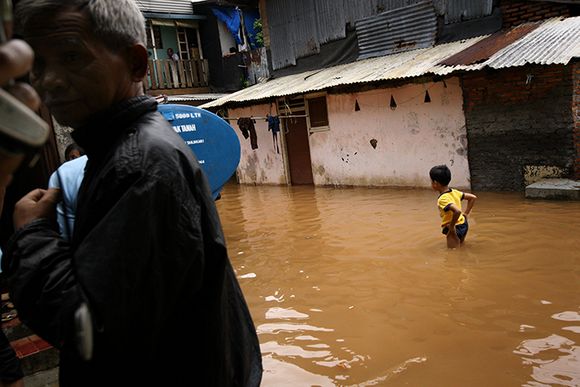
In Cipinang Muara, East Jakarta, there lies a cemetery complex known as ‘Kuburan Cina’. It is not, unfortunately, solely a resting place for the deceased. It is also home to over 80 families living in a slum inside the complex where water is a precious commodity. The people here earn their income from selling goods in a nearby flea market, making just Rp20,000 (US$2.60) a day. Buying clean water from private vendors is clearly not an option for them. Likewise, piped water is too expensive, and the city’s private water operators do not offer their services to what they consider illegitimate houses. In the past, the slum residents obtained water for cooking, drinking and sanitary purposes by collecting rainwater from the roofs of the buildings in their neighbourhood. Two years ago they collaborated to install four shallow wells. Given the quality of water they use however, water borne diseases such as diarrhoea and typhoid are not uncommon.
The story from Kuburan Cina is a stark reminder of the water service predicament in Jakarta and particularly its impact on the city’s urban poor. When a new system of Private Sector Participation, or PSP as it is sometimes known, opened up the city’s water supply sector to private companies in February 1998, it was hoped that Jakarta would finally be relieved of its clean water shortage woes. However, eight years later a UNDP report found that over 75 per cent of Jakartans – most of whom are of the poorer segment of the population – were still without improved access to clean water, relying instead on multiple sources, including rivers, lakes and private vendors.
Jakarta is in dire need of a functioning water supply system that can allow the city’s burgeoning population to stop relying on contaminated underground water
In the same year, however, Jakarta’s environmental body reported that approximately 85 per cent of the shallow underground water in the city had been contaminated by faecal coli bacterium resulting from human waste, causing those who consume it to be infected by water borne diseases. In light of these statistics, there is little doubt that Jakarta is in dire need of a functioning water supply system that can allow the city’s bourgeoning population to stop relying on the contaminated underground water. Unfortunately, to date the participation of private companies in the distribution and maintenance of Jakarta’s water supply seems to have done more harm than good.
A troubled history and poor performance
As a policy model, private sector participation was adopted as a means to revamp Jakarta’s water supply sector, which had long been marred by underinvestment and poor infrastructure. In 1995, it was estimated that the city’s state-owned water operator PAM Jaya could only serve 340,000 households – a mere 42 per cent of the city’s population. Due to rapid urbanisation during the closing decades of the twentieth century, the number of people needing access to clean water burgeoned and PAM Jaya did not have the funding to improve its infrastructure. Against this backdrop, the World Bank, which in 1991 had already loaned PAM Jaya US$92 million, began lobbying for the involvement of the private sector in Jakarta’s water supply.
The then Indonesian president, Suharto, responded by instructing the Ministry of Public Works to invite Thames Water Overseas (TWO) from England and Suez Lyonnaise des Eaux from France to become PAM Jaya’s partners in a concession contract with no open bidding process. Concession contracts were the most common model promoted by the prevailing private sector participation doctrine at the time. The contracts delegated full responsibilities for operation, investment, management and revenue collection to the private operators.
To secure political protection, the two transnational water consortia linked up with two local companies, PT Kekarpola Airindo, owned by Suharto’s eldest son, Sigit Harjojudanto, and PT Garuda Dipta Semesta, owned by Suharto’s long time crony, Anthony Salim. The 25-year contracts commenced on 1 February 1998 with Suez responsible for the western area of Jakarta and TWO for its eastern region.
In the wake of the political reforms that followed Suharto’s downfall in May 1998, the Jakarta administration and the concessionaires were compelled to renegotiate their contracts and they signed a Restated Cooperation Agreement, or RCA, in 2001. One notable change was the termination of Suharto’s influence. The concessionaires discarded their domestic counterparts to operate under the names of PT PAM Lyonnaise Jaya (Palyja) and PT Thames PAM Jaya (TPJ). In May 2008, following the sale of TWO’s shares to Acquatico International from Singapore, TPJ changed its name to PT Aetra Air Jakarta (Aetra).
The RCA also led to the establishment of an independent regulatory body, Badan Regulator Pelayanan Air Minum DKI Jakarta (Jakarta Water Supply Regulatory Body), the role of which was to mediate the interests of all related parties in the implementation of the RCA. In addition, each of the five municipalities in Jakarta established a Komite Pelanggan Air Minum (Water Users’ Committee), which would act as an advocacy group for the public. Unfortunately, the renegotiated agreement did little to improve the performance of the private operators in delivering clean water to Jakartans. On the surface however, the statistics seemed to indicate the opposite. For example, in terms of the amount of water they produced, the private operators indeed exceeded the target of 395 million cubic metres of water per annum, generating close to 426 million cubic metres.
Success, nonetheless, is by definition relative. In order to fully assess the performance of Palyja and Aetra, it is necessary to look at this achievement in conjunction with the other targets. This includes the reduction of unaccounted water – the amount of water lost due to thefts and leakages. Statistics from the regulatory body reveal that since the start of the concession agreement the private operators have consistently failed to meet the target for reducing the amount of unaccounted water. In 2007, for instance, Palyja and Aetra could only reduce the amount of unaccounted water to 50.56 per cent of all water in the system, a far cry from the original target of 38.05 percent. Moreover, in terms of coverage, the private operators were also unsuccessful in reaching the targets set for the period 2003-2007. In 2007, the target was to deliver water to 74.55 per cent of the city’s population, yet the operators fell short at 62.88 per cent. This number could potentially be lower: an insider in the regulatory body stated that only around 42 per cent of the population are actually covered by the private operators. These statistics are illustrative of the failure of the private operators to perform their duties. Nonetheless, their failures do not prevent them from succeeding in pushing for numerous water price hikes in Jakarta.
An unregulated commodity
Since the new system of private sector participation commenced in 1998, the average water tariff has increased by 240.8 per cent. With the average price per litre in 2007 at Rp7510 (US$0.75), water in Jakarta is more expensive than in other major cities in Southeast Asia, such as Singapore (US$0.55), Manila (US$0.35), Kuala Lumpur (US$0.22) and Bangkok (US$0.29). No less importantly, the water utilities in these cities deliver potable water whereas Jakarta’s private water operators have not fulfilled their contractual obligation to do so.
Water in Jakarta is more expensive than in other major cities in Southeast Asia
The water price hikes in Jakarta were made possible by the contract arrangements between the city’s administrators and the private operators. The contracts stipulate that the private operators are rewarded based on the amount of water used by the customers. The fee they charge for this is called the ‘water charge’. The water charge rate is adjusted every quarter, depending on the level of inflation and credit rates from banks. The amount of money paid by customers, however, is different: this is the ‘water tariff’ that is set by the Jakarta governor and legislative body according to the recommendations of the regulatory body.
When the contracts commenced, the water tariff was higher than the water charge, so payments by customers covered the cost for both the private operators and the government. Due to the Asian Financial Crisis, however, the Jakarta administration was compelled halt increases in the water tariff between 1999 and 2001. The financial crisis, however, also drove the private operators to keep raising the water charge to the point of exceeding the water tariff. To cover the shortfall, an Automatic Tariff Adjustment was eventually agreed between the government of Jakarta and the private operators. This agreement compelled the Jakarta government to increase the water tariff every six months so as to cover its mounting debt to private operators. The result was the much higher charges for users that we see today.
While the involvement of the private sector can help resolve the problem of underinvestment, the need for private sector companies to not only cover operational costs but also provide profits for shareholders is likely to impede the pursuit of universal access. As an unregulated commodity, water is today unaffordable for certain segments of Jakarta’s population.
Poor people need water whether they can afford it or not
Unregulated commodities are goods or services that are traded in the market according to the law of supply and demand. Most goods that are available today, such as cars and jewellery, fall into this category and there is no question that the market has functioned relatively well in providing these goods to the public. The problem is that water has a role in human life that is inherently dissimilar to the other goods that are traded according to this logic. Should the market fail to distribute many unregulated commodities to the poor, who do not have the purchasing power to buy them, the poor can still sustain a dignified human life.
A Bukit Duri resident hand-pumping groundwater in a public bathing space by the Ciliwung river. Henri Ismail

In contrast, should the market fail to distribute water to the poor, they lose the ability to live with dignity. The importance of water for human life is such that lower purchasing power does not bring lower demand for water. Poor people need water whether they can afford it or not. This is the root of the water service predicament in Jakarta: the ‘rationality’ of the market, as embodied in the actions of Palyja and Aetra, treats water with the same logic as it treats other goods. Private operators can reap profit by serving only the wealthier segment of the Jakarta population, while the poor are left without access to clean water.
As such, the Jakarta administration, in cooperation with the regulatory body and the Water Users’ Committee, must be able to hold the private operators accountable for their inability to meet their contractual obligations. This can be done by transforming the existing Water Users’ Committee from a mere advocacy body into an enforcement agency, to which the private operators must be accountable. Doing this would transform the role of the community from water users into water ‘watchdogs’ who ensure that the private water operators meet their responsibility to pursue the universal provision of clean water to all segments of the society.
Water should be conceived as a collective right, owned and managed cooperatively by the community, the government and the private sector with the goal of achieving universal access and social equity. In a democratising society like Indonesia, democracy needs to be understood not simply as a political institution and mechanism, separated from daily life, but as a mode of operating that affects every sphere of life. In the case of Jakarta’s water supply, this can only be done by holding the private operators accountable not only to their shareholders, but also to Jakarta residents. ii
H. Angga Indraswara (h.anggaindraswara@gmail.com) recently completed his honours degree in international politics at Melbourne University.
See also Henri Ismail's Down by the riverside: Kali Ciliwung
Copyright 1996-2009 © Inside Indonesia
Read more... Sphere: Related Content
Subscribe to:
Comments (Atom)


 Posts
Posts