Showing posts with label globalisation. Show all posts

18 February 2012

‘Global sustainability’ wilts in South Africa’s political hot air

The latest acts in South Africa’s’s intensifying political drama include a sizzling summer-long battle between young and old within the African National Congress (ANC), the February 10 State of the Nation speech by President Jacob Zuma and the release of the ANC’s “research” on alternatives to mining nationalisation, a demand by the ANC Youth League which is now one of the main issues dividing the ruling party

By Patrick Bond | Links International Journal of Socialist Renewal | February 15, 2012

Read more... Sphere: Related Content

10 February 2012

The new geography of trade

Globalisation's decline may stimulate local recoveries

Fred Curtis and David Ehrenfeld | Al Jazeera | 09 Feb 2012
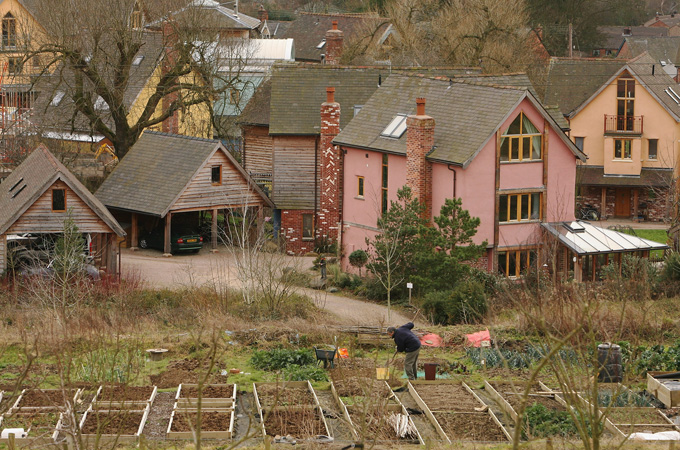
Relocalisation and Transition Towns movements are springing up in developed countries in response to higher oil prices and transport costs - and many 'eco-towns' have been built in Europe [GALLO/GETTY]

Read more... Sphere: Related Content

21 January 2012

From Davos to Dystopia

Not long ago the World Economic Forum (WEF) found itself in the sights of the global economic justice movement. At the turn of the last century, before anyone was “occupying” public spaces in protest at the growing inequalities between the top strata of society and the rest, a broad global coalition of environment, development, and peace activists were targeting the public meetings of major institutions such as the WTO, the IMF, and the G8

By Ben Zala | Foreign Policy in Focus | January 19, 2012
World Economic Forum in DavosWorld Economic Forum in Davos

Read more... Sphere: Related Content

08 December 2011

‘Net Energy’ ignorance reigns on Capitol Hill

“I don’t think there will ever again be sustained economic growth.” —U.S. Rep. Roscoe Bartlett (R–MD)

“We need to recognize that the U.S. economy is no longer capable of growing at three percent per year.” —Jeff Rubin, former chief economist, Canadian Imperial Bank of Commerce (CIBC)

by Megan Quinn Bachman | Dec 7 2011 by EcoWatch Journal in Energy Bulletin | Dec 7, 2001

Read more... Sphere: Related Content

05 December 2011

Occupy Economics

On November 13th 2011, economists from the University of Massachusetts Amherst drafted an open statement to the Occupy Wall Street movement pledging their support. Since then, more than 250 economists from around the world have added their names

Adbusters | 01 Dec 2011

Occupy Economics from Softbox on Vimeo.

Read more... Sphere: Related Content

06 November 2011

Fatty Foods Addictive as Cocaine in Growing Body of Science

Cupcakes may be addictive, just like cocaine

By Robert Langreth and Duane D. Stanford | Bloomberg | Nov 2, 2011
Food addiction
If fatty foods and snacks and drinks sweetened with sugar and high fructose corn syrup are proven to be addictive, Big Food may face the most drawn-out consumer safety battle since the anti-smoking movement took on the tobacco industry a generation ago. Photographer: Denis Stenderchuck/Getty Images
Food addiction
Cupcakes sit on display at a bakery in New York. Photographer: Rich Press/Bloomberg

Read more... Sphere: Related Content

The Reign of the One Percenters

Income inequality and the death of culture in New York City

By Christopher Ketcham | November/December 2011 issue | Orion
Photograph: William Steacy

Read more... Sphere: Related Content

The Era of Small and Many

Reversing the trend of generations

By Bill McKibben | November/December 2011 issue | Orion
Painting: Suzanne Stryk

Read more... Sphere: Related Content

26 October 2011

Richard Wilkinson: How economic inequality harms societies

We feel instinctively that societies with huge income gaps are somehow going wrong. Richard Wilkinson charts the hard data on economic inequality, and shows what gets worse when rich and poor are too far apart: real effects on health, lifespan, even such basic values as trust

TEDGlobal 2011 | Filmed July 2011 | Posted Oct 2011
© TED CONFERENCES, LLC

Read more... Sphere: Related Content

24 October 2011

NAFTA Is Starving Mexico

Since the North American Free Trade Agreement (NAFTA) became the law of the land, millions of Mexicans have joined the ranks of the hungry. Malnutrition is highest among the country’s farm families, who used to produce enough food to feed the nation

By Laura Carlsen | FPIF | October 20, 2011

Read more... Sphere: Related Content

17 October 2011

10 ways to support the Occupy movement

The #OccupyWallStreet movement continues to spread with more than 1,500 sites. More and more people are speaking up for a society that works for the 99 percent, not just the 1 percent

B Sarah van Gelder | Oct 16 2011 by YES! Magazine in Energy Bulleting | Oct 16 2011

In Westlake Park, Seattle, shortly before police removed the tent and arrested occupiers. Sign reads: 250,000 Homeless Vets Is Unacceptable.: Photo by Sarah van Gelder.

In Westlake Park, Seattle, shortly before police removed the tent and arrested occupiers. Sign reads: 250,000 Homeless Vets Is Unacceptable.: Photo by Sarah van Gelder.

Read more... Sphere: Related Content

07 March 2010

Trade and militarism: The political limits to globalisation

Is globalisation inevitable and irreversible? This column argues that globalisation is a policy choice. It examines the relationship between military expansion and international trade flows, finding that increased nationalist and militarist sentiments are negatively associated with trade. A 10% increase in military spending between 1985 and 2005 is associated with a reduction in the trade share of GDP of around 2%

Daron Acemoglu and Pierre Yared | vox | 7 March 2010

We live in an unprecedented age of globalisation, where technology, ideas, factors of production, and goods are increasingly mobile across national boundaries. But globalisation is neither inevitable nor irreversible – it is a policy choice. The last era of globalisation was brought to an end by the combined disorder of international conflicts and the Great Depression (James 2001, Findlay and O’Rourke 2007, 2008).

In recent research (Acemoglu and Yared 2010), we examine the political limits to globalisation in the modern era. We explore the claim that changes in domestic political factors might restrict international economic integration by examining the relationship between militarism and international trade flows. The evidence suggests that increased nationalist and militarist sentiments, measured by military spending and size, are negatively associated with trade. A country is less likely to open up to neighbours if the country is also becoming more militarised, and trade between two countries grows less rapidly when both countries become more militarised.

Militarism and trade, 1985–2005

Despite the increasing reach of globalisation, anecdotal evidence suggests that nationalism and militarism remain resilient. Figure 1 shows the evolution of world trade and total military spending since the closing of the Cold War. After declining for a number of years, military spending began climbing from the mid-1990s onwards, suggesting that nationalist sentiments and militarism may indeed be strengthening.

Figure 1. World trade and militarisation, 1988–2007

Notes: Trade share of GDP is average across countries for each year. Military spending is the sum across countries, in 1996 dollars. See Acemoglu and Yared (2010) for details and sources.

Does this trend in military spending suggest a potential threat to international trade? The evidence suggests some reasons for concern. First, between 1985 and 2005, countries that expanded their militaries faster experienced a relative decline in their volume of trade. Second, over the same period, trade between two countries grew less rapidly the more those countries invested in their military.

The first piece of evidence comes from the relationship between the change in a country’s trade share of GDP and its change in militarisation – proxied by log military spending. Regressions, also controlling for log GDP per capita and log population, indicate that a 10% increase in military spending over the two decades is associated with a reduction in the trade share of GDP of approximately 1.8%. Figure 2 demonstrates this strong negative relationship in a residual plot of the change in trade share against the change in military spending.

Figure 2. Change in trade and militarisation, 1988–2005

Source: Plot corresponds to the regression in column 1 of panel A of Table 1 in Acemoglu and Yared (2010).

These results are robust to measuring military size by personnel instead of spending, excluding Asian countries, and allowing for a differential trend between OECD and non-OECD countries. Moreover, the estimated effect is stronger once we exclude countries that were engaged in civil or international wars, which suggests that our results are capturing the relationship between trade and militarism, not the relationship between trade and disruptions due to war. Overall, the cross-country evidence shows a relatively robust association between changes in militarisation and changes in international trade between 1985 and 2005.

The relationship between militarism and bilateral trade is also consistent with these patterns. A regression of the change in a country’s trade with its partner as a share of its own GDP on the change in the interaction of the two countries’ military expansion shows a negative relationship. This approach of exploiting bilateral trade flows is attractive because it allows the inclusion of a rich set of controls for various differential trends, in particular by including a full set of country and partner fixed effects and other interactions.

Conclusion

International trade and international relations are deeply intertwined. Previous studies have examined the relationship between trade flows and armed conflicts, demonstrating how war disrupts trade and increased integration lessens the probability of conflict arising (Martin, Mayer, and Thoenig 2007, 2008). This column presents evidence that increased nationalism and militarism may constitute political limits to globalisation and trade even in the absence of outright conflict.

Of course, it is unclear to what extent these empirical patterns reflect causality, since trade may also affect militarisation, and the two may be related to an underlying third factor. In addition, the causes of the apparent rise in nationalism and militarisation during the last two decades are unclear and require further research. Nevertheless, these trends suggest that there are always dangers for some dimensions of globalisation to run into political limits.

References

Acemoglu, Daron and Pierre Yared (2010), “Political Limits to Globalization”, NBER Working Paper 15694, January.

Findlay, Ronald and Kevin O’Rourke (2007), Power and Plenty: Trade, War, and the World Economy in the Second Millennium, Princeton: Princeton University Press.

Findlay, Ronald and Kevin O’Rourke (2008), “Lessons of 1000 years of trade history”, VoxEU.org, 10 March.

James, Harold (2001), The End of Globalization: Lessons from the Great Depression, Cambridge: Harvard University Press.

Martin, Philippe Thierry Mayer and Mathias Thoenig (2007), “Trade and/or War?” VoxEU.org, 4 July.

Martin, Philippe Thierry Mayer and Mathias Thoenig (2008), “Make Trade Not War?” Review of Economic Studies, 75(3): 865-9

Daron Acemoglu - Professor of Applied Economics, MIT
Pierre Yared - PhD student, Department of Economics, MIT
Vox is research-based policy analysis and commentary from leading economists
Copyright

Read more... Sphere: Related Content

13 February 2010

Big cities and global farming now driving deforestation, study finds

Environmentalresearchweb, part of the Guardian Environment Network | guardian.co.uk | Thursday 11 February 2010

The drivers of tropical deforestation have shifted in the early 21st century to hinge on growth of cities and the globalised agricultural trade, a new large-scale study concludes. The observations starkly reverse assumptions by some scientists that fast-growing urbanization and the efficiencies of global trade might eventually slow or reverse tropical deforestation. The study, which covers most of the world's tropical land area, appears in this week's early edition of the journal Nature Geoscience.

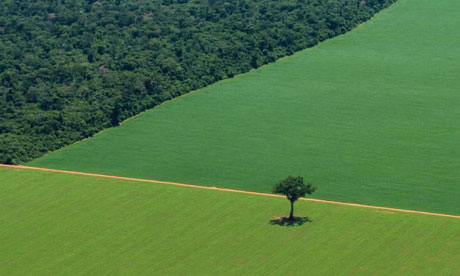
Forests in Brazil have been cut down to make way for crops such as soyaForests in Brazil have been cut down to make way for crops such as soya. Photographer: Rodrigo Baleia/Greenpeace

Deforestation has been a rising concern in recent decades, especially with the recognition that it may exacerbate climate change. Studies in the late 20th century generally matched it with growing rural populations, as new roads were built into forests and land was cleared for subsistence agriculture. Since then, rural dwellers have been flooding into cities, seeking better living standards; 2009 was recorded as the first year in history when half of human lived in urban areas. Large industrial farms have, in turn, taken over rural areas and expanded further into remaining forests, in order to supply both domestic urban populations and growing international agricultural markets, the study suggests.

"The main drivers of tropical deforestation have shifted from small-scale landholders to domestic and international markets that are distant from the forests," said lead author Ruth DeFries, a professor at the Earth Institute's Center for Environmental Research and Conservation. "One line of thinking was that concentrating people in cities would leave a lot more room for nature. But those people in cities and the rest of the world need to be fed. That creates a demand for industrial-scale clearing."

DeFries and her colleagues analyzed remote-sensing images of forest cover across 41 nations in Latin America, Africa and Asia from 2000–2005, and combined these with population and economic trends. They showed that the highest forest losses were correlated with two factors: urban growth within countries; and, mainly in Asia, growth of agricultural exports to other countries. Rural population growth was not related.

In recent years, tropical countries have been supplying growing amounts of palm oil, soybeans, sugar, meat and other processed products to distant markets abroad. Not all the products are used for food; palm oil and sugar in particular are also being converted into biofuels. Furthermore, said DeFries, as small farmers within tropical nations move away to become city dwellers, they may actually use more resources from the countryside, not less. This is because those living in cities have higher incomes-the reason most moved there to begin with – and thus tend to consume more processed foods and animal products. Pastures needed to produce meat, and large plantations and other facilities that turn out other products, in turn, require land. "Collectively, these results indicate a shift from state-run road building and colonization in the 1970s and 1980s to enterprise-driven deforestation," says the study.

Hot spots of industrial-scale clearing include Brazil, Indonesia and Cambodia – countries that, unlike many others, still have considerable forests left to clear. The trend has not reached some forested parts of Latin America, such as Surinam or Guyana, which also have large tracts of remaining forest. Almost 60% of remaining forests occur in areas where net agricultural trade, percent of products exported, and urban growth are all relatively low. But as demand for products grows, these areas are likely to see increased pressure, the study says. According to projections by the United Nations, nearly all population growth in the next 40 years will take place in cities, and some two-thirds of people will live there by 2050.

DeFries said that some initiatives aimed at halting deforestation need to be quickly shifted. For instance, some policies that focus on getting small landowners to conserve forests – a popular mechanism among governments and non-profits at the moment – "may not be all that productive without a focus on large-scale clearing as well," she said. "Governments will have to look at policies that intensify yields on existing high-yield fields-not clear more land," she said.

The other authors of the study are Columbia University ecologist Maria Uriarte; ecologist Thomas Rudel of Rutgers University; and Matthew Hansen of South Dakota State University.

guardian.co.uk © Guardian News and Media Limited 2010

Read more... Sphere: Related Content

04 February 2010

Ahmed al-Jaber: Oil-rich Abu Dhabi pins its hopes on dreams of a green future

The Business Interview: A carbon-neutral city is just the start, the chief executive of the Masdar investment fund tells Sarah Arnott

Sarah Arnott | The Independent | 4 February 2010

We are part of a transformation," says Sultan Ahmed al-Jaber with the uninhibited zeal of a man on a mission. "We are making history." The chief executive of Masdar, the Abu Dhabi government's green investment vehicle, may not be exaggerating. Not only does his organisation command a budget most company bosses would swap their left leg for, but the "vision" behind it is nothing short of turning the unimaginable petro-wealth of one of the richest Gulf states into a diversified, sustainable economy. And the success of the initiative is "very, very high" on the agenda of the emirate's all-powerful, hereditary leadership.

"Masdar has helped to raise the profile of Abu Dhabi and is also contributing on a global scale," Dr Al Jaber says. "Abu Dhabi has always been known as a global energy player, but with Masdar it set out the responsibility of oil nations and what is required of them to help create a balance between hydrocarbons and renewable energy."

In a country where the majority of powerful positions are occupied by members of the ruling al-Nahyan family, Dr Al Jaber has risen purely on merit. He is highly respected among his staff and has a reputation for knowing his subordinates' jobs as well as they do. But he scoffs at the notion that his exacting approach is a mirror of pressure from above.

"The guidance from the leadership is very clear and helps me do my job," he says. "We are blessed with leadership that understands the challenges of making Masdar a reality, and has the will to do it. There is a real desire for this to happen, because it is the future, not just for Abu Dhabi but for the whole world."

The list of the organisation's activities is long. There is the Masdar Institute of Science and Technology (MI), a postgraduate research body with links to Massachusetts Institute of Technology in the US. Like everything else in Abu Dhabi, MI is not short on ambition. The newly created institute has only 88 students so far, with another 154 starting in the next academic year. But the plan is to turn it into the best place in the world for research into advanced renewable energy and sustainability, with 600 students plus the faculty by 2015.

But MI is just the beginning. There are also Masdar's industrial investments, the largest of which is Masdar PV, which is the anchor client in Abu Dhabi's nascent high-tech manufacturing cluster and aims to become one of the world's top thin-film photovoltaic technology companies. Then there is Masdar's carbon management unit, working on how to make money from carbon reduction through the United Nations' Clean Development Mechanism (CDM), and on the development of carbon capture and storage technologies.

Then there is the utilities and asset management branch, which includes a $265m (£166m) clean-tech private equity fund and power project developments around the world, not least a 20 per cent stake in the 271-turbine London Array wind farm planned for the Thames Estuary. "Masdar covers the whole value chain of the green sector," Dr Al Jaber says. "That means education, seed capital, research and development, manufacturing, building, reduction of carbon emissions, CDM and investment in mature companies."

Even that is not everything. The real show-stopper is Masdar City. So far, the scheme is in its infancy – a vast expanse of virgin desert dotted with construction sites on the outskirts of Abu Dhabi. But the plan is for a whole new city: a tax-free, super-green home for 40,000 residents and 1,500 clean-tech companies that is entirely carbon neutral, powered by renewable energy and equipped with a futuristic transportation system.

The development, designed by British architects Foster and Partners, has turned urban planning on its head, starting from scratch to create a low-energy environment attuned to the harsh Gulf climate. Without the need to accommodate cars that belch carbon, the streets are narrow and shaded by buildings which are themselves angled to funnel prevailing winds through the city. No windows are positioned flat on to direct sunlight but 80 per cent of all buildings are covered with solar panels. The beautiful curve of the half-built library is no aesthetic gimmick but will harvest the morning and evening sun. It is an almost unbelievably ambitious plan, but it is really happening. The first phase is already under construction and the Masdar Institute headquarters and campus, complete with labs, accommodation, shops and cafés, is scheduled to open in September. The surrounding area, which has General Electric and Boeing as committed anchor tenants, is scheduled for completion by 2013.

Yet even Abu Dhabi cannot entirely escape the repercussions of the global economic downturn. Dr Al Jaber denies outright any rumours of finance issues and delays, saying: "We always said Masdar City would be delivered in phases and I am confident there is no delay whatsoever with phase one."

Masdar itself may no have finance troubles, but it is less easy to dismiss the impact of recession on the companies its new city must attract if it is to fulfil its promise as a cluster for clean-tech business. "Masdar City is difficult, challenging and ambitious," Dr Al Jaber says. "The progress that can be made is not only dependent on financial ability – that is only the facilitator."

There are all kinds of risks. One is the technology itself, much of which exists only in small demonstraion projects. But the biggest is undoubtedly the state of the market and the nominal completion date of 2016 is being quietly dropped. That said, Dr Al Jaber dismisses concerns that the development will end up as an expensive white elephant. "This is not a 'build and they will come' project," he says. "We are not going to build without a clear understanding between us as the developer and the international companies that are going to be interested in coming and getting involved."

Although that interest still exists, there may be other short term priorities. "A couple of years ago the excitement was very, very high," Dr Al Jaber says. "It is still there today, but these are companies exposed to the economic crisis. That doesn't mean they are changing their position, but they are slowing down their activities."

Whatever the mood in the global economy, Masdar itself will not be so easily deterred. "Renewables are a way to diversify the economy, to maintain the position in the global energy market, and to help encourage human capital development," Dr Al Jaber says, implying that there is simply too much to lose.

Masdar City: Tomorrow's world today

* Few of its buildings may be finished, but Masdar City already has a field of solar panels covering 210,000 square metres. They produce 17,500 megawatt hours of power per year, enough to power up to 8,000 households. At the moment the bulk of the power is being fed back into the Abu Dhabi grid, but ultimately the solar farm will be the main power source for the green city.

* Elsewhere on the largely undeveloped site, research into cutting-edge renewable energy technology is already under way. The "beamdown" project looks like something straight out of a James Bond villain's lair, with a massive array of mirrors focusing and re-focusing sunlight to create a patch of light with the intensity of 100 suns and a temperature of 500C.

* Perhaps wackiest of all is a "personal rapid transit" system. The streets of Masdar City are at first-floor level, beneath which six-person pods will race around a network of sealed tunnels using magnetic guidance rather than fixed tracks. The scheme is at an early stage, but the first two stations – at Masdar Institute and the nearby Project One gateway into the city – are in the process of being built.

©independent.co.uk

Read more... Sphere: Related Content

29 January 2010

Social forum activists talk of 'green' conspiracy

By ALAN CLENDENNING | AP in Yahoo! News | Jan 27, 2010

PORTO ALEGRE, Brazil – Leftist activists protesting capitalism at theWorld Social Forum claimed Wednesday that multinational corporations in cahoots with governments are trying to take control of a new multibillion-dollar market for reducing emissions that cause global warming.

They made the accusation on the third day of the gathering of leftists that serves as an annual counterweight to the World Economic Forumin Davos, Switzerland.

"The companies that caused the problems are saying, 'Trust us, we'll get you out of this problem,'" said Pat Mooney, a Canadian expert on biotechnology and biodiversity. "They're saying, 'Don't worry, because we have a new technology that you will pay for to control the world's thermostat.'"

Activists who converged on the city of Porto Alegre, near the border with Uruguay, said the World Economic Forum — which got under way Wednesday — should focus on bettering global conditions for the poor and the environment instead of debating whether global financial reforms must be enacted or abandoned because of concerns about over-regulation.

While the Davos participants sip champagne in luxury hotels, eat catered meals and try to find time to go skiing, "we're here camping in the rain and cooking outside with open fires," said Melissa Zumino of Uruguay, who works for a nonprofit group promoting human coexistence with nature.

The social forum, which is celebrating its 10th anniversary this year, began Monday and will last through Friday. The forum's highlight came Tuesday night, when Brazil's first working-class president received a hero's welcome and vowed to reproach the planet's business titans for causing the global meltdown when he meets with them in Davos.

President Luiz Inacio Lula da Silva — a former radical union leader known almost everywhere as Lula — was greeted like a rock star by activists in a sports stadium chanting "Lula, Lula, the warrior of the Brazilian people!"

He received more cheers after promising to tell world leaders and bankers at the World Economic Forum that the free-market policies they have espoused for decades are to blame for the worldwide financial crunch.

Silva was scheduled to leave Wednesday night for Davos, where he will become the first head of state to receive the economic forum's new Global Statesmanship Award.

Copyright © 2010 The Associated Press. All rights reserved
Copyright © 2010 Yahoo! Inc. All rights reserved

Read more... Sphere: Related Content

22 January 2010

Copenhagen De-briefing: An Analysis of COP15 for Long-term Cooperation

Goodbye UN, hello G20

Climatico has just released its latest report entitled, “Copenhagen De-briefing: An Analysis of COP15 for Long-term Cooperation”
by Copenhagen Team on January 19, 2010

This report analyses key issues under discussion in Copenhagen including: finance, technology transfer, REDD+, CDM and JI, as well as the ongoing conflicts between Annex I and Non Annex I countries. The Copenhagen Accord is also discussed along with its potential effect on future negotiations.

Download the report

© 2010 Climaticoanalysis.org | All Rights Reserved

Read more... Sphere: Related Content

17 January 2010

Haiti: A Historical Perspective

It's not culture or curse, but a difficult history of occupation and environmental degradation that explain the country's woes

Haiti world's deadliest earthquakes sinc 1900Where does the Haiti Quake Rank? A look at the deadliest earthquakes since 1900
By Karen Fragala Smith | Newsweek Web Exclusive | Jan 16, 2010

Long before the biggest natural disaster in Haiti's history shook Port-au-Prince on the afternoon of Jan. 12, the Caribbean nation of 10 million struggled to feed and shelter its expanding population. More than a million families relied daily on international food aid, and the capital sprawled with shantytowns build by unemployed farmhands who had migrated to the city in search of work. Haiti is the poorest nation in the Western Hemisphere, but its culture and history are undeniably rich. Under French rule in the 1700s, Haiti was the wealthiest colony in the New World and represented more than a quarter of France's economy. After a Haitian slave revolt defeated the French army in 1801, the newly independent nation became the first country in the New World to abolish slavery. But Haiti's fortunes ebbed when the 20th century brought three decades of American occupation, multiple corrupt regimes, natural disasters, environmental devastation, and the scourge of HIV. Newsweek discussed Haiti's storied past and uncertain future with Michele Wucker, the executive director of the World Policy Institute and author of Why the Cocks Fight: Dominicans, Haitians, and the Struggle for Hispaniola.

Haiti and the Dominican Republic share the same island and the same basic climate and geography. Why is Haiti considerably poorer?

Haiti won its independence after a long revolution that destroyed a lot of the country. They were then required to pay a large indemnity to France or else many countries—including the United States—refused to acknowledge Haiti for fear that it would encourage an American slave revolt. More recently, both Haiti and the Dominican Republic were occupied by the United States, but Haiti was occupied for much longer. By the time the U.S. pulled out in 1934, Haiti's own institutions had atrophied.

A man grieves in haiti in front of the morgue where bodies are piledFaces of Tragedy Pictures of the victims of Haiti's earthquake

How does the legacy of the Duvaliers (Francois "Papa Doc" and his son, Jean-Claude "Baby Doc," who ruled Haiti from 1957 to 1986) contribute to Haiti's current conditions?

The Duvaliers left Haiti economically decimated. A large number of educated professionals left the country during the Duvalier regimes, and the period that followed was so unstable, it was hard to lay down roots and build infrastructure. International investment was limited because it was an unreliable business environment.

Haiti has a history of limiting foreign ownership of its land and industries. Will it need to open up its borders to multinationals and can it provide the security foreign investment requires?

Haitians must have a feeling that they are in control of their own destiny. After the coup against President Aristide in 2004, there was a lot of controversy over what Haiti's economy should look like. A lot of Haitians felt that reform was being dictated by Washington. Haiti wasn't given enough of a chance to help itself, which made the political instability worse.

Food aid from the United States has helped feed the poorest Haitians but it also seems to have put Haitian farmers out of business. How can Haiti build an effective farming system?

As for Haitian farmers competing with U.S. imports, it raises the larger question of how the U.S. subsidizes its farm industry and dumps surplus crops in the form of food aid. This practice has done a lot of damage in Haiti and other developing countries. For Haiti to sustain its own people, it needs to rebuild the roads and infrastructure needed to transport crops internally.

How have deforestation and soil erosion impacted Haiti?

Deforestation has drastically worsened the impact of hurricanes and tropical storms. On the southern border between the countries, you can see the green forest stops and it's barren on the Haitian side.

Given that Haiti is vulnerable to hurricanes and earthquakes, it would be prudent to establish building codes and other disaster response initiatives. How can this be implemented?

A lot of Haitians living in the diaspora are interested in helping back home, and that will play an important role in rebuilding Haiti. At the same time, there are administrators from big international aid organizations living in Haiti who are paid well and live in lovely homes. These resources could be spent more effectively by employing Haitians rather than top-loading with international consultants. 

How have racism and cultural identity had an impact on Haiti's interaction with other countries?     

Haitians are very proud of their heritage as they should be. But when you've got a country that's constantly derided and accused of making a pact with the devil, it's hard to get the aid and investment the country needs. Haiti has done amazing things. To be the country that started the end of slavery is so powerful. Haiti has fantastic music, a language that is very witty and creative, and people with an amazing spirit and work ethic. Those things are too easily forgotten by outsiders, but anyone who has spent any time in Haiti can't help but fall in love with it.  

© 2010 Newsweek, Inc

Read more... Sphere: Related Content

Q&A: Ecological Crisis: Next Challenge for World Social Forum

Interviews NICOLA BULLARD, member of the World Social Forum’s international council

Marwaan Macan-Markar | Inter-Press Service | Jan 13, 2010
Nicola Bullard, WSF international council member / Credit:Marwaan Macan-Markar/IPS                                              Nicola Bullard, WSF international council member  Credit:Marwaan Macan-Markar/IPS
Ten years after its founding, the World Social Forum (WSF) has come to represent a rallying point for activists and grassroots groups committed to shaping an alternative world view.

"It is very important that we have this space for all of us to come together and shape a vision that reflects our concerns," says Nicola Bullard, a senior associate of Focus on the Global South, a Bangkok-based think tank championing issues that matter to people in the developing world. "We have been able to build our own discourse, our own thinking, our own legitimacy."

"It is certainly an alternative to the elite, who build their own spaces all the time," adds the Australian national, who has been a member of the WSF’s international council since its inception. "The WSF is still relevant today."

Yet the social movement – as opposed to a political party – has evolved, taking on newer issues that have emerged, including concerns over climate change, which dominates economic justice debates.

As it celebrates its 10th anniversary this year, the WSF will hold a series of events that will kick off on Jan. 22 in Greater Porto Alegre in southern Brazil. A programme of activities dubbed the "Greater Porto Alegre 10 years Social Forum," to be held on January 25-29 in Brazil, will be one of the highlights of the celebration.

"Another world is necessary" to deal with the current ecological crisis, observes Bullard, a Melbourne University graduate who has worked on global trade, human rights and women’s issues in Australia, Thailand and Cambodia.

IPS met Bullard at her book-lined office in the Thai capital for an interview ahead of the next gathering of the WSF in Brazil.

Q: The World Social Forum (WSF) to be held later this month in Brazil will be a milestone. Does the movement have much to celebrate?

A: Absolutely. When the first WSF was held in 2001, no one imagined by 2010 that there would be over 40 different social forums planned for the 10th year. It is certainly a moment to celebrate and also to reflect on what we have achieved and what we haven’t been able to achieve and to look ahead at what we need to do next.

It is particularly timely given what happened in Copenhagen in December during the climate change talks. There is a resurgence, a critical momentum for economic justice that emerged during the talks. There is a new energy, a new challenge that the WSF can build on.

Q: On the subjects of achievements, what do you hold out as success stories of the WSF in the past decade?

A: The idea that the WSF is really a space that is ours. It is not a space for protest or a space created in response to an official event, such as at the WTO (World Trade Organisation) or IMF (International Monetary Fund) meetings, where we have to gather on the margins. But the WSF is a physical and political space created by us and for us and the agenda is ours – a bottom-up process.

Secondly, the WSF has, through a lot of critical thinking and a pretty open process, been able to grow over the years. There are different kinds of events, different kinds of people attending, a diversity of issues discussed and the very deliberate attempt to have a pretty horizontal participatory and inclusive process.

Q: But has there been an attempt to measure such success, to say these are concrete achievements linked to the WSF that it can be proud of?

A: This is the endless debate we have had, because some people would argue that the impact of the WSF should be measurable by the actual political changes on the ground, and that the WSF needs to be more strategic and have clear objectives.

On the other hand, other people would argue that the WSF is an open space, and that is its strength and particular beauty, where trade unions and people from political organisations or indigenous people can come together and share ideas and build common perspectives and language.

But there was a lot of momentum in the way the WSF positioned itself against the (World Economic Forum) meetings in Davos.

During the meetings in Davos, the WSF was seen as an alternative event that takes place in the South and where the agenda is very different from what is discussed in Davos. The fact that more political leaders want to be part of the WSF shows that it is an important place for them to be seen and be associated with.

Q: Talking of Davos, where the captains of international trade and commerce meet in the Swiss resort to plot the shape of the world’s economy, let’s move toward the global financial crisis. The WSF certainly had little part in what happened, but is there anything the WSF stood to gain from this crisis?

A: I think the fact that the critics of the global financial system were so readily at hand because there were academics and writers and activists who had been talking about these for years needs to be recognised. Suddenly these were the people journalists and the media were going to. In that respect, the analysis and the critics coming out of the WSF suddenly found a resonance in the public arena.

Q: Another issue the WSF sought to make its mark on was opposition to the war in Iraq launched by former U.S. President George W. Bush. You certainly failed to stop that U.S. invasion.

A: The WSF was important as a mechanism for making the February 15 (2003) global day of action against the war in Iraq such a strong protest. The WSF provided a kind of legitimacy for the global actions against the war. It was important in delegitimising the war.

Q: The current global concern, as you mentioned earlier, is climate change. It is supposed to be on the WSF’s agenda in Brazil this month. How will it be addressed?

A: The WSF has always said that ‘Another world is possible’. What the climate change crisis tells us is that ‘Another world is necessary’. It is very clear that the ecological crisis is a systemic problem. In so far as the WSF is talking about alternatives, I think up until now many groups at the WSF have concentrated very much on economics. We need to enlarge that to accommodate the ecological frame and build strong networks with indigenous movements and other sectors that we have not worked with before.

I also think this will be an interesting challenge to the traditional Left, which had a fairly materialist view, or somehow believed in the idea that development means progress. But the ecological crisis is a real challenge to that view. What does development mean if the price you pay is the complete destruction of the eco-system?

Q: How truly global is the WSF 10 years after its conception? Does it have a wide following in Asia?

A: Even up until now the WSF continues to be a very European- and Latin American-dominated process. We have had several really good social forums in Asia in places like (South) Korea, India, Pakistan and even Thailand. But I don’t think the WSF has really dug deep roots in Asia. That is my impression.

Q: Why?

A: There is a unity of common experience in Latin America and they have two languages that unite vast sections of the continent. It is difficult in Asia because of the many languages, because of the size and the diversity.

Copyright © 2010 IPS-Inter Press Service. All rights reserved

Read more... Sphere: Related Content

Fidel Castro: The lesson of Haiti

By Fidel Castro Ruz | LINKS | January 15, 2010

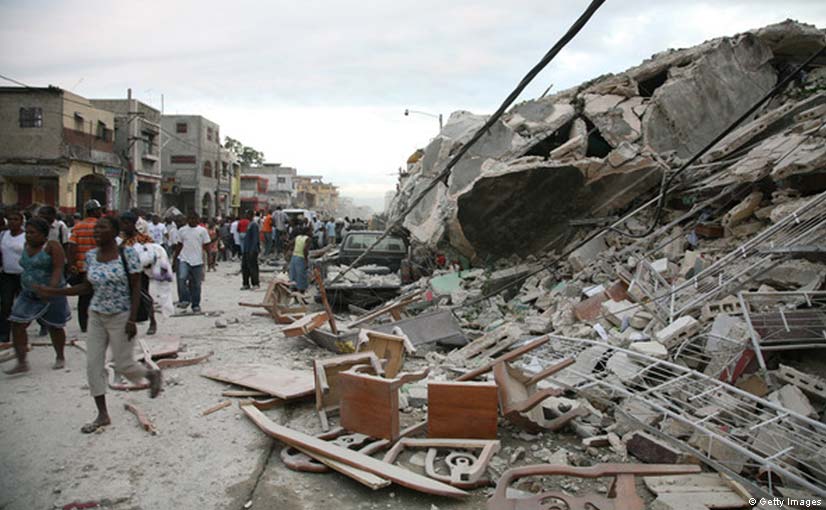
Two days ago, at almost six o’clock in the evening Cuban time and when, given its geographical location, night had already fallen in Haiti, television stations began to broadcast the news that a violent earthquake -– measuring 7.3 on the Richter scale -– had severely struck Port-au-Prince. The seismic phenomenon originated from a tectonic fault located in the sea just 15 kilometres from the Haitian capital, a city where 80% of the population inhabit fragile homes built of adobe and mud.

The news continued almost without interruption for hours. There was no footage, but it was confirmed that many public buildings, hospitals, schools and more solidly constructed facilities were reported collapsed. I have read that an earthquake of the magnitude of 7.3 is equivalent to the energy released by an explosion of 400,000 tons of TNT.

Tragic descriptions were transmitted. Wounded people in the streets were crying out for medical help, surrounded by ruins under which their relatives were buried. No one, however, was able to broadcast a single image for several hours.

The news took all of us by surprise. Many of us have frequently heard about hurricanes and severe flooding in Haiti, but were not aware of the fact that this neighbouring country ran the risk of a massive earthquake. It has come to light on this occasion that 200 years ago, a massive earthquake similarly affected this city, which would have been the home of just a few thousand inhabitants at that time.

At midnight, there was still no mention of an approximate figure in terms of victims. High-ranking United Nations officials and several heads of government discussed the moving events and announced that they would send emergency brigades to help. Given that MINUSTAH (United Stabilization Mission in Haiti) troops are deployed there -– UN forces from various countries –- some defence ministers were talking about possible casualties among their personnel.

It was only yesterday morning when the sad news began to arrive of enormous human losses among the population, and even institutions such as the United Nations mentioned that some of their buildings in that country had collapsed, a word that does not say anything in itself but could mean a lot.

For hours, increasingly more traumatic news continued to arrive about the situation in this sister nation. Figures related to the number of fatal victims were discussed, which fluctuated, according to various versions, between 30,000 and 100,000. The images are devastating; it is evident that the catastrophic event has been given widespread coverage around the world, and many governments, sincerely moved by the disaster, are making efforts to cooperate according to their resources.

Why is Haiti so poor?

The tragedy has genuinely moved a significant number of people, particularly those in which that quality is innate. But perhaps very few of them have stopped to consider why Haiti is such a poor country. Why does almost 50% of its population depend on family remittances sent from abroad? Why not analyse the realities that led Haiti to its current situation and this enormous suffering as well?

The most curious aspect of this story is that no one has said a single word to recall the fact that Haiti was the first country in which 400,000 Africans, enslaved and trafficked by Europeans, rose up against 30,000 white slave masters on the sugar and coffee plantations, thus undertaking the first great social revolution in our hemisphere. Pages of insurmountable glory were written there. Napoleon's most eminent general was defeated there. Haiti is the net product of colonialism and imperialism, of more than one century of the employment of its human resources in the toughest forms of work, of military interventions and the extraction of its natural resources.

This historic oversight would not be so serious if it were not for the real fact that Haiti constitutes the disgrace of our era, in a world where the exploitation and pillage of the vast majority of the planet's inhabitants prevails.

Billions of people in Latin American, Africa and Asia are suffering similar shortages although perhaps not to such a degree as in the case of Haiti.

Situations like that of that country should not exist in any part of the planet, where tens of thousands of cities and towns abound in similar or worse conditions, by virtue of an unjust international economic and political order imposed on the world. The world population is not only threatened by natural disasters such as that of Haiti, which is a just a pallid shadow of what could take place in the planet as a result of climate change, which really was the object of ridicule, derision and deception in Copenhagen.

Real and lasting solutions needed

It is only just to say to all the countries and institutions that have lost citizens or personnel because of the natural disaster in Haiti: we do not doubt that in this case, the greatest effort will be made to save human lives and alleviate the pain of this long-suffering people. We cannot blame them for the natural phenomenon that has taken place there, even if we do not agree with the policy adopted with Haiti.

But I have to express the opinion that it is now time to look for real and lasting solutions for that sister nation.

In the field of healthcare and other areas, Cuba –- despite being a poor and blockaded country -– has been cooperating with the Haitian people for many years. Around 400 doctors and healthcare experts are offering their services free of charge to the Haitian people. Our doctors are working every day in 227 of the country’s 337 communes. On the other hand, at least 400 young Haitians have trained as doctors in our homeland. They will now work with the reinforcement brigade which traveled there yesterday to save lives in this critical situation. Thus, without any special effort being made, up to 1000 doctors and healthcare experts can be mobilised, almost all of whom are already there willing to cooperate with any other state that wishes to save the lives of the Haitian people and rehabilitate the injured.

Another significant number of young Haitians are currently studying medicine in Cuba.

We are also cooperating with the Haitian people in other areas within our reach. However, there can be no other form of cooperation worthy of being described as such than fighting in the field of ideas and political action in order to put an end to the limitless tragedy suffered by a large number of nations such as Haiti.

The head of our medical brigade reported: "The situation is difficult, but we have already started saving lives." He made that statement in a succinct message hours after his arrival yesterday in Port-au-Prince with additional medical reinforcements.

Later that night, he reported that Cuban doctors and ELAM’s Haitian graduates were being deployed throughout the country. They had already seen more than 1000 patients in Port-au-Prince, immediately establishing and putting into operation a hospital that had not collapsed and using field hospitals where necessary. They were preparing to swiftly set up other centers for emergency care.

We feel a wholesome pride for the cooperation that, in these tragic instances, Cuba doctors and young Haitian doctors who trained in Cuba are offering our brothers and sisters in Haiti!

[Fidel Castro Ruz is the former president of Cuba.]

Read more... Sphere: Related Content

15 January 2010

Haiti: Natural and human-made disasters combine

The terrible devastation caused earthquake in Haiti, the worst to hit the Caribbean half-island in 200 years, is a combination of natural and human-made catastrophes. The series of articles listed below explain the history of how Haiti, which won its independence from France in 1084 through a revolution by the island’s slaves, has become the poorest nation in the hemisphere

Green Left Weekly | 14 January 2010

Donate to the Haitian Emergency Relief Fund here

Recent pieces:

Our role in Haiti’s plight

Catastrophe in Haiti

Timeline of US oppression of Haiti

Naomi Klein: Be wary of ‘disaster capitalism’ in Haiti

Ten initial and basic things the US could do now to help Haiti

Two background articles from Green Left Weekly:

Haiti: Hunger made in the USA

The story of Haiti’s tragedy

Read more... Sphere: Related Content