Showing posts with label conservation. Show all posts
Showing posts with label conservation. Show all posts
20 March 2012
Read more... Sphere: Related Content

12 March 2012
Fighting to survive
A small community in Southeast Sulawesi is engaged in an ongoing quest for recognition of its right to live on its ancestral land
Linda McRae and Dirk Tomsa | Inside Indonesia | 12 March 2012
 The school in Hukaea-Laea. Linda McRae
Read more...
Sphere: Related Content
29 February 2012
Possible embezzlement halts WWF-run REDD project in Tanzania
Two conservation and community projects in Tanzania have been halted after the World Wide Fund for Nature (WWF) reported possible corruption
Jeremy Hance | mongabay.com | February 29, 2012
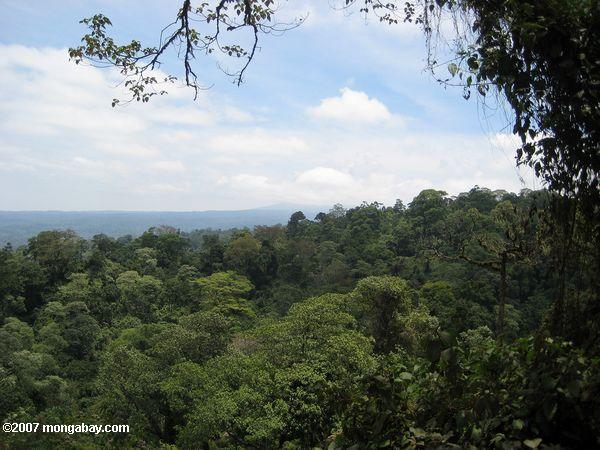 Forest in Tanzania. Photo by: Rhett A. Butler.
Read more...
Sphere: Related Content
28 February 2012
Bolivia: Challenges face Morales' goal of 'governing by obeying the people'
A new twist in the turbulent saga surrounding a proposed roadway through Indigenous land has reignited a debate raging throughout Bolivia since the middle of last year
By Federico Fuentes | Green Left Weekly | February 19, 2012
 A march by indigenous group Conisur in favour of a controversial highway being built through Indigenous lands.
Read more...
Sphere: Related Content
22 February 2012
Existence of Javanese tigers at Indonesia’s Meru Betiri to be proven
Officers at the Meru Betiri National Park (TNMB) have installed five trap cameras to establish the existence of Javanese tigers (panthera tigris sondaica), now believed to be extinct
ANTARA News | February 21 2012
 Javanese Tigers, Panthera tigris sondaica. (istimewa)
Read more...
Sphere: Related Content

13 February 2012
Satellites key to global conservation: Ice caps, forests feed $2.1B market
Brazilian deforestation and melting polar ice caps are feeding a boom in demand in the $2.1-billion market for satellite data, images and services used to monitor the planet
By Chiara Remondini And Alex Morales | Bloomberg in The Windsor Star | February 13, 2012
Read more... Sphere: Related Content11 February 2012
WWF scandal (part 2): Corporate capture, commodities and carbon trading
A recent article asks whether corporations have captured big conservation? The subheading could have read, “Do bears shit in the woods?”
By Chris Lang | REDD-Monitor | 9th February 2012

25 January 2012
In Brazil, Fears of a Slide Back for Amazon Protection
Brazil has made great strides in recent years in slowing Amazon deforestation and showing the world it was serious about protecting the mammoth rain forest
By ALEXEI BARRIONUEVO | The New York Times | January 24, 2012
 Deforestation in Brazil, driven largely by clearing land for cattle, as in Mato Grosso, above, has lessened. But there has been a shift under President Dilma Rousseff. Damon Winter/The New York Times
Read more...
Sphere: Related Content
21 January 2012
Indonesia to set aside 45% of Kalimantan for conservation
Indonesian President Susilo Bambang Yudhoyono (SBY) on Thursday announced a regulation that would protect 45 percent of Kalimantan, the Indonesian part of Borneo, according to a statement issued by his office
mongabay.com | January 19, 2012
 Rainforest in West Kalimantan
Read more...
Sphere: Related Content
20 December 2011
The other side of the Penan story: threatened tribe embraces tourism, reforestation
News about the Penan people is usually bleak. Once nomadic hunter-gatherers of the Malaysian state of Sarawak on Borneo, the indigenous Penan have suffered decades of widespread destruction of their forests and an erosion of their traditional culture. Logging companies, plantation developments, massive dams, and an ambivalent government have all played a role in decimating the Penan, who have from time-to-time stood up to loggers through blockades, but have not been successful in securing recognition of legal rights to their traditional lands
Jeremy Hance | mongabay.com | December 19, 2011
Read more... Sphere: Related Content
Traveling on the Kerong River with the Penan. Photo courtesy of Gavin Bate.
11 October 2011
Borneo rainforest conservation banking on Indonesian debt
The United States government has written off a US$28.5 million debt by Indonesia in exchange for the preservation of some Borneo rainforest and the reduction of greenhouse gas emissions.
Jenny Marusiak | Eco-Business | October 4th, 2011

Read more... Sphere: Related ContentThe signing of the US-Indonesia debt-for-nature swap. Photo and feature video: WWF-Indonesia
08 April 2010
Forest Carbon Incentive Rules Need Time, Definition
Talks to define a mechanism for global forest protection should not be rushed if it is to work efficiently and fairly, a panel of experts said on Tuesday
Nina Chestney | Planet Ark | 07 April 2010
Talks began in Paris last month to define an interim and global architecture for a financial incentive scheme to reduce emissions from deforestation and degradation called REDD-plus.
"We know any system which looks good on paper on day one is no good if it doesn't stimulate long-term results," said Lars Lovold, director of the Rainforest Foundation Norway.
U.N. climate talks in Copenhagen last December failed to deliver much guidance on the scheme and a meeting in Bonn on April 9-11 is not expected to make much progress on the issue.
Under REDD-plus, governments could receive payments for their emissions cutting efforts while ensuring the sustainable management, conservation and restoration of forests.
Norway, which will host the next round of the talks in May, would like to get plans defined for an interim mechanism, ideally defining governance and administrative bodies, the distribution of funds, application of standards and the monitoring and verifying of emissions.
The idea is to arrive at the U.N. climate talks in Cancun, Mexico, in December with a concrete plan aimed specifically at the issue of deforestation.
But balancing the interests of 64 nations, local governments, indigenous peoples, private investors and environmental organizations will be tough.
"We need to be realistic about what we can achieve and how quickly. With different countries involved there are different drivers and conflicts," said Pat Hardcastle at consultancy LTS International.
The direct participation of all parties, especially including indigenous peoples in all parts of the process is crucial, the panel said.
"We need to revise the timeframe to allow for proper consultation. Putting a document on a website is not enough," said Francesco Martone, policy adviser at the Forest Peoples Programme.
Defining financial rewards for governments that make progress in cutting emissions and sustaining forests was also key, said Dan Nepstad, senior scientist at the Woods Hole Research Center.
"It will be a rough road but if there are no rewards for good performance it will not work," he said.
(Editing by James Jukwey)
© Thomson Reuters 2010 All rights reserved
Read more... Sphere: Related Content06 April 2010
Low Mekong levels provide wake-up call for regional cooperation
The low levels of the Mekong River this year have provided a "wake-up call" for the need to improve cooperation in managing the vital regional resource, Thai Prime Minister Abhisit Vejjajiva said Monday
Earth Times | 05 Apr 2010

"Our economic, social and environmental prosperity depends on how we protect and share the benefits of our common water resources through cooperative mechanisms," Abhisit told the first Mekong River Summit being held in Hua Hin, 130 kilometres south-west of Bangkok.
The summit marks the 15th anniversary of the Mekong River Commission, which consists of Cambodia, Laos, Thailand and Vietnam.
The prime ministers of those four countries attended the summit along with Chinese Deputy Foreign Minister Song Tao and Myanmar Foreign Minister Nyan Win.
Neither China nor Myanmar are members of the commission although they are dialogue partners with the regional group.
China's role in managing the Mekong, South-East Asia's longest waterway, has been the main theme of the first Mekong summit.
The river hit its lowest level in 50 years in February, raising key questions about how to equitably share the regional resource.
The 4,350-kilometre-long river originates in southern China and meanders through Laos and Thailand into Cambodia, where it feeds Tonle Sap Lake before reaching southern Vietnam and emptying into the South China Sea.
An unusually severe drought in southern China and South-East Asia has been blamed for the unusually low river level, but environmentalists and non-governmental organizations have also blamed China, which has constructed four dams on the shared waterway.
China has adamantly denied the dams have contributed to reducing the river's downstream flow, claiming the structures are only used for generating hydroelectricity and not for irrigation.
The Chinese delegation provided data to substantiate their claims during pre-summit meetings in Hua Hin.
Abhisit praised China's willingness to provide such information in his opening address to the summit.
"Sharing knowledge and data is one of the crucial means to mitigate problems," Abhisit said. "I also hope that such genuine efforts of cooperation would become more regular."
The Mekong River Comission hopes to get a commitment from China to be more forthcoming on sharing information on the river, half of which lies in southern China.
"At the technical level, we have had good cooperation with China, but we clearly want more information, more data," commission chief executive officer Jeremy Bird said.
"I think China is taking a step-by-step approach to this cooperation," he said.
Copyright DPA
© 2010 www.earthtimes.org, The Earth Times, All Rights Reserved
Read more... Sphere: Related Content28 March 2010
Video: Nestle's attempt to censor Greenpeace palm oil ad backfires
In a bold online video, the environmental group Greenpeace cleverly links candy-giant Nestle to oil palm-related deforestation and the deaths of orangutans. Clearly angered over the video, Nestle struck back by having it banned from YouTube and replaced with this statement: "This video is no longer available due to a copyright claim by Société des Produits Nestlé S.A."
Jeremy Hance | mongabay.com | March 19, 2010
In a bold online video, the environmental group Greenpeace cleverly links candy-giant Nestle to oil palm-related deforestation and the deaths of orangutans. Clearly angered over the video, Nestle struck back by having it banned from YouTube and replaced with this statement: "This video is no longer available due to a copyright claim by Société des Produits Nestlé S.A."
However Nestle's reaction to the video only spread it far and wide (see the ad below): social network sites like Twitter, Facebook, and Reddit were all flooded with the ad as well as rising criticism against Nestle—one of the world's largest food producers—including calls for boycotts.
Greenpeace began sustained action against Nestle on Wednesday when they released new evidence that linked Nestle to illegal deforestation in Indonesia through one of its palm oil suppliers, Sinar Mas.
Oil palm plantation in Sumatra, Indonesia. While palm oil plantations may look 'green' studies have shown a drastic reduction in biodiversity and large carbon emissions due to deforestation.
"While many companies such as Unilever and Kraft are making efforts to disassociate themselves from the worst practices of the palm oil industry, Nestlé has done diddly squat," the organization wrote in a blog.
The report spurred Nestle to cancel its contract with Sinar Mas—months after Sinar Mas was shown to be involved in illegal deforestation—but the corporation continues to purchase oil palm from Cargill, which is supplied in part by Sinar Mas. For its part, Cargill says it is investigating Greenpeace's allegations and if Sinar Mas is found to be committing illegal deforestation they will drop them. Nestle has said in a statement: "we share the deep concern about the serious environmental threat to rain forests and peat fields in South East Asia caused by the planting of palm oil plantations."
To prove this to its consumers, the company says it is committed to purchasing only sustainable palm oil by 2015. However, critics contend this is too late.
"Not only are these areas key habitat for orangutans, but also crucial carbon stores; the destruction of these areas is a major cause of Indonesia's rocketing carbon emissions,” Greenpeace said in a statement. .
Indonesia is the world's third largest emitter of greenhouse gases largely due to large-scale deforestation across the nation. Between 1990 and 2005, Indonesia lost more than 28 million hectares of forest, including 21.7 hectares of virgin forest. The country has declined from 82 percent forest cover in the 1960s to less than half today.
Orphaned orangutan, of which there are thousands, at Sepilok in Sabah, Malaysia. Photo by: Rhett A. Butler.
Deforestation is also the leading cause of biodiversity loss in the region. While orangutans have come to represent the movement against deforestation by oil palm plantations in the same way that polar bears symbolize climate change, Indonesia is home to tens of thousands of other species, many of which are threatened by deforestation.
Since Wednesday Nestle's Facebook page has been hit by growing anger against the multi-billion dollar food giant. Nestle complained that some Facebook users were posting new images of its logo, which shows three happy birds in a tree, and stated that it will delete any "altered version of any of our logos as your profile pic". This statement brought another firestorm of criticism, which Nestle has eventually caved to, now allowing 'alterations'.
This is not the first time Nestle has been called out for its practices. The company has long-faced criticism for aggressively marketing its baby formula to poor mothers in the developing world.
Have a break? from Greenpeace UK on Vimeo.
Copyright mongabay 2010
Read more... Sphere: Related Content24 March 2010
Ambon to host coastal resources management conference
The 7th National Conference on marine, small islands, and coastal resources management will be organized in the eastern Indonesian city of Ambon on August 3-7, 2010
ANTARA News | March 23, 2010
Maluku Maritime Affairs and Fisheries Office chief Poli Kayhattu said over his cellular phone from Jakarta on Tuesday that at least two international experts on coastal resources management have confirmed to be the keynote speakers at the conference.
"Two small islands and coastal management experts, respectively from China and Maldives have confirmed to be the keynote speakers at the 7th National Conference on marine, small islands, and coastal resources management in Ambon," Kayhattu said.
He said the conference would be conducted as part of the upcoming international marine event of Sail Banda 2010, scheduled to last from July to August this year.
Kayhattu said that besides the international experts from China and Maldives, Coordinating Minister for Economy Hatta Rajasa and Maritime Affairs and Fisheries Minister Fadel Muhammad would also act as speakers in the conference.
The coastal resources management conference is part of Maritime Affairs and Fisheries Ministry`s biennial activity, and the one this year in Ambon is themed, "To Knit the Integration of Marine, Small Islands, and Coastal Resources Management for Food Resilience and People`s Welfare."
According to Kayhattu, the objective of the national conference in Ambon was to increase communication and information exchange in relation with marine, small islands, and coastal resources management for people`s welfare and food resilience.
"The conference will be attended by around 500 people who are expected to optimally formulate a new coastal resources management strategy to improve the local people`s welfare," Kayhattu said.
He expressed optimism that the 7th National Congress which had been conducted since 1998 would run well and successfully because various preparations were currently being made for the event.(*)
COPYRIGHT © 2010
Read more... Sphere: Related Content19 March 2010
The Wrong Kind of Green: A discussion
Two weeks ago, journalist Johann Hari wrote a searing article in The Nation, raising important questions about conservation NGOs that accept funding from polluting corporations. Hari argues that the funding appears to have influenced the actions the NGOs take to address climate change. “Sometimes the corruption is subtle; sometimes it is blatant,” Hari writes
By Chris Lang | REDD-Monitor | 17th March 2010
 Johann Hari appeared on Democracy Now! last week, together with journalist Christine MacDonald who has written a book called Green, Inc.: An Environmental Insider Reveals How a Good Cause Has Gone Bad. She worked for Conservation International (CI) and her book criticises CI and other environmental groups for adopting positions apparently influenced by their corporate funders. (Click on the image below to watch the video on Democracy Now!)
Hari’s article, “The Wrong Kind of Green”, raises two crucially important questions (among others):
- Should conservation NGOs accept funding from polluting corporations?
- Should polluting companies be allowed to continue polluting by buying up forest carbon offset credits?
While my answer to both questions would be a resounding “no” (and the”no” can be extended to include all carbon offsets, for the simple reason that offsetting allows emissions to continue somewhere else), clearly Hari has raised issues that are worthy of further discussion.
The Nation has now posted a series of responses to Hari’s article, some supportive others dismissive. Phil Radford, Executive Director of Greenpeace mentions the three principles in “The Wrong Kind of Green” that could make environmental advocacy groups stronger:
- avoid the perceived or real conflicts of interest created by taking corporate money;
- start with what must be done to save the environment, not with what we think we can eke out of an unfriendly Congress; and
- the way forward will be bottom-up, shutting and stopping coal plants
On the Tropical Forest Group blog, John-O Niles disagrees. Having dismissed Hari’s article as “one of the most self-righteous article [sic] ever written”, Niles writes:
The key thing Democracy Now and Mr Hari miss is that REDD+ has been approved by all nations signing up to the Copenhagen Accord. If the United Nations and the UNFCCC trying to tackle climate change and deforestation is not international democracy (Now), then I don’t know what is. No one thinks the Copenhagen Accord is perfect, but it will probably have more traction than Hari’s suggestion that we all put ourselves in front of coal trains.
What Niles misses (putting aside for the moment the undemocratic process by which the Copenhagen Accord was drawn up or the fact that it is non-binding) is that the version of REDD in the Copenhagen Accord will not address climate change. It will allow the creation of vast numbers of cheap forest carbon credits, allowing polluting industry to continue polluting and effectively locking in dirty technology such as coal-fired power stations.
Kevin Koenig, the Ecuador Programme Coordinator of Amazon Watch, notes that
“A market-based offset system that equates fossil carbon with biotic carbon is little more than carbon laundering, and the BINGOs [Big International Non-Governmental Organisations] should be wielding their power to address the drivers of climate change and deforestation, as well as advocating for indigenous rights protections that reflect the traditional and current role indigenous peoples play in preserving their rainforest territories.”
Koenig argues that “Given the absence of any meaningful or substantive language referencing indigenous rights – let lone guaranteeing them – in the Copenhagen Accord, these groups should be speaking out and withdrawing their support for REDD unless basic inalienable principles like FPIC (Free, Prior, Informed, Consent), are included.”
Christine Dorsey of the National Wildlife Federation describes Hari’s article as “an irresponsible and toxic mixture of inaccurate information and uninformed analysis.” But her response fails to address any of the key issues raised by Hari. In any case, she writes, corporate partnerships for NWF’s educational work account for less that 1/2 of 1 per cent of NWF’s funding.
Carl Pope, the out-going executive director of the Sierra Club is dismissive: “While thin on solutions Hari’s story was so plump with distortions of reality that it might have been written by Lewis Carroll.” But as Hari responds, “Rather than engage with the serious issues I raised, Carl Pope sadly plays the old politician’s trick of denying charges I did not make.” Pope ignores the facts that Hari raised in his article, such as this one: “the Sierra Club vehemently opposed a lawsuit to force the US government’s policies into line with climate science by returning us to 350ppm of carbon dioxide in the atmosphere.”
My favourite response to Hari’s article is that from Karen Foerstel, director, climate media relations at The Nature Conservancy. Here it is, in full:
The article “The Wrong Kind of Green” offers readers in inaccurate and incomplete picture of the role deforestation plays in climate change and the way in which environmental and conservation organizations are fighting for policies to address global warming. For the full story, visitwww.nature.org/climatechange.
Hari’s article cites Greenpeace’s research into the Noel Kempff Climate Action Project in Bolivia. The page on TNC’s website linked to from Foerstel’s response does not mention the Noel Kempff project. “If there are so many ‘inaccuracies’ in my description of TNC,” writes Hari, “why can’t they name a single one? Do they think the banal propaganda they link to is an answer?”
Noel Kempff was also slammed in last week’s Guardian, in Fred Pearce’s Greenwash column. Pearce repeats Greenpeace’s argument that forest carbon has to be accounted for at the national level and not just at REDD project level:
Since the start of the Noel Kempff project, deforestation rates in Bolivia have gone up. So the argument is that one-off carbon offsetting projects do not deliver real benefits to the atmosphere unless governments undertake much wider efforts to curb deforestation.
Foerstel’s reluctance to talk about Noel Kempff in The Nation is strange. When Natasha Loder, a journalist with The Economist, asked Foerstel some questions about Noel Kempff, she answered at length. Loder recently posted the response on her blog. Foerstel’s response can be summed as follows: Noel Kempff is a pilot project, TNC is learning by doing and “no certified offsets (credits) have yet been issued to any of the partners”.
Loder asks “So given that no carbon offsets have been created, where exactly is the scam?”
Here’s the scam. TNC created the project with “the intent of testing and refining the science of forest carbon accounting and monitoring, and developing best practices for future REDD activities,” according to Foerstal’s reply to Loder. To TNC, of course, REDD activities means trading forest carbon. Trading forest carbon allows the polluting companies (American Electric Power (AEP) BP-Amoco (BP) and Pacificorp) which fund Noel Kempff to continue business as usual.
Here’s how AEP describes its involvement in REDD-type projects:
AEP has also sequestered substantial amounts of CO2 emissions through forestry projects. We invested in a project to save an ecologically diverse forest region in Bolivia – the world’s largest such project – and have facilitated similar projects in Brazil.
In an interview with Time magazine in 2008, Diane Fitzgerald, AEP’s managing director of environment and safety explained “We’ll compare forestry offsets to projects like renewable energy, and we have to make the best financial decision.”
Michael G. Morris, chief executive of AEP is more blunt. He told the Washington Post that
“When Greenpeace says the only reason American Electric Power wants to do this is because it doesn’t want to shut down its coal plants, my answer is, ‘You bet, because our coal plants serve our customers very cost-effectively,’”
Meanwhile TNC is lobbying on behalf of its corporate sugar daddies – polluting companies like AEP – to ensure that forest carbon trading is included in an international agreement on REDD.
The frustration in Johann Hari’s final comment on The Nation website is clear. He has attempted to open up an urgently needed discussion about corporate funding to conservation NGOs, but the biggest offenders appear not to want a meaningful discussion.
“Do none of these people feel any concern that the leading environmental groups in America are hoovering up cash from the worst polluters and advocating policies that fall far short of what scientists say we need to safely survive the climate crisis? Do they really think there is nothing to discuss here?”
REDD-Monitor is licensed under a Creative Commons Attribution-Noncommercial-Share Alike 3.0 Unported License
Read more... Sphere: Related Content10 March 2010
Overfishing prompts Brazil sardine conservation curbs
Overfishing is threatening to decimate Brazil's seafood resource and the latest danger concerns the country's sardine catch, which has led officials to speed up plans for conservation of the species
United Press International | March 9, 2010
Sardine is part of the staple diet in Brazil's coastal areas and most of last year's catch of 100,000 tons was unloaded in the states of Rio do Janeiro, Santa Catarina and Sao Paulo, MercoPress reported.
However, overfishing blights some 80 percent of marine species in Brazilian waters and despite warnings and exhortations to the fishing industry, yields in excess of recommended quantities are a common occurrence.
The problem of fishing has reached crisis proportions in Argentina, where hake yields in excess of recommended levels now a pose a threat to preservation of the biomass in the seas -- a problem now familiar to Brazilians as well.
Overfishing put Brazil's sardine stocks at risk in the 1990s but a conservation program restored the biomass somewhat, only to be depleted again.
Fishing authorities have been struggling to enforce two bans on fishing each year, from the middle of June to the end of July and again from November to February. The first ban is geared to help regeneration of the biomass to safe levels and the second is to facilitate sardines to develop to an ideal catch size, experts said.
Officials said Brazil might need to start importing sardines if its domestic consumption kept rising at the current pace.
Meanwhile, Argentina is trying to restrain fishing in Patagonia's San Jorge Gulf to preserve stocks of the common hake. But the conservation aim is challenged by fishing targets set by the Argentine Federal Fisheries Council, which plans to increase the yield by 27 percent this year.
Argentina's government has been exploring ways of regenerating the country's fishing industry. One of the investment initiatives calls for a Russian company, Sturgeon and Caviar, to set up a sturgeon farm in the La Rioja province. The technique of breeding sturgeon, until recently specific to the Caspian Sea, was pioneered about five years ago in Uruguay.
As caviar production in the Caspian dwindles and is threatened with extinction, the projects in Argentina and Uruguay are aimed at saving the fish, if not the heavily Caspian Sea.
Latin American partners of Russia hope the methods applied for sturgeon farming may help lead the way to a better management of Latin America's own endangered fish stocks, including those affected by overfishing.
© 2010 United Press International, Inc. All Rights Reserved
Read more... Sphere: Related Content06 March 2010
The Wrong Kind of Green
Why did America's leading environmental groups jet to Copenhagen and lobby for policies that will lead to the faster death of the rainforests--and runaway global warming? Why are their lobbyists on Capitol Hill dismissing the only real solutions to climate change as "unworkable" and "unrealistic," as though they were just another sooty tentacle of Big Coal?
by JOHANN HARI | The Nation | March 4, 2010

At first glance, these questions will seem bizarre. Groups like Conservation International are among the most trusted "brands" in America, pledged to protect and defend nature. Yet as we confront the biggest ecological crisis in human history, many of the green organizations meant to be leading the fight are busy shoveling up hard cash from the world's worst polluters--and burying science-based environmentalism in return. Sometimes the corruption is subtle; sometimes it is blatant. In the middle of a swirl of bogus climate scandals trumped up by deniers, here is the real Climategate, waiting to be exposed.
I have spent the past few years reporting on how global warming is remaking the map of the world. I have stood in half-dead villages on the coast of Bangladesh while families point to a distant place in the rising ocean and say, "Do you see that chimney sticking up? That's where my house was... I had to [abandon it] six months ago." I have stood on the edges of the Arctic and watched glaciers that have existed for millenniums crash into the sea. I have stood on the borders of dried-out Darfur and heard refugees explain, "The water dried up, and so we started to kill each other for what was left."
While I witnessed these early stages of ecocide, I imagined that American green groups were on these people's side in the corridors of Capitol Hill, trying to stop the Weather of Mass Destruction. But it is now clear that many were on a different path--one that began in the 1980s, with a financial donation.
Environmental groups used to be funded largely by their members and wealthy individual supporters. They had only one goal: to prevent environmental destruction. Their funds were small, but they played a crucial role in saving vast tracts of wilderness and in pushing into law strict rules forbidding air and water pollution. But Jay Hair--president of the National Wildlife Federation from 1981 to 1995--was dissatisfied. He identified a huge new source of revenue: the worst polluters.
Hair found that the big oil and gas companies were happy to give money to conservation groups. Yes, they were destroying many of the world's pristine places. Yes, by the late 1980s it had become clear that they were dramatically destabilizing the climate--the very basis of life itself. But for Hair, that didn't make them the enemy; he said they sincerely wanted to right their wrongs and pay to preserve the environment. He began to suck millions from them, and in return his organization and others, like The Nature Conservancy (TNC), gave them awards for "environmental stewardship."
Companies like Shell and British Petroleum (BP) were delighted. They saw it as valuable "reputation insurance": every time they were criticized for their massive emissions of warming gases, or for being involved in the killing of dissidents who wanted oil funds to go to the local population, or an oil spill that had caused irreparable damage, they wheeled out their shiny green awards, purchased with "charitable" donations, to ward off the prospect of government regulation. At first, this behavior scandalized the environmental community. Hair was vehemently condemned as a sellout and a charlatan. But slowly, the other groups saw themselves shrink while the corporate-fattened groups swelled--so they, too, started to take the checks.
Christine MacDonald, an idealistic young environmentalist, discovered how deeply this cash had transformed these institutions when she started to work for Conservation International in 2006. She told me, "About a week or two after I started, I went to the big planning meeting of all the organization's media teams, and they started talking about this supposedly great new project they were running with BP. But I had read in the newspaper the day before that the EPA [Environmental Protection Agency] had condemned BP for running the most polluting plant in the whole country.... But nobody in that meeting, or anywhere else in the organization, wanted to talk about it. It was a taboo. You weren't supposed to ask if BP was really green. They were 'helping' us, and that was it."
She soon began to see--as she explains in her whistleblowing book Green Inc.--how this behavior has pervaded almost all the mainstream green organizations. They take money, and in turn they offer praise, even when the money comes from the companies causing environmental devastation. To take just one example, when it was revealed that many of IKEA's dining room sets were made from trees ripped from endangered forests, the World Wildlife Fund leapt to the company's defense, saying--wrongly--that IKEA "can never guarantee" this won't happen. Is it a coincidence that WWF is a "marketing partner" with IKEA, and takes cash from the company?
Likewise, the Sierra Club was approached in 2008 by the makers of Clorox bleach, who said that if the Club endorsed their new range of "green" household cleaners, they would give it a percentage of the sales. The Club's Corporate Accountability Committee said the deal created a blatant conflict of interest--but took it anyway. Executive director Carl Pope defended the move in an e-mail to members, in which he claimed that the organization had carried out a serious analysis of the cleaners to see if they were "truly superior." But it hadn't. The Club's Toxics Committee co-chair, Jessica Frohman, said, "We never approved the product line." Beyond asking a few questions, the committee had done nothing to confirm that the product line was greener than its competitors' or good for the environment in any way.
The green groups defend their behavior by saying they are improving the behavior of the corporations. But as these stories show, the pressure often flows the other way: the addiction to corporate cash has changed the green groups at their core. As MacDonald says, "Not only do the largest conservation groups take money from companies deeply implicated in environmental crimes; they have become something like satellite PR offices for the corporations that support them."
It has taken two decades for this corrupting relationship to become the norm among the big green organizations. Imagine this happening in any other sphere, and it becomes clear how surreal it is. It is as though Amnesty International's human rights reports came sponsored by a coalition of the Burmese junta, Dick Cheney and Robert Mugabe. For environmental groups to take funding from the very people who are destroying the environment is preposterous--yet it is now taken for granted.
This pattern was bad enough when it affected only a lousy household cleaning spray, or a single rare forest. But today, the stakes are unimaginably higher. We are living through a brief window of time in which we can still prevent runaway global warming. We have emitted so many warming gases into the atmosphere that the world's climate scientists say we are close to the climate's "point of no return." Up to 2 degrees Celsius of warming, all sorts of terrible things happen--we lose the islands of the South Pacific, we set in train the loss of much of Florida and Bangladesh, terrible drought ravages central Africa--but if we stop the emissions of warming gases, we at least have a fifty-fifty chance of stabilizing the climate at this higher level. This is already an extraordinary gamble with human safety, and many climate scientists say we need to aim considerably lower: 1.5 degrees or less.
Beyond 2 degrees, the chances of any stabilization at the hotter level begin to vanish, because the earth's natural processes begin to break down. The huge amounts of methane stored in the Arctic permafrost are belched into the atmosphere, causing more warming. The moist rainforests begin to dry out and burn down, releasing all the carbon they store into the air, and causing more warming. These are "tipping points": after them, we can't go back to the climate in which civilization evolved.
So in an age of global warming, the old idea of conservation--that you preserve one rolling patch of land, alone and inviolate--makes no sense. If the biosphere is collapsing all around you, you can't ring-fence one lush stretch of greenery and protect it: it too will die.
You would expect the American conservation organizations to be joining the great activist upsurge demanding we stick to a safe level of carbon dioxide in the atmosphere: 350 parts per million (ppm), according to professor and NASA climatologist James Hansen. And--in public, to their members--they often are supportive. On its website the Sierra Club says, "If the level stays higher than 350 ppm for a prolonged period of time (it's already at 390.18 ppm) it will spell disaster for humanity as we know it."
But behind closed doors, it sings from a different song-sheet. Kieran Suckling, executive director of the Center for Biological Diversity, in Arizona, which refuses funding from polluters, has seen this from the inside. He told me, "There is a gigantic political schizophrenia here. The Sierra Club will send out e-mails to its membership saying we have to get to 350 parts per million and the science requires it. But in reality they fight against any sort of emission cuts that would get us anywhere near that goal."
For example, in 2009 the EPA moved to regulate greenhouse gases under the Clean Air Act, which requires the agency to ensure that the levels of pollutants in the air are "compatible with human safety"--a change the Sierra Club supported. But the Center for Biological Diversity petitioned the EPA to take this commitment seriously and do what the climate science says really is "compatible with human safety": restore us to 350 ppm. Suckling explains, "I was amazed to discover the Sierra Club opposed us bitterly. They said it should not be done. In fact, they said that if we filed a lawsuit to make EPA do it, they would probably intervene on EPA's side. They threw climate science out the window."
Indeed, the Sierra Club's chief climate counsel, David Bookbinder, ridiculed the center's attempts to make 350 ppm a legally binding requirement. He said it was "truly a pointless exercise" and headed to "well-deserved bureaucratic oblivion"--and would only add feebly that "350 may be where the planet should end up," but not by this mechanism. He was quoted in the media alongside Bush administration officials who shared his contempt for the center's proposal.
Why would the Sierra Club oppose a measure designed to prevent environmental collapse? The Club didn't respond to my requests for an explanation. Climate scientists are bemused. When asked about this, Hansen said, "I find the behavior of most environmental NGOs to be shocking.... I [do] not want to listen to their lame excuses for their abominable behavior." It is easy to see why groups like Conservation International, which take money from Big Oil and Big Coal, take backward positions. Their benefactors will lose their vast profits if we make the transition away from fossil fuels--so they fall discreetly silent when it matters. But while the Sierra Club accepts money from some corporations, it doesn't take cash from the very worst polluters. So why is it, on this, the biggest issue of all, just as bad?
It seems its leaders have come to see the world through the funnel of the US Senate and what legislation it can be immediately coaxed to pass. They say there is no point advocating a strategy that senators will reject flat-out. They have to be "politically realistic" and try to advocate something that will appeal to Blue Dog Democrats.
This focus on inch-by-inch reform would normally be understandable: every movement for change needs a reformist wing. But the existence of tipping points--which have been overwhelmingly proven by the climate science--makes a mockery of this baby-steps approach to global warming. If we exceed the safe amount of warming gases in the atmosphere, then the earth will release its massive carbon stores and we will have runaway warming. After that, any cuts we introduce will be useless. You can't jump halfway across a chasm: you still fall to your death. It is all or disaster.
By definition, if a bill can pass through today's corrupt Senate, then it will not be enough to prevent catastrophic global warming. Why? Because the bulk of the Senate--including many Democrats--is owned by Big Oil and Big Coal. They call the shots with their campaign donations. Senators will not defy their benefactors. So if you call only for measures the Senate could pass tomorrow, you are in effect giving a veto over the position of the green groups to the fossil fuel industry.
Yet the "conservation" groups in particular believe they are being hardheaded in adhering to the "political reality" that says only cuts far short of the climate science are possible. They don't seem to realize that in a conflict between political reality and physical reality, physical reality will prevail. The laws of physics are more real and permanent than any passing political system. You can't stand at the edge of a rising sea and say, "Sorry, the swing states don't want you to happen today. Come back in fifty years."
A classic case study of this inside-the-Beltway mentality can be found in a blog written by David Donniger, policy director of the climate center at the Natural Resources Defense Council (NRDC), after the collapse of the Copenhagen climate summit. The summit ended with no binding agreement for any country to limit its emissions of greenhouse gases, and a disregard of the scientific targets. Given how little time we have, this was shocking. Donniger was indeed furious--with the people who were complaining. He decried the "howls of disaster in European media, and rather tepid reviews in many U.S. stories." He said people were "holding the accord to standards and expectations that no outcome achievable at Copenhagen could reasonably have met--or even should have met."
This last sentence is very revealing. Donniger believes it is "reasonable" to act within the constraints of the US and global political systems, and unreasonable to act within the constraints of the climate science. The greens, he suggests, are wrong to say their standards should have been met at this meeting; the deal is "not weak." After fifteen climate summits, after twenty years of increasingly desperate scientific warnings about warming, with the tipping points drawing ever closer, he says the world's leaders shouldn't be on a faster track and that the European and American media should stop whining. Remember, this isn't an oil company exec talking; this is a senior figure at one of the leading environmental groups.
There is a different way for green groups to behave. If the existing political system is so corrupt that it can't maintain basic human safety, they should be encouraging their members to take direct action to break the Big Oil deadlock. This is precisely what has happened in Britain--and it has worked. Direct-action protesters have physically blocked coal trains and new airport runways for the past five years--and as a result, airport runway projects that looked certain are falling by the wayside, and politicians have become very nervous about authorizing any new coal power plants [see Maria Margaronis, "The UK's Climate Rebels," December 7, 2009]. The more mainstream British climate groups are not reluctant to condemn the Labour government's environmental failings in the strongest possible language. Compare the success of this direct confrontation with the utter failure of the US groups' work-within-the-system approach. As James Hansen has pointed out, the British model offers real hope rather than false hope. There are flickers of it already--there is an inspiring grassroots movement against coal power plants in the United States, supported by the Sierra Club--but it needs to be supercharged.
By pretending the broken system can work--and will work, in just a moment, after just one more Democratic win, or another, or another--the big green groups are preventing the appropriate response from concerned citizens, which is fury at the system itself. They are offering placebos to calm us down when they should be conducting and amplifying our anger at this betrayal of our safety by our politicians. The US climate bills are long-term plans: they lock us into a woefully inadequate schedule of carbon cuts all the way to 2050. So when green groups cheer them on, they are giving their approval to a path to destruction--and calling it progress.
Even within the constraints of the existing system, their approach makes for poor political tactics. As Suckling puts it, "They have an incredibly naïve political posture. Every time the Dems come out with a bill, no matter how appallingly short of the scientific requirements it is, they cheer it and say it's great. So the politicians have zero reason to strengthen that bill. If you've already announced that you've been captured, then they don't need to give you anything. Compare that to how the Chamber of Commerce or the fossil fuel corporations behave. They stake out a position on the far right, and they demand the center move their way. It works for them. They act like real activists, while the supposed activists stand at the back of the room and cheer at whatever bone is thrown their way."
The green groups have become "the mouthpiece of the Democratic Party, regardless of how pathetic the party's position is," Suckling says in despair. "They have no bottom line, no interest in scientifically defensible greenhouse gas emission limitations and no willingness to pressure the White House or Congress."
It will seem incredible at first, but this is--in fact--too generous. At Copenhagen, some of the US conservation groups demanded a course of action that will lead to environmental disaster--and financial benefits for themselves. It is a story buried in details and acronyms, but the stakes are the future of civilization.
When the rich countries say they are going to cut their emissions, it sounds to anyone listening as if they are going to ensure that there are fewer coal stations and many more renewable energy stations at home. So when Obama says there will be a 3 percent cut by 2020--a tenth of what the science requires--you assume the United States will emit 3 percent fewer warming gases. But that's not how it works. Instead, they are saying they will trawl across the world to find the cheapest place to cut emissions, and pay for it to happen there.
Today, the chopping down of the world's forests is causing 12 percent of all emissions of greenhouse gases, because trees store carbon dioxide. So the rich governments say that if they pay to stop some of that, they can claim it as part of their cuts. A program called REDD--Reducing Emissions from Deforestation and Forest Degradation--has been set up to do just that. In theory, it sounds fine. The atmosphere doesn't care where the fall in emissions comes from, as long as it happens in time to stop runaway warming. A ton of carbon in Brazil enters the atmosphere just as surely as a ton in Texas.
If this argument sounds deceptively simple, that's because it is deceptive. In practice, the REDD program is filled with holes large enough to toss a planet through.
To understand the trouble with REDD, you have to look at the place touted as a model of how the system is supposed to work. Thirteen years ago in Bolivia, a coalition of The Nature Conservancy and three big-time corporate polluters--BP, Pacificorp and American Electric Power (AEP)--set up a protected forest in Bolivia called the Noel Kempff Climate Action Project. They took 3.9 million acres of tropical forest and said they would clear out the logging companies and ensure that the forest remained standing. They claimed this plan would keep 55 million tons of CO2 locked out of the air--which would, in time, justify their pumping an extra 55 million tons into the air from their coal and oil operations. AEP's internal documents boasted: "The Bolivian project...could save AEP billions of dollars in pollution controls."
Greenpeace sent an investigative team to see how it had turned out. The group found, in a report released last year, that some of the logging companies had simply picked up their machinery and moved to the next rainforest over. An employee for San Martin, one of the biggest logging companies in the area, bragged that nobody had ever asked if they had stopped. This is known as "leakage": one area is protected from logging, but the logging leaks a few miles away and continues just the same.
In fact, one major logging organization took the money it was paid by the project to quit and used it to cut down another part of the forest. The project had to admit it had saved 5.8 million tons or less--a tenth of the amount it had originally claimed. Greenpeace says even this is a huge overestimate. It's a Potemkin forest for the polluters.
When you claim an offset and it doesn't work, the climate is screwed twice over--first because the same amount of forest has been cut down after all, and second because a huge amount of additional warming gases has been pumped into the atmosphere on the assumption that the gases will be locked away by the now-dead trees. So the offset hasn't prevented emissions--it's doubled them. And as global warming increases, even the small patches of rainforest that have technically been preserved are doomed. Why? Rainforests have a very delicate humid ecosystem, and their moisture smothers any fire that breaks out, but with 2 degrees of warming, they begin to dry out--and burn down. Climatologist Wolfgang Cramer says we "risk losing the entire Amazon" if global warming reaches 4 degrees.
And the news gets worse. Carbon dioxide pumped out of a coal power station stays in the atmosphere for millenniums--so to genuinely "offset" it, you have to guarantee that a forest will stand for the same amount of time. This would be like Julius Caesar in 44 BC making commitments about what Barack Obama will do today--and what some unimaginable world leader will do in 6010. In practice, we can't even guarantee that the forests will still be standing in fifty years, given the very serious risk of runaway warming.
You would expect the major conservation groups to be railing against this absurd system and demanding a serious alternative built on real science. But on Capitol Hill and at Copenhagen, these groups have been some of the most passionate defenders of carbon offsetting. They say that, in "political reality," this is the only way to raise the cash for the rainforests, so we will have to work with it. But this is a strange kind of compromise--since it doesn't actually work.
In fact, some of the big groups lobbied to make the protections weaker, in a way that will cause the rainforests to die faster. To understand why, you have to grasp a distinction that may sound technical at first but is crucial. When you are paying to stop deforestation, there are different ways of measuring whether you are succeeding. You can take one small "subnational" area--like the Noel Kempff Climate Action Project--and save that. Or you can look at an entire country, and try to save a reasonable proportion of its forests. National targets are much better, because the leakage is much lower. With national targets, it's much harder for a logging company simply to move a few miles up the road and carry on: the move from Brazil to Congo or Indonesia is much heftier, and fewer loggers will make it.
Simon Lewis, a forestry expert at Leeds University, says, "There is no question that national targets are much more effective at preventing leakage and saving forest than subnational targets."
Yet several groups--like TNC and Conservation International--have lobbied for subnational targets to be at the core of REDD and the US climate bills. Thanks in part to their efforts, this has become official US government policy, and is at the heart of the Waxman-Markey bill. The groups issued a joint statement with some of the worst polluters--AEP, Duke Energy, the El Paso Corporation--saying they would call for subnational targets now, while vaguely aspiring to national targets at some point down the line. They want to preserve small patches (for a short while), not a whole nation's rainforest.
An insider who is employed by a leading green group and has seen firsthand how this works explained the groups' motivation: "It's because they will generate a lot of revenue this way. If there are national targets, the money runs through national governments. If there are subnational targets, the money runs through the people who control those forests--and that means TNC, Conservation International and the rest. Suddenly, these forests they run become assets, and they are worth billions in a carbon market as offsets. So they have a vested financial interest in offsetting and in subnational targets--even though they are much more environmentally damaging than the alternatives. They know it. It's shocking."
What are they doing to ensure that this policy happens--and the money flows their way? Another source, from a green group that refuses corporate cash, describes what she has witnessed behind closed doors. "In their lobbying, they always talk up the need for subnational projects and offsetting at every turn and say they're great. They don't mention national targets or the problems with offsetting at all. They also push it through their corporate partners, who have an army of lobbyists, [which are] far bigger than any environmental group. They promote their own interests as a group, not the interests of the environment." They have been caught, he says, "REDD-handed, too many times."
TNC and Conservation International admit they argue for subnational accounting, but they claim this is merely a "steppingstone" to national targets. Becky Chacko, director of climate policy at Conservation International, tells me, "Our only interest is to keep forests standing. We don't [take this position] because it generates revenue for us. We don't think it's an evil position to say money has to flow in order to keep forests standing, and these market mechanisms can contribute the money for that."
Yet when I ask her to explain how Conservation International justifies the conceptual holes in the entire system of offsetting, her answers become halting. She says the "issues of leakage and permanence" have been "resolved." But she will not say how. How can you guarantee a forest will stand for millenniums, to offset carbon emissions that warm the planet for millenniums? "We factor that risk into our calculations," she says mysteriously. She will concede that national accounting is "more rigorous" and says Conservation International supports achieving it "eventually."
There is a broad rumble of anger across the grassroots environmental movement at this position. "At Copenhagen, I couldn't believe what I was seeing," says Kevin Koenig of Amazon Watch, an organization that sides with indigenous peoples in the Amazon basin to preserve their land. "These groups are positioning themselves to be the middlemen in a carbon market. They are helping to set up, in effect, a global system of carbon laundering...that will give the impression of action, but no substance. You have to ask--are these conservation groups at all? They look much more like industry front groups to me."
So it has come to this. After decades of slowly creeping corporate corruption, some of the biggest environmental groups have remade themselves in the image of their corporate backers: they are putting profit before planet. They are supporting a system they know will lead to ecocide, because more revenue will run through their accounts, for a while, as the collapse occurs. At Copenhagen, their behavior was so shocking that Lumumba Di-Aping, the lead negotiator for the G-77 bloc of the world's rainforest-rich but cash-poor countries, compared them to the CIA at the height of the cold war, sabotaging whole nations.
How do we retrieve a real environmental movement, in the very short time we have left? Charles Komanoff, who worked as a consultant for the Natural Resources Defense Council for thirty years, says, "We're close to a civil war in the environmental movement. For too long, all the oxygen in the room has been sucked out by this beast of these insider groups, who achieve almost nothing.... We need to create new organizations that represent the fundamentals of environmentalism and have real goals."
Some of the failing green groups can be reformed from within. The Sierra Club is a democratic organization, with the leadership appointed by its members. There are signs that members are beginning to put the organization right after the missteps of the past few years. Carl Pope is being replaced by Mike Brune, formerly of the Rainforest Action Network--a group much more aligned with the radical demands of the climate science. But other organizations--like Conservation International and TNC--seem incapable of internal reform and simply need to be shunned. They are not part of the environmental movement: they are polluter-funded leeches sucking on the flesh of environmentalism, leaving it weaker and depleted.
Already, shining alternatives are starting to rise up across America. In just a year, the brilliant 350.org has formed a huge network of enthusiastic activists who are demanding our politicians heed the real scientific advice--not the parody of it offered by the impostors. They have to displace the corrupt conservationists as the voice of American environmentalism, fast.
This will be a difficult and ugly fight, when we need all our energy to take on the forces of ecocide. But these conservation groups increasingly resemble the forces of ecocide draped in a green cloak. If we don't build a real, unwavering environmental movement soon, we had better get used to a new sound--of trees crashing down and an ocean rising, followed by the muffled, private applause of America's "conservationists."
Johann Hari is a columnist for the Independent in London and a contributing writer for Slate. He has been named Newspaper Journalist of the Year by Amnesty International for his reporting from the war in Congo. more...
Copyright © 2009 The Nation
Read more... Sphere: Related ContentThe Nature Conservancy and Conservation International: Putting profits before planet
“Why did America’s leading environmental groups jet to Copenhagen and lobby for policies that will lead to the faster death of the rainforests – and runaway global warming?” Good question. It comes from a new article by journalist Johann Hari in The Nation. In the article, “The Wrong Kind of Green“, Hari slams the corruption of US NGOs that receive corporate funding
By Chris Lang | REDD-Monitor | 5th March 2010

As Hari points out it is no coincidence that these NGOs are the ones driving the push for trading forest carbon. Hari is not afraid to name names:
“[O]ther organizations–like Conservation International and [The Nature Conservancy] TNC – seem incapable of internal reform and simply need to be shunned. They are not part of the environmental movement: they are polluter-funded leeches sucking on the flesh of environmentalism, leaving it weaker and depleted.”
Hari traces the impact of funding from polluters to environmental organisations. “Companies like Shell and British Petroleum (BP) were delighted,” writes Hari. And no wonder. For comparatively small amounts of money, polluting corporations can buy “reputation insurance”, or defence against criticism. Every time they are criticised, the polluters can show their green awards, provided by the same environmental organisations that they funded.
Meanwhile, the environmental organisations stop criticising their funders. Hari quotes Christine MacDonald, who left her job as a journalist in 2006, to start work at Conservation International:
“About a week or two after I started, I went to the big planning meeting of all the organization’s media teams, and they started talking about this supposedly great new project they were running with BP. But I had read in the newspaper the day before that the EPA [Environmental Protection Agency] had condemned BP for running the most polluting plant in the whole country…. But nobody in that meeting, or anywhere else in the organization, wanted to talk about it. It was a taboo. You weren’t supposed to ask if BP was really green. They were ‘helping’ us, and that was it.”
Being in the pocket of polluting corporations helps explain why some environmental organisations support REDD and forest carbon trading. It provides “solutions” for polluters (who don’t need to reduce their pollution, they can “trawl across the world to find the cheapest place to cut emissions, and pay for it to happen there,” as Hari puts it). REDD also provides profits for the environmental organisations (through trading forest carbon).
Hari writes that “At Copenhagen, some of the US conservation groups demanded a course of action that will lead to environmental disaster – and financial benefits for themselves.” REDD “sounds fine”, writes Hari. “A ton of carbon in Brazil enters the atmosphere just as surely as a ton in Texas.” But the reality is that “In practice, the REDD program is filled with holes large enough to toss a planet through.” Hari takes the example of the Noel Kempff Climate Action Project to illustrate the problems. The project was set up by The Nature Conservancy, BP, Pacificorp and American Electric Power (AEP). As Greenpeace research revealed the project hugely overestimated the amount of “avoided emissions” from the project. And the loggers who were kicked out of the project area simply moved their logging operations to other forests.
One way of addressing this sort of “leakage”, is to use national targets rather than project (or sub-national) targets, thus preventing loggers from moving to another area of the same country. (National targets do nothing to address the problem of a country’s logging industry moving to a neighbouring country, as Vietnam’s has done in Laos and Cambodia.)
Yet the Nature Conservancy and Conservation International have lobbied for sub-national targets to be included in international REDD negotiations and US climate bills. Last year, these organisations and others signed an agreement with polluters which, “offered some of the biggest, filthiest planetary polluters an ‘easy out’, by lobbying the US Congress jointly with them, that US carbon emissions should be offset against oversees credits for ‘avoided deforestation’,” as an anonymous contribution on REDD-Monitor noted.
“Do the math, and it’s not hard to see why the BINGOs have finally sold their souls to the devil. Around 150 million hectares of tropical forests is in protected areas worldwide, much of it under the control or management of international conservation groups. Each hectare of forest contains around 100-200 tons of carbon, and each ton of carbon could be worth around $10 at the moment (and potentially much more in the future). The BINGOs know that they have a big stake in an asset potentially worth $150 billion and upwards.
“But there would have to be a buyer for this asset to actually be worth anything. Step in the big fossil fuel-burning power utilities, which, like most US businesses, have been cosseted and protected from global environmental realities by eight years of the Bush administration. If there is an easy way to avoid changing their business model, of avoiding the installation of more efficient technology, or of losing market segment to renewable energy producers, they will surely take it. Avoided deforestation offsets on a grand scale – brokered by their chums in the conservation groups – would be just the ticket.”
Not surprisingly, Conservation International denies that greed explains their position on REDD. “Our only interest is to keep forests standing,” Becky Chacko, director of climate policy at Conservation International, told Hari. “We don’t [take this position] because it generates revenue for us. We don’t think it’s an evil position to say money has to flow in order to keep forests standing, and these market mechanisms can contribute the money for that.”
Hari asked how Conservation International justifies the conceptual holes in the entire system of offsetting. “Her answers become halting,” Hari writes.
“She says the ‘issues of leakage and permanence’ have been ‘resolved.’ But she will not say how. How can you guarantee a forest will stand for millenniums, to offset carbon emissions that warm the planet for millenniums? ‘We factor that risk into our calculations,’ she says mysteriously. She will concede that national accounting is ‘more rigorous’ and says Conservation International supports achieving it ‘eventually.’”
Eventually, of course, is likely to be irrelevant. By then the forests will have gone up in smoke.
“So it has come to this,” writes Hari. “After decades of slowly creeping corporate corruption, some of the biggest environmental groups have remade themselves in the image of their corporate backers: they are putting profit before planet.”
REDD-Monitor is licensed under a Creative Commons Attribution-Noncommercial-Share Alike 3.0 Unported License.
Read more... Sphere: Related Content03 March 2010
Indonesia's Protected Forests Now Open to Development
President Susilo Bambang Yudhoyono has signed a decree to allow mining, power plants and other projects deemed strategically important to take place in protected forests
Reuters in Jakarta Globe | March 01, 2010
Indonesia continues to have one of the highest rates of deforestation in the world. (Reuters Photo/Yusuf Ahmad)
The decree, which took effect on Feb. 1, is certain to anger environmental groups given that the country already has one of the fastest rates of deforestation in the world.
“The use of forest areas for development activities can be done for unavoidable strategic purposes,” said the decree, which said key development projects included power plants, renewable energy, toll roads and train lines.
The decree said open-pit and underground mining could take place in production forests, which is a forest area considered neglected or abandoned after trees have been cut.
“In a protected forest, mining can be done through underground mining,” the decree said.
The decree defined mining activities as including oil and gas, minerals, coal and geothermal.
Yudhoyono has pledged to cut red tape and prevent overlapping regulations from slowing down projects ranging from mining to toll roads. Increasing exploitation of mineral resources and speeding up infrastructure development are seen as keys to boosting growth and creating jobs.
State-owned oil and gas company PT Pertamina has urged the Forestry Ministry to allow geothermal activities in protected forests as most of the country’s geothermal reserves are located in these areas.
There has frequently been confusion over whether companies can exploit resources in forest areas, with various ministries requiring permits.
The Forestry Ministry recently asked Freeport McMoRan Copper and Gold to submit a request to use land in a protected forest area, a ministry official said on Tuesday. Freeport operates the huge Grasberg copper and gold mine in Papua. Grasberg has the world’s largest recoverable reserves of copper and the largest gold reserves.
In 2004, the government allowed 13 mining firms, including Freeport, to continue mining operations after the introduction of a law in 1999 that banned open-pit mining in forested areas.
Last month, police temporarily shut the Jorong coal mine in Kalimantan operated by a unit of Thailand’s top coal miner, Banpu, over a permit problem. Banpu said the closure would only have a slight impact on production at its domestic unit, PT Indo Tambangraya Megah.
Indonesia has struggled to attract fresh investment into mining, as well as for developing new oil and gas fields, partly due to uncertain regulations and red tape.
The government has previously said it expected mining investment to hit $2.5 billion this year, up from $1.81 billion in 2009, supported by greater certainty after the introduction of new mining regulations.
Copyright 2009 The Jakarta Globe
Read more... Sphere: Related Content
Subscribe to:
Posts (Atom)


 Posts
Posts