Showing posts with label small-islands. Show all posts
Showing posts with label small-islands. Show all posts
17 March 2012
Read more... Sphere: Related Content
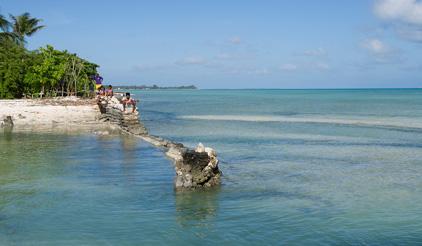 Children in the village of Tebikenikora, on Kiribati’s main Tarawa atoll (Photo: UN Photo/Eskinder Debebe)
07 March 2012
Entire nation of Kiribati to be relocated over rising sea level threat
The low-lying Pacific nation of Kiribati is negotiating to buy land in Fiji so it can relocate islanders under threat from rising sea levels
By Paul Chapman | The Telegraph | 07 Mar 2012
 The low-lying Pacific archipelago of Kiribati Photo: REUTERS
Read more...
Sphere: Related Content
06 March 2012
Q&A: Needed: Common Caribbean Strategies Against Climate Change
Subject to the double impact of the global economic crisis and climate change, the Caribbean island nations are in need of adaptation strategies in which international cooperation and citizen participation play key roles, says Cuban expert Ramón Pichs
By Patricia Grogg | Inter-Press Service | Mar 2 2012
 Most Caribbean island nations depend on tourism. Credit: Jorge Luis Baños/IPS
Read more...
Sphere: Related Content
14 February 2012
SPC and Fiji Cooperate to Map Forest Cover
The Secretariat of the Pacific Community (SPC) has announced a collaboration with Fiji's Department of Forestry to increase capacity in the use of high resolution satellite images to map land and forest cover in the country. The programme will focus on classifying forest types in Drawa, a 6,400 hectare area of indigenous forest on Vanua Levu
Climate Policy & Practice | 8 February 2012
Read more... Sphere: Related Content30 December 2011
Hawaii: Our Very Own Island Nation, Battling Climate Change Via Innovation
Amid the abstract arguments that often dominate discussions of climate change (let’s face it, for the average person climate models and debates over half a degree here or there don’t hold much relevance), the pleas of island nations have helped to put a human face on things
Amy Westervelt | Forbes | December 29, 2011
Read more... Sphere: Related Content

Climate change diplomacy and small island developing states
Science (climate scientists) and politics (diplomats and Foreign Ministry officials) may not always speak the same language, but climate change diplomacy (inter-governmental negotiations on climate change issues) inevitably brings them together into a “marriage of convenience”
by Obijiofor Aginam | OurWorld 2.0 | December 26, 2011
Read more... Sphere: Related Content
Photo: Mauroof Khaleel/Presidency Maldives.
20 December 2011
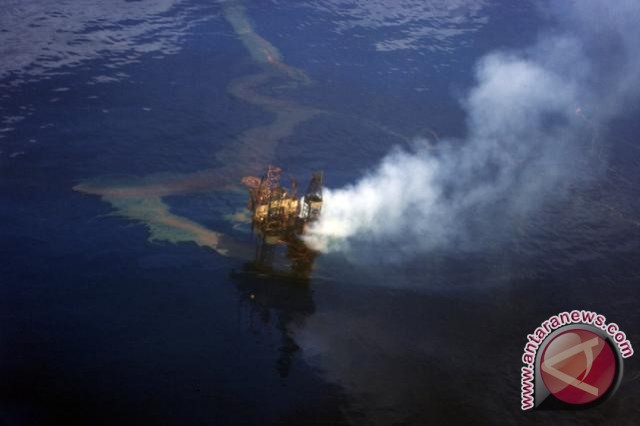
Montara oil spill victims still awaiting promised compensation
East Nusatenggara (NTT) fishermen who lost their livelihoods by the Montara oil spill in 2009 are still waiting for the promised compensations, two years after the disaster
by Fardah | ANTARA | December 19 2011
Read more... Sphere: Related Content
Montara Block. (guardian.co.uk)
09 December 2011
Pacific micro-state switches entirely to renewable energy
Tokelau challenged world leaders at the UN climate talks in Durban to follow its lead
John Vidal | guardian.co.uk | 8 December 2011
Read more... Sphere: Related Content
The head of government of Tokelau island, Foua Toloa, during a press conference at COP17 in Durban. Photograph: Jenny Bates for The Guardian
24 March 2010
Ambon to host coastal resources management conference
The 7th National Conference on marine, small islands, and coastal resources management will be organized in the eastern Indonesian city of Ambon on August 3-7, 2010
ANTARA News | March 23, 2010
Maluku Maritime Affairs and Fisheries Office chief Poli Kayhattu said over his cellular phone from Jakarta on Tuesday that at least two international experts on coastal resources management have confirmed to be the keynote speakers at the conference.
"Two small islands and coastal management experts, respectively from China and Maldives have confirmed to be the keynote speakers at the 7th National Conference on marine, small islands, and coastal resources management in Ambon," Kayhattu said.
He said the conference would be conducted as part of the upcoming international marine event of Sail Banda 2010, scheduled to last from July to August this year.
Kayhattu said that besides the international experts from China and Maldives, Coordinating Minister for Economy Hatta Rajasa and Maritime Affairs and Fisheries Minister Fadel Muhammad would also act as speakers in the conference.
The coastal resources management conference is part of Maritime Affairs and Fisheries Ministry`s biennial activity, and the one this year in Ambon is themed, "To Knit the Integration of Marine, Small Islands, and Coastal Resources Management for Food Resilience and People`s Welfare."
According to Kayhattu, the objective of the national conference in Ambon was to increase communication and information exchange in relation with marine, small islands, and coastal resources management for people`s welfare and food resilience.
"The conference will be attended by around 500 people who are expected to optimally formulate a new coastal resources management strategy to improve the local people`s welfare," Kayhattu said.
He expressed optimism that the 7th National Congress which had been conducted since 1998 would run well and successfully because various preparations were currently being made for the event.(*)
COPYRIGHT © 2010
Read more... Sphere: Related Content12 March 2010
Indigenous leaders’ objections to LCDS, REDD+ ‘malicious distortion’
The Office of Climate Change (OCC) last night described the objections by some indigenous leaders to the LCDS and REDD+ policies as “malicious misrepresentations and distortions” and a deliberate attempt to mislead the public on the two policies
Stabroek News | March 11, 2010
The OCC referred to articles published in this newspaper and the Kaieteur News following a statement issued after a workshop on ‘Indigenous Peoples Rights, Extractive Industries and National Development Policies in Guyana.’ The statement had, among other things, called for the policies to be shelved until free, prior and informed consent (FPIC) guidelines for land use are in place.
In a statement late last night, the OCC reiterated that the LCDS and REDD+ processes have demonstrated openness, transparency, accountability, availability of information and public participation.
It said from the onset the LCDS sensitisation education and consultation process was designed and implemented in accordance with international best practice. Further, the statement said, an independent international NGO, the London-based International Institute for Environmental Development (IIED), provided monitoring of the entire stakeholder engagement process of the LCDS and concluded that the “the LCDS has established the principle of FPIC as the standard for Amerindian communities.”
As such, the OCC labelled the statement, which said that land rights and right to free, prior and informed consent are not respected in Guyana, as being “inaccurate and appalling”.
“This assertion is furthest from the truth. There are democratic institutions in operation in Guyana to ensure that Amerindian rights are respected and in particular the Ministry of Amerindian Affairs,” the statement said.
According to the OCC, in order to ensure transparency of the LCDS, stakeholder consultations were held to ensure the participation of all with a representation from a wide-cross section of society. It said that Amerindian non-governmental organisations were invited to participate in the consultations and all accepted the invitation except the Amerindian Peoples Association (APA), a major player in the recent conference.
“The OCC wishes to categorically reiterate that the APA and some chosen community representatives cannot purport to be more representative of Guyana’s indigenous peoples than the National Toshaos Council (NTC) whose members are elected in an open and democratic process. The council has been an integral part of the LCDS process from the beginning,” the statement said.
The OCC found the call by the leaders for the establishment of satellite telecommunications and internet facilities in the hinterland villages “interesting” stating that at the same time they speak against the LCDS which calls for the use of REDD+ funds for development of information technology for hinterland communities.
“With regard to the claim of respect for Amerindian rights, government has always stated that titled Amerindian villages have the right to opt in or not to opt in,” the statement said. It said that should the villages opt in they would benefit from direct funds to their communities and those who opt out will benefit from the development opportunities available to the rest of the country from the LCDS.
“There is absolutely no coercion or compulsion for any Amerindian village to opt into a REDD Plus Scheme,” the OCC said.
© 2009 Stabroek News All rights reserved
Read more... Sphere: Related Content04 February 2010
Sea level rise may sink island nations
Island countries could soon drown underneath rising tides, but their people and their governments may endure
By Larry O'Hanlon | Discovery News | Feb 3, 2010
Even after rising tides engulf their lands, residents of island nations could still maintain their identity and their government "in exile." Getty Images

Sea level rise from anthropogenic global warming could erase some island states from the face of the Earth -- but those nations could survive even without land, say researchers.
Governments and people of lost islands could survive "in exile," build structures to mark their submerged territory, retain their status in the eyes of other states and await the day when their islands emerge again when global cooling drops sea levels.
The trouble is current international agreements, including the United Nations Convention on the Law of the Sea, don't address the issue, said international law professor Rosemary Rayfuse of the University of New South Wales in Australia. Just what to do about the possibility of nations being lost, and how to do it, is very much on the frontiers of the legal thinking.
"From the international law perspective, it's fascinating," Rayfuse told Discovery News. "Ultimately, this is going to be a very serious problem."
According to the vast majority of scientific investigations, warming waters and the melting of polar and high-elevation ice worldwide will steadily raise sea levels. This will likely drive people off islands first by spoiling the fresh groundwater, which will kill most land plants and leave no potable water for humans and their livestock.
Low-lying island states like Kiribati, Tuvalu, the Marshall Islands and the Maldives are the most prominent nations threatened in this way.
"The biggest challenge is to preserve their nationality without a territory," said Lilian Yamamoto of Kanagawa University in Japan. "It is unlikely that they can still have a state without it."
Yamamoto is the lead author of a paper on the challenges facing island states in the latest issue of the journal Ocean & Coastal Management.
What seems likely, if no plans are laid to avoid it, is that people who are forced to leave their island states could become stateless. After settling in other countries, if permitted, the descendants of islanders might acquire the nationality of the countries where they were born, Yamamoto told Discovery News.
But if island states want to survive without their islands, they will need to explore new ways to do so, said Rayfuse. The first step is to establish and "grandfather-in" a legal baseline for their coastlines, in order to properly claim their Exclusive Economic Zone, in accordance with the UN Law of the Sea. After that, it gets a bit less clear.
One option that's been discussed is for other nations to provide territory upon which displaced islanders could settle. The problem with that, said Rayfuse, is that any land given would likely be of such poor quality that it would not be wanted.
Island states could also seek some kind of quasi-state status, like that of the European Union, which is not a state itself, but represents many states, Rayfuse explained.
"So these states should set up a trust fund to manage the resources (of their oceanic territories)," she said.
Another option is to get other nations to recognize the vanishing island states, despite their lost territories. However, there is a precedent for this.
The Sovereign Military Order of Saint John of Jerusalem, of Rhodes and of Malta is an ancient religious order which ruled over the islands of Rhodes (1310–1528) and then Malta (1530–1798), until Napoleon kicked them out.
However, they have retained their status under international law, and have their own government which issues its own passports to this day.
Copyright © 2010 Discovery Communications, LLC
Read more... Sphere: Related Content21 January 2010
CLIMATE CHANGE: Small Islands Await Haitian-Type Disaster
The devastation caused by the earthquake in Haiti last week has brought into sharp focus the threat of another natural disaster waiting to happen: a sea-level rise that could obliterate the world's small island states, triggering fears of mass migration
By Thalif Deen | IPS | Jan 19, 2010
But contrary to initial reports, the Indian Ocean island of Maldives says it has no plans to relocate its 300,000 inhabitants or purchase land in neighbouring countries to re-settle Maldivians before the impending devastation.
"Maldives does not have a relocation plan and had at no time ever considered relocation to another country, either in the neighbourhood or any other area," Ambassador Abdul Ghafoor Mohamed, the permanent representative of Maldives to the United Nations, told IPS.
Still, the Pacific Small Island Developing States (PSIDS), which includes countries such as Fiji, Palau, Marshall Islands, Nauru and Tuvalu, have not ruled out the possibility of relocating before disaster strikes.
Ambassador Stuart Beck of Palau says that displacement to a neighbouring or third country "might be the only option if climate change continues at the current or increased rate without significant and urgent mitigation by the international community."
As they struggle to cope with the monumental disaster that may have killed over 200,000 people, hundreds of Haitians have been trying to find shelter in neighbouring Dominican Republic.
Asked about this post-earthquake migration, U.N. Secretary-General Ban Ki-moon told reporters he is aware that the government of Dominican Republic "is trying to accommodate as many as possible, those people within the existing rules and regulations of their country, but they have been very generous."
Soon after his election in the Maldives in October 2008, President Mohamed Nasheed proposed the creation of a sovereign fund to buy land to resettle his countrymen.
But his U.N. envoy points out that the president was only alluding to the seriousness of the situation for countries like the Maldives for whom the threats posed by sea level rise are in fact very real and imminent.
Since then, Nasheed has reiterated many times that the Maldives "neither wished for nor was planning relocation."
"However, his statement on the setting up of the sovereign fund did have the desired effect of raising the awareness of the international community to the stark reality that the Maldives, along with many other small island countries, faced as they try to address the myriad of challenges posed by climate change," Mohamed said.
The International Organisation for Migration (IOM) has predicted that in the worst case scenario, as many as 50 million to 350 million people may have to migrate from their island nations - if they are to survive a climate change disaster.
Ambassador Beck of Palau cites an analysis by the Office of the U.N. High Commissioner for Refugees which says that while international law is not clear, some people forced to flee the effects of climate change may be protected by the 1951 U.N. Convention on the Status of Refugees, "whereas others may not qualify for protection."
"There is little appetite for expanding the Refugee Convention to explicitly cover those displaced by climate change, given the fear that this risks lowering the protection currently afforded all refugees," Beck argues.
There have been unconfirmed reports that countries such as Australia or New Zealand may consider providing sanctuary to inhabitants of neighbouring small island developing states (SIDS) - dubbed "environmental refugees" - fleeing sea-level rise.
But the Maldivian envoy told IPS he is not aware of any island nation that has signed an agreement with a larger neighbour or another country regarding relocation.
"Even if such an agreement is signed between an island nation and another host country, this itself will raise a number of issues regarding international law - sovereignty status, U.N. membership etc. etc."
"Do these people relocate as a 'nation' or as individual refugees who are then subsumed into the host nation as their own citizens, or would they enjoy 'sovereign rights'? Would they continue to have claim to the territory of the land they had vacated? If not, who would have claim on it, if at all?" he asked.
The fate of these disaster-prone small island states will be high on the agenda of two major upcoming international conferences mandated to draft a legally binding treaty on climate change: the first one in June in Germany and the second in November in Mexico.
Mark Jariabka, executive director of Islands First, an organisation that promotes and protects the interests of SIDS, told IPS that it is very likely that this issue will continue to be discussed at the two meetings.
"It is important that the recognition of SIDS as most vulnerable countries be preserved in a legally binding outcome and that these countries receive priority access to resources for urgent adaptation and mitigation projects," he said.
Jariabka said the special vulnerability of SIDS was recognised in the December 2007 Bali Action Plan and was an important issue in last month's Copenhagen negotiations, especially in the context of adaptation, access to financial resources, and capacity building.
There has been some debate at the negotiations regarding the question of what constitutes a 'most vulnerable' country, with some parties offering proposals that could dilute the significance of the distinction, he said.
"However, it is important to remember that SIDS are unique in that their very existence is threatened by climate change," he added.
Even a modest rise in sea level, he said, could render countries like Tuvalu and Kiribati completely uninhabitable, though serious climate change impacts on food and water security are already being felt in SIDS.
Under the Copenhagen Accord, the most vulnerable countries, including SIDS, least developed countries (LDCs), and some African countries, are granted priority access to finance, Jariabka said.
Also, mitigation actions under the Accord are voluntary for SIDS and LDCs, he added.
Copyright © 2010 IPS-Inter Press Service. All rights reserved
Read more... Sphere: Related Content
Subscribe to:
Posts (Atom)


 Posts
Posts