Climate adaptation through migration: A role for charter cities

 Most Caribbean island nations depend on tourism. Credit: Jorge Luis Baños/IPS
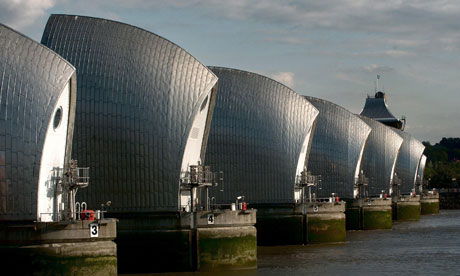 The overall bill for adaptation will depend on the severity of climatic changes and the range of measures chosen. Photograph: Ian Nicholson/PA
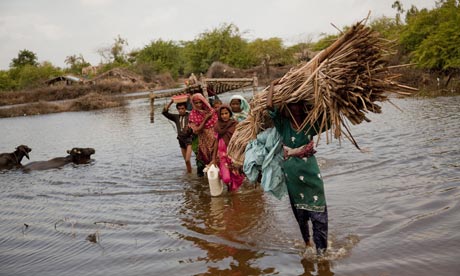 A family carries their possessions from their village which had become engulfed by rising floodwaters, on September 14, 2011 in Badin, Pakistan. Photograph: Warrick Page/Getty Images for UNICEF
Read more... Sphere: Related Content
Agro-ecological methods of farming have been shown to increase food production
Read more... Sphere: Related Content
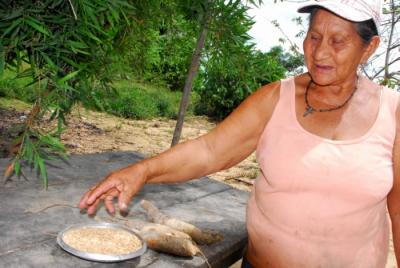
Margarita Amabeja with the rice seed she is about to plant, and this season's first cassava. Credit:Franz Chávez/IPS
THE Green Climate Fund, which developing countries are relyi
Read more... Sphere: Related ContentThe experts, who worked with the principle behind the United Kingdom’s Climate Change Act, determined that Nigeria’s policy should ensure cut down of greenhouse gas emission and set the best target and institutional framework for doing so.
They also recommended that it includes a carbon target budgeting, which sets clear cut budget within a short term and long term time frame, be Reviewed every year to ascertain progress; establish a committee on climate change, which agrees on how much, should be emitted and finalises discussions on the trading scheme and make provision of trading schemes, which describes the best way to offset carbon through trading.
The group of experts resolved that the National Climate Change Policy should adopt a development approach by indicating the activities that the country should engage in to reduce emission or be low in emission, that implementation must be monitor-able, reportable and verifiable (MRV) and backed with specific detailed activities.
The policy should take cognizance of the nation’s circumstances to address vulnerability and adaptation to the impact of climate change; would be useful to Nigeria in accessing the Copenhagen fund, the Global Environmental Facility Fund and reduce climate risk insurance and stimulate the carbon market.
They said the policy should have an ecosystem based approach to climate change adaptation and mitigation so that the protection of sensitive ecosystem vulnerability to climate change would be integrated in the policy framework. It should also have a policy document and a separate document that concentrates on the activities/strategies of implementing the policy.
The aim of the roundtable, attended by over 80 participants in attendance from Federal Ministry of Environment, CSO, media, HOR and the academia, was to examine issues and to propose a work plan for delivering a National Climate Change Policy and Legislation; provide Nigeria with a policy framework that tackles climate change, one that is based on strong scientific evidence. The Executive Director, International Centre for Energy, Environment and Development, (ICEED), Mr. Ewah Otu Eleri stated that much of the information required to develop a climate change policy is already being collected for the finalization of the Second National Communication.
He said the Second National Communication (SNC) provides scientific evidence for developing plans to reduce greenhouse gas, overview of financial resources, technology acquisition, capacity building and so on. It provides the evidence-base to engage in policy. That the Vulnerability Impact and Adaptation component of the SNC was to assess the subsisting and potential impacts of Climate Change on Nigeria’s ecological system; evaluate the country’s vulnerability to the actual and potential impacts of Climate Change and identifies, evaluate and recommend relevant adaptation options; that the final report would have seven Chapters namely: including Chapter 1- Background to the study; Chapter 2- Situation Analysis; Chapter 3- Methodology; Chapter 4- Results and Discussions of Vulnerability Analysis; Chapter 5- Adaptation Options; Chapter 6- Technology Transfer; Chapter 7- Best Practices from Various Zones
That outstanding issues in the SNC included the completion of the discussion of vulnerability assessment; Preparation of the executive summary; Collation of best practices from the various geopolitical zones; Table of contents and appendices; and the Delivery of first draft by first week in April, 2010; that the SNC covers only sectors that are relevant to the development due to time bound and fund limitation; therefore, a range of parameters are clustered together to enable the team assess the vulnerability.
It also recommended that the Thematic Group Inventory of Greenhouse for the SNC have the objective to produce National Inventory Report in accordance with IPCC and UNFCCC reporting formats and prepare Green House Gases inventory/Mitigation Options manual and national strategy for ensuring the sustainable inventory/Mitigations Assessment Processes; that the SNC report focuses on the agricultural, Land Use and Land Use Change and Forestry (LULUCF), Energy and Industrial waste sector. The final draft write-up would be April 23, 2010 and a final draft would be submitted in May, this year.
The IMF made no public acknowledgment of the rejection by the board and instead published the proposal on Thursday as a staff paper, emphasizing it did not represent the views of IMF member countries.
Board officials privately told Reuters the paper was the subject of much disagreement at an informal meeting earlier in March, where many members argued the IMF had no expertise or mandate to address climate change.
The paper said the IMF would not create, finance or manage the green fund and that the proposal should be seen as part of the overall debate over how to finance climate adaptation. It is a big theme in global talks on a new climate treaty expected to be hammered out in Cancun, Mexico, at the end of the year.
Strauss-Kahn has been a proponent of creating a green fund, something he first mentioned during the World Economic Forum in Davos earlier this year.
The IMF paper outlines ways for mobilizing $100 billion a year by 2020 to help poor countries cope with climate change.
This is the same amount the World Bank and United Nations estimated last year as the cost to developing countries of adapting to the impact of climate change -- which is equivalent to foreign aid flows provided to poor countries by rich ones.
Developing countries argue rich industrial economies that prospered while using environmentally damaging fossil fuels should help poorer countries deal with climate change.
The IMF paper proposes rich countries make an initial contribution to the green fund in the form of IMF special drawing rights, or SDRs, an international reserve asset and the fund's unit of account.
Last year, IMF member countries agreed to issue $250 billion worth of SDRs to central banks to boost liquidity in the face of a financial crisis and credit squeeze.
The idea would be that developed countries would make an initial capital injection into the fund using some of the $176 billion worth of SDR allocations from last year in exchange for a stake in the green fund.
The fund would then leverage resources from private and official investors by issuing low-cost "green bonds" in global capital markets, the IMF paper said.
The fund would use the money to provide grants or cheap loans to developing countries to deal with climate change.
Strauss-Kahn unveiled the proposal to IMF member countries during an informal board meeting on March 4, a day before he left for Africa where he launched the idea in Nairobi, Kenya.
Board officials, speaking on condition of anonymity, told Reuters most of the 24 directors present, except for those from France and Britain, rejected the proposal.
They said board members, speaking in turn, told Strauss-Kahn that climate was not part of the IMF's mandate and that SDR allocations are a reserve asset never intended for development issues.
"The message to the managing director was clear ... no one wants the IMF involved in this," one director from a large developing country said.
Another director complained that Strauss-Kahn was trying to make the IMF relevant in an area it had no expertise and would probably require a change in the IMF's articles of agreement if it pursued the idea.
The director said climate-related development should be left to the World Bank, which already oversees several funds to deal with clean technology and climate adaptation.
In a speech in Nairobi, Strauss-Kahn acknowledged while "some rightly argue that climate change is not in the mandate," the amount of resources needed for climate change would have a bearing on countries' economies.
He said the IMF did not intend to manage such a fund but "now is the time to put new ideas on the table."
Oxfam, the international development group, welcomed the IMF proposal, saying it showed there are ways to deliver large-scale resources to fight climate change.
"The fact that the IMF is proposing that adaptation efforts are funded by grants rather than loans is positive," said Oxfam spokesman David Waskow. "Worryingly, what is not specifically laid out in today's proposal is where this money will come from."
He said money needed to be funneled through a "fair and accessible" fund that is accountable to the U.N. climate process.
Outlined in a staff paper by IMF economists Hugh Bredenkamp and Catherine Pattillo, the Green Fund could launch from a capital injection by developed countries, in the form of Special Drawing Rights (SDRs), a currency issued by the IMF to member countries.
The facility would eventually combine resources from investors, raised through 'green bonds' in global capital markets, with developed country subsidies. Contributors could scale their equity stakes in proportion to their IMF quota share.
Aid would then be extended in the form of grants or highly concessional loans to developing countries but the IMF would not finance or manage the Fund, according to the authors.
The IMF began working on the concept of a Green Fund following the talks at the United Nations Copenhagen Conference (COP15) in December because, while finance was discussed and various figures pledged, it was not clear where the money was going to come from.
"The risk is that, without a credible framework for delivering financing on the scale necessary, soon enough, and on the right terms, developing countries' response to climate change will be either insufficient or delayed, thereby endangering sustainable growth and increasing ultimate costs, or financed in ways that are inconsistent with maintaining fiscal and broader macroeconomic stability," the authors write.
IMF officials told IPS the Fund could enable faster and more reliable disbursement than uncoordinated aid pledges from rich countries, which often fail to materialise.
Thursday's report is the first time the IMF has directly implicated itself in the issue of climate-related financing efforts. However, the authors stress that the proposal is not a formal announcement by the IMF to create the facility.
Ilana Solomon, policy analyst at ActionAid, told IPS that she welcomed the IMF paper as "an interesting contribution to the debate", and that she supports the use of SDRs in climate financing and believes this proposal has broken through the barrier of using SDRs for finance.
"A consolidated, centralised Fund, as long as there is transparency, will also facilitate the tracking of commitments," she said.
But Solomon expressed concerns about "lack of clarity regarding where the Fund would sit, and the implicated role of the World Bank" in terms of funding management.
"ActionAid wants to see an explicit endorsement of the United Nations Framework Convention on Climate Change (UNFCCC) as the medium through which resources should flow," she told IPS.
Solomon also questioned the 100-billion-dollar per annum benchmark against which the Fund is framed, suggesting 200 billion dollars per year in public financing as a more appropriate figure, and pointed out that climate finance should consist entirely of grants, not loans, because the developed countries are responsible for the majority of emissions.
Peter Chowla, programme manager at the Bretton Woods Project, told IPS he was also pleased that the issue of using SDRs in climate finance was being raised, but that the IMF was stepping beyond its mandate.
"No institution other than the UNFCCC should run climate finance. That is the only legitimate forum where everyone has a say," he said. He added that before they can play a constructive role in climate financing, IFIs needed to undergo radical reform.
"You cannot take an institution with a lop-sided governance structure and expect it to be trusted," he said. "To base any new institutional arrangement on the IMF quota formula is backward looking."
The IMF paper is published just days before the first meeting of the newly formed U.N. High-Level Advisory Group on Climate Change Financing, which takes place on Monday, Mar. 29 in London.
The advisory group is chaired by British Prime Minister Gordon Brown and Ethiopia's Prime Minister Minister Meles Zenawi, along with other heads of state including Jens Stoltenberg, prime minister of Norway. Trevor Manual, South Africa's respected minister for national planning, the philanthropist George Soros and Nicholas Stern, the climate change economist, are also members of the group.
Verified reports showed standing corn crops sustained most of the damage, he told reporters at the sidelines of the Agriculture Guarantee Fund Pool awarding rites at the Bureau of Soils and Water Management.
The government could not yet say if the damage would go beyond P11 billion as reported earlier. “We'll see. Should the episode worsen, we can estimate the extent of the damage and determine if there will be a need to import additional rice,” he said.
The government is monitoring 14 provinces greatly affected by the drought, including Cagayan, Isabela, Nueva Vizcaya and Quirino in Northern Luzon, Bulacan and Nueva Ecija in Central Luzon, Occidental Mindoro, Oriental Mindoro, Marinduque and Romblon in the Mimoropa area or Region IV-B, Masbate in Bicol, and Antique, Guimaras and Negros Occidental in Western Visayas.
Still, the department has no numbers yet for the total size of farmlands affected by the drought as well as the volume of crops that were destroyed.
Over 200,000 metric tons (MT) of paddy rice was destroyed, Fondevilla estimated.
The department’s Central Action Center earlier placed the damage to crops at P11.2 billion, with damaged paddy rice nearing 300,000 MT.
Despite the center’s numbers for rice crops, Fondevilla said the department is sticking to its projection that paddy rice output in the first half would total 7.2 million metric tons.
Paddy rice production for the second quarter will reach 3.463 million MT or 0.8 percent higher than the 3.435 MMT produced in April to June 2009.
In crop survey for January, the Bureau of Agricultural Statistics said that paddy rice output in the second quarter would grow with the 1.11-percent expansion of harvested areas. It projected a harvest in 868,000 hectares of irrigated and rain-fed farms in the country.
“With the demand (for palay) expected at 3.03 MMT in the second quarter, the 3.463 MMT projection is more than enough to cover our national requirement for the period,” Agriculture Secretary Salvador Salacup said.
This year the Philippines will import up to 2.4 MMT of milled rice, mostly from Vietnam, to fill a possible gap in production, cover the crops damaged by typhoons late last year and the current crops felled by the drought.
An old Sami 'nili' – a food storage hut raised above ground out of the reach of animals. Photograph: Kaisa Siren/Rex Features
Elina Helander-Renvall comes from Utsjoki, a place so obscure that even many Finns have little idea where it is. Utsjoki, or Ochejohka, Uccjuuha, and Uccjokk, depending on which local language you are speaking, isFinland's northern-most municipality. Straddling the border with Norway, it shivers, unregarded, deep inside the Arctic circle, a few icy miles from the shores of the Arctic Ocean.
Utsjoki, population 1,034, is home to Finland's largest concentration of Sami speakers, the indigenous people once loosely known as Lapps who have eked out an itinerant existence herding reindeer across the frozen wastes of northern Norway, Sweden, Finland and western Russia since the last Ice Age. Nearly 50% of Utsjoki's population are Sami. In Finnish terms, it's the closest this eternal minority has got to being the majority.
Born and raised on the margin though she was, Helander-Renvall's message these days is strictly mainstream. As accelerating climate change and other man-made environmental degradations create growing alarm across the planet, the Sami people have much to teach the world about how to adapt, survive, and thrive, she says.
"There is a lot to learn from the Sami, they have the traditional ecological knowledge, they really know about nature," said Helander-Renvall, head of the Arctic Indigenous Peoples Office at the University of Lapland in Rovaniemi. "They have the most precise knowledge about the weather conditions, about the plants, the diet, the resources. The Sami people have an ethical relationship with nature; a respect for nature that also has a spiritual side."
The Arctic region is uniquely vulnerable to global warming, but if it is to weather the storm, it would do well to adopt Sami methods of land and resource management, communal co-operation and communication, local knowledge and best practice, she said.
In order to keep a reindeer herd out of trouble, for example, a knowledge of different types of snow could be decisive, Helander-Renvall said. Muohta (ordinary snow) or oppas (untouched snow) might be safe. But the presence of sievla (wet snow), skarta (thin, ice-like snow layers) or ceavvi (a hard layer that the reindeer cannot penetrate in search of lichen) could dictate a life-saving change of route or decision to move camp.
Local knowledge will also be vital to the large-scale industrial development on the fast-expanding oil and gas fields of western Russia's Yamal peninsula, and for the burdgeoning commercial and tourism industries in the Scandinavian north. Knowing where it is safe to build, how to site the foundations for a new road, airstrip or pipeline, what terrain to avoid, and how to do so responsibly while protecting biological diversity will all be increasingly important. "We need to preserve and transfer indigenous knowledge to future generations," Helander-Renvall said.
Professor Monica Tennberg of the Arctic Research Centre in Rovaniemi said the Sami had shown notable ability to adapt to changing climate conditions. "We've seen how the community adapts, for example finding new ways to deal with floods. We've seen better co-operation, better municipal leadership, better communications, better early warning systems," she said. Adverse effects of climate change on pasture and traditional herding trails had been met with new rotation and migration patterns and also by a tighter communal discipline.
The Arctic as a whole faces enormous challenges. Broadly speaking the region is warming at double the rate of the rest of the world, said Paula Kankaanpaa, director of the Research Centre, with local "hotspots" that fare even worse.
Symptoms include reduced sea ice; the opening of blue-water sea passages both east and west in summer, north of Canada and Russia; increased levels of carbon-carrying organic waste in the Arctic Ocean caused by melting tundra; coastal erosion due to increased wave activity; loss of habitat for large mammals such as seals and polar bears and growing disruption of indigenous human communities.
Governments still resist the idea that Arctic indigenous peoples have something unique to contribute. Canada announced this month that it will convene a foreign ministers' meeting of the five Arctic Ocean states (Canada, Russia, the US, Norway and Denmark/Greenland) in March "to encourage new thinking on responsible development" and "reinforce ongoing collaboration in the region".
To their dismay, Arctic indigenous people's organisations, including the Sami, Inuit and Inuvialuit, were not invited.
The head of the International Monetary Fund has proposed a plan for the world's governments to pool together to raise money needed to adapt to climate change, a rare step for an organisation that normally does not develop environmental policies.
The IMF managing director, Dominique Strauss-Kahn, said the fund is concerned by the huge amount of money needed and the effect this will have on the global economy. He added that the proposal may help efforts to reach a binding agreement on climate change this year.
Strauss-Kahn proposed that countries adopt a quota system similar to the one the fund uses to raise its own money, which could bring in money faster than proposals to increase carbon taxes or other fundraising methods. He only provided a broad outline of the plan, as the organisation will release a paper this week with full details. It is unclear how the proposal will be received.
The IMF raises funds from its 185 members mainly through a quota system that is based broadly on each country's economic size. TheUnited States is currently the largest shareholder.
"We all know that [carbon taxes and other fundraising methods] will take time and we don't have this time. So we need something which looks like an interim solution, which will bridge the gap between now and the time when those carbon taxes will be big enough to solve the problem," Strauss-Kahn said. "And that is exactly what the IMF proposal is dealing with."
He said a climate change accord reached last December estimated $100bn a year will be needed by 2020 to fund programs, including those to help poor nations deal with droughts, flooding and food shortages expected to be caused by climate change.
Nations failed to reach a binding deal in Copenhagen in December, but agreed on a voluntary plan to control greenhouse gas emissions which are blamed for the gradual heating of the Earth that scientists predict will worsen weather-related disasters. The accord, however, included collective commitments by rich countries to provide billions of dollars to help poor countries adapt to climate change, a major demand the poor nations had made.
The more than 190 nations will reconvene in Cancun, Mexico, later this year for another attempt to reach a binding agreement to replace the Kyoto protocol, which sets emissions targets for industrial countries and expires in 2012.
The major concern of the present world is climate change and environmental degradation. In fact, involving women inprotecting the environmentwould help societies develop the sense of responsibility needed to maintain a good balance between humans and the earth's resources.
Environmental degradation, however, is a result of the dynamic interplay of socio-economic, institutional and technological activities. Environmental changes may be driven by many factors including economic growth, population growth, urbanization, intensification of agriculture, rising energy use and transportation. Poverty still remains a problem at the root of several environmental problems.
Idiatou Camara, Guinea's National Environment Director, one of four environmental protection experts exchanging views with the Commission on the theme of the gender perspective in environmental management and disaster mitigation, said: "Women need to participate at the national level and get their countries to empower women in regions unable to afford protection activities. They must encourage democratization and discourage the economic oppression that led to massive population movements degrading the environment. They must mobilize to reverse the poverty which excluded the poor from protecting the environment because limited knowledge and technical ability prevented them from addressing problems."
Marie Yolene Surena, Director, Civil Protection, Ministry of Interior of Haiti, said, "Investing in women for roles in environmental risk management was not only beneficial, but profitable. Managing environmental risk was part of the development process, while managing disasters now is a drain on development funds. The priorities must be to develop human resources, change laws, address food security and slow population increases."
Women's role after Haiti disaster: When Haitian commercial banks remained closed after the terrible effect of the earthquake, Fonkoze, the Haitian branch of the Grameen Bank of Bangladesh, mobilized over one weekend to get funds to its members in rural towns as well as Port-au-Prince. Between 2 a.m. and 2 p.m., on January 23, 2010 Fonkoze brought in 2.0 million dollars in cash from their US bank and distributed it by helicopters to regional offices in the most remote parts of the country.
Fonkoze has been operating in Haiti for 15 years. Ninety-nine per cent of its members are women. In addition to micro-lending programmes, Fonkoze sponsors major literacy, health care and micro-insurance programmes. Its remittances and savings accounts serve more than 200,000 people, making it a significant part of the country's financial system.
It isn't the first time that a micro-lending network of mostly women has taken a lead role in helping rebuild a country's economy after a natural disaster. In Poland, after a devastating flood in the mid-1990s, the US-backed Fundusz Mikro became the conduit for credit to small businesses, ultimately funnelling more than US$10 million to rebuild when the central government proved inept and also tone-deaf to the challenge.
Salving Briceno, Director, United Nations International Strategy for Disaster Reduction, said economic losses due to natural disasters had increased nearly ten-fold during the past four decades. In some cases, as in Afghanistan now, persistent drought was amplifying man-made emergencies. Numerous elements of a comprehensive and sustained policy for hazard awareness and disaster reduction should be looked at from a gender perspective. Balanced and equal participation of men and women informulating and implementing policies and programmes was essential.
The case of Bangladesh: The problems of women and environmental degradation have recently been addressed by women's groups. NGOs have been the most active, with 600 registered organizations. Among these 40 per cent were international, 38 per cent national, and 22 per cent local. NGOs have promoted the recent inclusion of environmental concerns into development plans.
The data shows about 100 NGOs are engaged in forestry projects. The National Association for Resource Improvement, for example, involves women in tree planting along roadsides and income-generating activities. About 75 per cent of upazilas (sub-districts) have environmental and women's projects, but fewer than 20 per cent of all villages are affected and 1.0 per cent landless people are reached.
In fact, women's groups have created awareness on women's problems and advocated for socio-economic changes. Women, despite cultural and social restrictions imposed on them, have changed environmental and economic conditions. Women's leadership and organizing abilities have contributed to public awareness of environmental degradation. Because Bangladesh is a delta, a rise in sea level from greenhouse effects would have serious consequences for the land and population.
Global warming has contributed to river flooding and climate changes that have increased rainfall and tropical storms. Deforestation upriver adds to the water overflow problems. About 20 per cent of the cultivable land area is affected by natural disasters. Population density is 760 persons per sq km. About 50 per cent of forested areas have been destroyed within the past 20 years. Around 4.0 per cent of gross domestic product comes from forest activity. The lack of wood fuel limits the ability of people to boil water and contributes to the increased incidence of diarrhoea, other intestinal problems, and less nutritious food.
Drought is another problem. Urban migration has overwhelmed the ability of urban centres to provide basic services. Coastal areas have been settled by 20 per cent of total population, but coastal storms regularly impact on people's lives and livelihoods.
The different roles and responsibilities of women and men in water resources use and management are closely linked to environmental change and well-being. This is true both for how women and men affect the environmentthrough their economic and household activities and how the resulting environmental changes affect people's well-being. Understanding these gender differences is an essential part of developing policies aimed at both better environmental outcomes and improved health and well-being.
Women play a critical role in the field of environment, especially in the management of plants and animals in forests, arid areas and wetlands. Ruralwomen in particular maintain an intimate interaction with natural resources, the collection and production of food products.
As their knowledge is transmitted through generations, girls and women often acquire a thorough understanding of their environment, and more specifically of its biodiversity. Their experience gives them valuable skills required for the management of the environment. Women have an important role to play in preserving the environment and in managing natural resources to achieve ecologically sustainable production (UNEP, 2004).
Despite women's assumed special relations to nature it should be stressed that all people depend on the environment and all should share the responsibility for sustainable use of water and other natural resources.
The impacts of the degradation of the environment on people's everyday lives are not the same for men and women. When the environment is degraded, women's day-to-day activities, such as fuel and water collection, require more time, leaving less time for productive activities. When water becomes scarce, women and children in rural areas must walk longer distances to find water, and in urban areas are required to wait in line for long hours at communal water points.
Despite their efforts, women living in arid areas tend to be categorized among the poorest of the poor, and have absolutely no means to influence real change. They are often excluded from participating in land development and conservation projects, agricultural extension activities, and policies directly affecting their subsistence. Men make most decisions related to cattle and livestock, and even in households headed by women, men still intervene in the decision-making process through members of the extended family. However, because of the important contribution of women, the fight against the degradation of arid areas requires a gender-inclusive approach.
In conclusion, we may say that women's status in conserving biodiversity may be enhanced through the following types of actions to integrate gender concerns into environmental planning:
So, it is evident that the gender perspective should feature strongly in all our development efforts, especially in dealing with the adverse affects of climate change and environmental degradation, where women have equal stakes as men, if not more.
Madrid, Spain
20-22 April 2010
The SBSTA at its 28th session requested the secretariat to organize, under the guidance of the Chair of the SBSTA and before SBSTA 32 (June 2010), a technical workshop on costs and benefits of adaptation options involving representatives from Parties, relevant organizations, communities and experts with a view to facilitating the identification of appropriate adaptation practices and measures and avoiding maladaptation.
The workshop will take into account:
The workshop will be held under the area of socio-economic information, under which activities are undertaken with a view to advancing sub-theme a (v) of the Nairobi work programme, “Promoting the availability of information on the socioeconomic aspects of climate change and improving the integration of socio-economic information into impact and vulnerability assessments”.
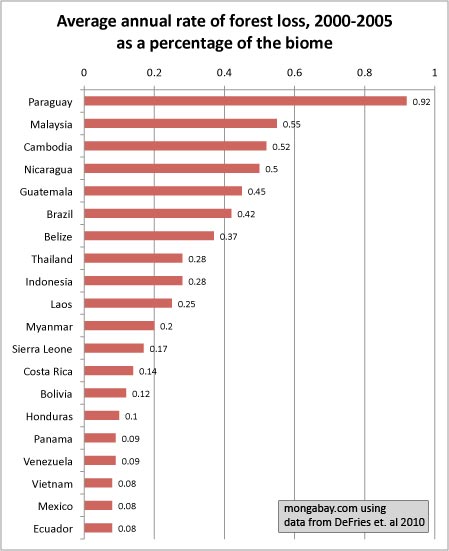
Read more... Sphere: Related ContentDeforestation is increasingly correlated to urban population growth and trade rather than rural poverty, suggesting that measures proposed to reduce deforestation will be ineffective if they fail to address demand for commodities produced on forest lands, argues a new paper published in Nature GeoScience.
Using newly available, spatially explicit analysis of tropical forest loss, Ruth S. DeFries, Thomas Rudel, Maria Uriarte and Matthew Hansen determined that from 2000-2005, rural population growth was not associated with forest loss, "indicating the importance of urban-based and international demands for agricultural products as drivers of deforestation." The results are a departure from research for earlier periods that has shown rural population growth to be the primary driver of deforestation.
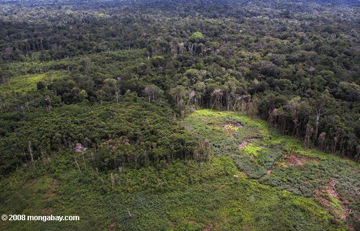
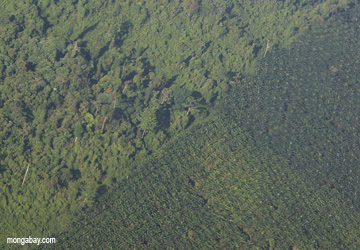
Small-holder deforestation, like this seen in Suriname (top), is being replaced by large-scale deforestation for export-driven commodity production, like cattle (middle) and palm oil (bottom).
"Landscapes with stabilizing or depopulating populations are likely to exacerbate rather than reduce pressure to clear forests, primarily because urbanization raises consumption levels and increases demand for agricultural products. Urban consumers generally eat more processed foods and animal products than rural consumers, thereby inducing commercial production of crops and livestock," write the authors. "This pattern contradicts the argument that pressures on forests will decline as local populations urbanize."
Industrial agriculture has become a booming business in the tropics over the past two decades. Driven by international demand for commodities, vast areas of rainforest have been razed, burned, and converted for extensive soy farms, sugar cane fields, cattle ranches, and oil palm, rubber, and timber plantations. So while many countries are experiencing rural depopulation, which reduces the pool of subsistence farmers that traditionally clear forests for small-scale agriculture, deforestation rates have remained roughly constant over the period.
Accordingly, the authors argue that measures like the proposed REDD (Reducing Emissions from Deforestation and forest Degradation) mechanism will need to go beyond sustainable development schemes for subsistence cultivators and the establishment of protected areas in rural landscapes to be effective in slowing forest loss.
"We therefore suggest that policies to reduce deforestation among local, rural populations will not address the main cause of deforestation in the future. Rather, efforts need to focus on reducing deforestation for industrial-scale, export-oriented agricultural production, concomitant with efforts to increase yields in non-forested lands to satisfy demands for agricultural products."
Average annual rate of forest loss, 2000-2005 as a percentage of the original extent of the biome (rather than the extent of forest in 2000). Click image to enlarge.
But the results have implications beyond REDD. The study undermines claims by industry groups — including loggers and oil palm plantation developers — that efforts to fight deforestation will exacerbate rural poverty. Indeed, other research suggests that large landowners and corporations are the biggest beneficiaries of large-scale forest conversion. For example, a study published last year in Science found that Amazon deforestation fails to sustain long-term economic growth for rural populations. Amazon communities are not richer, better educated, or healthier after forest clearing — most of the benefits of conversion accrue to developers.
The new paper also lends credibility to the argument that the shift in the underlying drivers of deforestation may offer new opportunities to protect forests in that it is easier, and more ethical, for environmental lobby groups to target corporations and enterprises rather than tens of millions of poor farmers who are simply trying to put food on the table for their families.
The two most dangerous decades start now, say the researchers (Flickr/Oxfam international)
Poor countries will be most vulnerable to climate disasters from now until 2030, researchers have warned.
In the first model pinpointing exactly when least-developed countries must receive adaptation funds from the industrialised world, researchers have predicted that the number of deaths from climate change-related disasters will be highest over the next 20 years.
After that they will subside as countries acquire the economic means to better defend themselves.
International organisations, including the World Bank and the UN Framework Convention on Climate Change (UNFCCC), estimate that developing countries need US$9–100 billion a year to adapt to climate change.
But exactly how soon they should receive those funds has not been studied until now, according to Anthony Patt, a risk and vulnerability research scholar at the International Institute for Applied Systems Analysis in Austria, who developed the model with a range of international partners.
Their research, published this week (4 January) in the Proceedings in the National Academy of Sciences, used the number of human losses to natural disasters as an indicator of a country's vulnerability to climate change.
The team created a statistical model to predict how many people might be killed by natural disasters in a given country, using factors such as population and level of development.
Taking Mozambique as an example, they found that deaths caused by natural disasters are likely to peak in 2030 if the country develops sustainably. After this, they predict, the country will have developed to a stage where socioeconomic development will begin to offset risk.
Less detailed studies of 23 other least developed countries followed a similar pattern.
"[The research] isn't saying that climate change isn't going to be a problem — it's saying that, as countries' wealth changes, the inherent riskiness of living in that country changes," Patt told SciDev.Net.
"In general richer countries are less vulnerable to natural disasters because they put more money into civil protection [such as flood protection] and all sorts of things that keep people from getting killed," he added.
"So there's a big shortfall [in funding] right now, between now and about 2030, where one could see very fast rising numbers of losses to climate-related events."
Patt said that pledges made at the Copenhagen climate summit in December — of US$30 billion a year between 2010 and 2020, increasing to US$100 billion a year by 2020 — for both adaptation and mitigation are "about right". "By 2040 or 2050 it might be too late."
But it is unclear how much of the money will go to adaptation and how much to mitigation, he said.
"And the question is whether they actually do it — because there are a lot of commitments that haven't been followed through."
Patt admitted that there are some limitations to the study, for example that it doesn't take into account the magnitude of disasters, only their frequency.
He also said that basing predictions of future trends in disaster frequency on historical data — one of the ways the researchers predicted human losses — was imperfect.
 [460kB]
 Posts
All Comments
Posts
All Comments