Showing posts with label emission-trading. Show all posts
Showing posts with label emission-trading. Show all posts
17 March 2012
05 March 2012
Breathing difficulties: A market in need of a miracle
The European Union’s Emissions Trading System (ETS), the world’s biggest carbon market, has two main aims. One is to restrict the carbon-dioxide emissions of the 11,000 companies trading on it to an agreed cap. The other is to give these firms an incentive to invest in clean technology
The Economist | Mar 3rd 2012
Read more... Sphere: Related Content21 December 2011
EU lawmakers back plan to withhold carbon permits
Proposal will prop up record low carbon prices by withholding 1.4bn permits from the third phase of the emissions trading scheme
Reuters in guardian.co.uk | 20 December 2011
Read more... Sphere: Related Content
The EU misjudged the amount of permits that industry needed to cover their emissions. Photograph: Reuters
19 December 2011
CERs crash 8.8 percent, hit record low
UN-backed carbon offsets plunged to an all-time low Tuesday on the back of continued fears of over-supply in the market, albeit in thin trade. By 11:00 GMT, the December 2011 CER contract on ICE Futures Europe was trading at 4.47 euros, a record low for the contract and down 43 cents on Monday’s 4.90-euro close
Commodity Now in Thomson Reuters Point Carbon | 13 December 2011
Read more... Sphere: Related ContentThe Endless Algebra of Climate Markets
“The Endless Algebra of Climate Markets”, is the title of a recent paper by Larry Lohmann of the UK-based NGO the Corner House. That’s him on the left holding up an “I love emissions trading”, T-shirt that Fortis Bank (now part of BNP Paribas) was handing out at a UN climate conference
By Chris Lang | REDD-Monitor | 16th December 2011

24 October 2011
Ecuador: Threats From Carbon Market
Ecuador’s participation in the global carbon market has generated complications in indigenous peoples and Afro-Ecuadorian communities, which have not only seen cutbacks in their rights to use land for ancestral activities, but whose organizations have also undergone fracturing due to the government’s offer to establish annual cash bonuses to communities that participate in its flagship program, Socio Bosque, or Forest Partner, driven by the Ministry of Environment since mid-2008
By Luis Ángel Saavedra | Asia Indigenous Peoples CCMIN | October 17, 2011
Read more... Sphere: Related Content22 October 2011
New report calls for “An end to forest offsets!”
A new manual by six Europe-based NGOs calls for an end to forest offsets. The report argues that there are two motivations for forest offsets: “reducing the pressure to do something about fossil fuel emissions and the short term profit motive”
By Chris Lang | REDD-Monitor | 21st October 2011
Read more... Sphere: Related Content16 April 2010
EU carbon allowances break €14 price barrier
Analysts report bullish sentiment across the carbon market as hedging season gets under way
James Murray | BusinessGreen | 15 Apr 2010
The price of carbon in the EU emissions trading scheme hit a record high for the year yesterday, breaking through the €14 (£12.36) a tonne mark for the first time since the week before December's Copenhagen summit.
The failure of the summit to deliver an international deal led the price of carbon to fall back and prices have been locked in a narrow range of between €12 and €13.50 a tonne since the start of the year.
However, the price of EU allowances (EUAs) for delivery in December surged 40 cents yesterday morning to €14.10, setting a record for the year to date.
Traders said the price hike was driven by rising oil prices, which cleared $84 (£54) a barrel; new figures showing rising industrial output across the EU and the prospect of today's planned auction of four million EUAs by the Dutch government.
Speaking to BusinessGreen.com, Alessandro Vitelli, director of strategy and intelligence at analyst IDEAcarbon, said there was also an increasingly bullish sentiment across the market.
"We are shifting from the winter season when energy firms are focused on day-to-day operations, into the hedging season where they begin to establish hedging positions with forward purchasing of energy and EUAs," he said. "People are taking hedging positions for 2013… it's a breath of fresh air for the market after being locked in such a narrow price range for months."
He added that if the price consolidates above €14 over the next few days, it could rise further in the coming weeks, although he also predicted that it was likely to calm down again over the summer when traders go on holiday.
Confidence in the market has also been fuelled by increased levels of liquidity, with Vitelli reporting that the market is seeing about 18,000 lots a day traded currently, a significant increase on the daily trade of 12,000 lots that was recorded a year ago.
© Incisive Media Investments Limited 2010
Read more... Sphere: Related Content28 March 2010
IMF Proposes 100-Billion-Dollar Climate Fund
The International Monetary Fund (IMF) has published the first details of a proposed financing framework, dubbed the 'Green Fund', intended to mobilise 100 billion dollars a year by 2020 to help developing countries cope with the consequences of climate change and mitigate further emissions
By Adam Robert Green | Inter-Press Service | Mar 25, 2010
Outlined in a staff paper by IMF economists Hugh Bredenkamp and Catherine Pattillo, the Green Fund could launch from a capital injection by developed countries, in the form of Special Drawing Rights (SDRs), a currency issued by the IMF to member countries.
The facility would eventually combine resources from investors, raised through 'green bonds' in global capital markets, with developed country subsidies. Contributors could scale their equity stakes in proportion to their IMF quota share.
Aid would then be extended in the form of grants or highly concessional loans to developing countries but the IMF would not finance or manage the Fund, according to the authors.
The IMF began working on the concept of a Green Fund following the talks at the United Nations Copenhagen Conference (COP15) in December because, while finance was discussed and various figures pledged, it was not clear where the money was going to come from.
"The risk is that, without a credible framework for delivering financing on the scale necessary, soon enough, and on the right terms, developing countries' response to climate change will be either insufficient or delayed, thereby endangering sustainable growth and increasing ultimate costs, or financed in ways that are inconsistent with maintaining fiscal and broader macroeconomic stability," the authors write.
IMF officials told IPS the Fund could enable faster and more reliable disbursement than uncoordinated aid pledges from rich countries, which often fail to materialise.
Thursday's report is the first time the IMF has directly implicated itself in the issue of climate-related financing efforts. However, the authors stress that the proposal is not a formal announcement by the IMF to create the facility.
Ilana Solomon, policy analyst at ActionAid, told IPS that she welcomed the IMF paper as "an interesting contribution to the debate", and that she supports the use of SDRs in climate financing and believes this proposal has broken through the barrier of using SDRs for finance.
"A consolidated, centralised Fund, as long as there is transparency, will also facilitate the tracking of commitments," she said.
But Solomon expressed concerns about "lack of clarity regarding where the Fund would sit, and the implicated role of the World Bank" in terms of funding management.
"ActionAid wants to see an explicit endorsement of the United Nations Framework Convention on Climate Change (UNFCCC) as the medium through which resources should flow," she told IPS.
Solomon also questioned the 100-billion-dollar per annum benchmark against which the Fund is framed, suggesting 200 billion dollars per year in public financing as a more appropriate figure, and pointed out that climate finance should consist entirely of grants, not loans, because the developed countries are responsible for the majority of emissions.
Peter Chowla, programme manager at the Bretton Woods Project, told IPS he was also pleased that the issue of using SDRs in climate finance was being raised, but that the IMF was stepping beyond its mandate.
"No institution other than the UNFCCC should run climate finance. That is the only legitimate forum where everyone has a say," he said. He added that before they can play a constructive role in climate financing, IFIs needed to undergo radical reform.
"You cannot take an institution with a lop-sided governance structure and expect it to be trusted," he said. "To base any new institutional arrangement on the IMF quota formula is backward looking."
The IMF paper is published just days before the first meeting of the newly formed U.N. High-Level Advisory Group on Climate Change Financing, which takes place on Monday, Mar. 29 in London.
The advisory group is chaired by British Prime Minister Gordon Brown and Ethiopia's Prime Minister Minister Meles Zenawi, along with other heads of state including Jens Stoltenberg, prime minister of Norway. Trevor Manual, South Africa's respected minister for national planning, the philanthropist George Soros and Nicholas Stern, the climate change economist, are also members of the group.
Copyright © 2010 IPS-Inter Press Service. All rights reserved
Read more... Sphere: Related Content25 March 2010
Richard Sandor: “Junk bonds to carbon cop-out”
In the 1970s, Richard Sandor was one of the originators of interest rate derivatives. In the 1980s, he made a fortune at Drexel Burnham Lambert, where he developed “collateral mortgage obligations”. In the 1980s and 1990s he helped develop pollution trading. And as founder of the Chicago Climate Exchange, he’s been described as the “father of carbon trading”
By Chris Lang | REDD-Monitor | 25th March 2010
 In 2007, he was named as a hero of the environment by Timemagazine. “Sandor is an innovator and a great booster of new markets, and he had the vision to create something out of nothing,” writes James Cameron in Time. Creating something (money) out of nothing (carbon offsets) is a good description of the carbon market. “And he’s always been phenomenal at making money,” Cameron writes. Last year, Sandor earned US$1 million.
Since 2000, Sandor has been a director of American Electric Power, the biggest coal burner in the USA. AEP has teamed up with The Nature Conservancy for two controversial REDD-type projects: the Noel Kempff project in Bolivia and the Guaraqueçaba project in Brazil. And where does AEP plan to sell its carbon credits from the Noel Kempff project? The Chicago Climate Exchange. Cozy.
In February 2009, in a discussion on Al Jazeera, Sandor explained that “The mess in the financial markets is related to opaqueness, which doesn’t exist on exchanges.” But an article in the current issue of Private Eye reveals that Sandor’s operations in the climate business seem to be pretty murky.
Of course, this isn’t only about Sandor. As Larry Lohmann, of the UK-based organisation The Corner House, points out, “There are close parallels between the rampant financial innovations behind the current financial crisis and the innovations feeding carbon trading.” A Corner House Briefing, from September 2009, “When Markets are Poison: Learning about Climate Policy from the Financial Crisis” is available here (pdf file, 568 KB).
Here’s the Al Jazeera debate, where Patrick Bond, Director of the Centre for Civil Society, University of KwaZulu-Natal, corrects some of Sandor’s myths, followed by the article inPrivate Eye. “I think in fact that many of these emissions markets are full of chancers”, Bond notes on Al Jazeera.
Private Eye, No. 1258, 19 March – 1 April 2010
CARBON emissions trading might be useless at tackling climate change but it is proving to be highly profitable for the financial engineers behind it – men like the godfather of pollution trading, an American called Richard Sandor, who was one of the founders of financial derivatives in the 1980s at junk bond trader Drexel Burnham Lambert.
It was at Drexel Burnham Lambert that Sandor pioneered the “collateral mortgage obligations” that eventually brought the financial markets to their knees. He was also architect of the first pollution permit trading scheme (in sulphur emissions) in the US in the 1990s.
Today he chairs the company controlling more than 80 percent of EU carbon emissions trading, Climate Exchange plc, which regularly launches “innovative” carbon products such as daily futures contracts and has set up trading exchanges in China, Canada and Australia. Sandor meanwhile has been a big mover behind plans for a mandatory trading system in the US that would see his company’s income multiply.
‘Significant long-term growth potential’
Under Sandor and chief executive and offshore insurance specialist Neil Eckert, Climate Exchange plc owns the European Climate Exchange based in London’s Bishopsgate, as well as the Chicago Climate Exchange and the Chicago Climate Futures Exchange. Business is especially booming in London, as Eckert boasted in a results announcement last week: “ECX had a wonderful year and with the continuing EU discussion of an anticipated 30 percent cut [in emissions] by 2020 and particularly the move to 100 percent auctioning [of allowances] in 2011, shows significant long-term growth potential.”
Last year Sandor earned $1m and Eckert £575,000. Sandor’s shares in the company are worth more that £40m, and Eckert’s around £5m on top of £7m worth of options. These riches came on the back of operating profits last year of £11.5m, made almost entirely in London where trading in £70bn worth of emissions allowances by the European exchange’s 100 members, including such renowned environmentalists as Shell, Barclays and RBS, earned the exchange £11.4m.
Not that any of this finds its way into the government’s coffers in the form of tax that might be invested in slightly more useful environmental measures. Climate Exchange plc is registered in the tax haven of the Isle of Man, where, according to its accounts, “it is subject to tax at zero percent” having been set up there when it was simply a fund company in order to avoid capital gains tax. But the company also claims that its operating subsidiaries “are resident in various jurisdictions where they are subject to local rates of taxation”.
Same name, different company
In Britain this might be thought to refer to the company ostensibly running the exchange in Bishopsgate, European Climate Exchange Ltd. But its accounts, filed quietly at Companies House, show that it is owned by an Irish company with, er, exactly same the same name: European Climate Exchange Ltd. It is this Irish company, registered at its lawyer’s office at 70 Sir John Rogerson’s Quay in Dublin (without a trading exchange in sight and only a company secretary to be found there), that earns the commissions.
The synonymous British company is reimbursed for its costs of running the exchange while the profits that accumulate in Dublin are then returned to its ultimate parent company, Climate Exchange plc, in the Isle of Man in the form of tax-free interest payments on the substantial loans from Douglas that fund the operation.
This kind of tax planning requires plenty of carbon-intensive jetting off to board meetings in whichever countries the directors want their companies to be tax resident. As a Climate Exchange plc spokesman told the Eye: “They’re always travelling.” This might not do much for the planet but it’ll be good for business when airlines are forced into the trading scheme from 2012.
REDD-Monitor is licensed under a Creative Commons Attribution-Noncommercial-Share Alike 3.0 Unported License
Read more... Sphere: Related Content19 March 2010
Cap-and-trade's last hurrah
The decline of a once wildly popular idea
The Economist | Mar 18th 2010
Gaia lent an unhelpful hand
IN THE 1990s cap-and-trade—the idea of reducing carbon-dioxide emissions by auctioning off a set number of pollution permits, which could then be traded in a market—was the darling of the green policy circuit. A similar approach to sulphur dioxide emissions, introduced under the 1990 Clean Air Act, was credited with having helped solve acid-rain problems quickly and cheaply. And its great advantage was that it hardly looked like a tax at all, though it would bring in a lot of money.
The cap-and-trade provision expected in the climate legislation that Senators John Kerry, Joe Lieberman and Lindsey Graham have been working on, which may be unveiled shortly, will be a poor shadow of that once alluring idea. Cap-and-trade will not be the centrepiece of the legislation (as it was of last year’s House climate bill, Waxman-Markey), but is instead likely to apply only to electrical utilities, at least for the time being. Transport fuels will probably be approached with some sort of tax or fee; industrial emissions will be tackled with regulation and possibly, later on, carbon trading. The hope will be to cobble together cuts in emissions similar in scope to those foreseen under the House bill, in which the vast majority of domestic cuts in emissions came from utilities.
This composite approach is necessary because the charms of economy-wide cap-and-trade have faded badly. The ability to raise money from industry is not so attractive in a downturn. Market mechanisms have lost their appeal as a result of the financial crisis. More generally, climate is not something the public seems to feel strongly about at the moment, in part because of that recession, in part perhaps because they have worries about the science (see article), in part, it appears, because the winter has been a snowy one.
The public is, though, quite keen on new initiatives on energy, which any Senate bill will shower with incentives and subsidies whether the energy in question be renewable, nuclear, pumped out from beneath the seabed or still confined to research laboratories. So the bill will need to raise money, which is why cap-and-trade is likely to remain for the utilities, and revenues will be raised from transport fuels. A complex way of doing this, called a linked fee, would tie the revenues to the value of carbon in the utility market; a straightforward carbon tax may actually have a better chance of passing.
Energy bills have in the past garnered bipartisan support, and this one also needs to. That is why Senator Graham matters. He could bring on board both Democrats and Republicans. Mr Graham’s contribution has been to focus the rhetoric not just on near-term jobs, but also on longer-term competitiveness. Every day America does not have climate legislation, he argues, is a day that China’s grip on the global green economy gets tighter.
He also thinks action on the issue would be good for his party. While short-term Republican interests call for opposition, the party’s long-term interests must include broadening its support. Among young people, for example, polling suggests that the environment, and the climate, matter a great deal.
Unfortunately for this argument, tactics matter, and young voters are unlikely to play a great role in the mid-term election. Other Republicans may think it better to wait before re-establishing the party’s green credentials. Lisa Murkowski of Alaska, for example, is happy to talk about climate as a problem, and talks about the desirability of some sort of carbon restriction—perhaps a tax, or some version of Maria Cantwell’s “cap-and-dividend” scheme. But she expresses no great urgency about the subject. And she has introduced one of two measures intended to curtail the power the Environmental Protection Agency (EPA) now has to regulate carbon, on the ground that that is a matter for legislation sometime in the future.
The EPA’s new powers undoubtedly make the charms of legislation greater. Some industrial lobbies may decide that the bill will provide the certainty they need to decide about future investment, and get behind it. The White House has been supportive of late, inviting senators over to talk. But it remains an uphill struggle, and the use of reconciliation to pass health care could greatly increase the gradient of the hill, as Mr Graham has made abundantly clear.
If the bill does not pass, it will change environmental politics in America and beyond. The large, comparatively business-friendly environmental groups that have been proponents of trading schemes will lose ground, with organisations closer to the grassroots, and perhaps with a taste for civil disobedience, gaining power. Carbon-trading schemes elsewhere in the world have already been deprived of a vast new market—Waxman-Markey, now dead, would have seen a great many carbon credits bought in from overseas—and if America turned away from cap-and-trade altogether they would look even less transformative than they do today. And as market-based approaches lose relevance, what climate action continues may come to lean more heavily on the command-and-control techniques they were intended to replace.
Copyright © The Economist Newspaper Limited 2010. All rights reserved
Read more... Sphere: Related Content09 March 2010
EU's 'carbon fat cats' get rich off trading scheme: study
Europe's system for industrial carbon quotas has enriched the continent's biggest polluters, with ten firms together reaping permits for 2008 alone worth 500 million euros, a new report revealed
EU Business | 06 March 2010
Dominated by steel and cement makers, the same "carbon fat cats" stand to collect surplus CO2 permits that -- at current market rates -- could be worth 3.2 billion euros (4.3 billion dollars) by 2012, it said.
This is roughly equivalent to the entire EU investment in renewable energy and clean technology under its economic recovery plan, according to Sandbag, a non-profit group in Britain that analyses carbon market policy.
"Emissions trading is meant to be the central policy for cutting CO2 levels," said Anna Pearson, Sandbag's top policy analyst.
"The fact that companies are able to make large sums of money for doing nothing highlights that the trading scheme must be reformed and EU climate change target strengthened."
Under the Emissions Trading Scheme (ETS), the European Union allocates carbon polluting allowances to member states to meet obligations laid out in the UN's Kyoto Protocol, for which the first commitment period runs through 2012.
The states then assign quotas to the industries that belch the most CO2 into the atmosphere.
Companies that emit less than their allowance can sell the difference on the market to companies that exceed their limits, thus providing -- in theory -- a financial carrot to everyone to become greener.
But the energy, steel and cement sectors that dominate the system, hit by the global crunch, are emitting less CO2 than forecast, which means surplus carbon permits are flooding the market.
Among the top ten beneficiaries, steelmaker ArcelorMittal collected more than 40 percent of the 2008 excess permits, reported Sandbag.
French cement giant Lafarge got about 12 percent, with Tata steel group subsidiary Corus and Swedish steel maker SSAB-Svenskt Stal each claiming about 10 percent.
Even if the permits are not directly resold for profit, the value will still remain on the companies' books, rising or falling with the market.
Most of the permits were generated simply because the companies were allocated more free permits than they wound up using, according to the report.
"Little or no actual 'effort' toward emissions reductions need have taken place, yet these companies will be able to literally bank the profits," it said.
The price of a tonne of carbon dioxide (CO2) or its equivalent has fallen sharply over the last 18 months.
After peaking at nearly 30 euros (38 dollars) in mid-2008, CO2 is currently trading at about 13 euros, according to BlueNext, one of several European carbon exchanges.
Viewed narrowly, the recession-driven drop in CO2 emissions helps the environment.
But low carbon prices give businesses little incentive to develop and install new technologies to slash future emissions.
Text and Picture Copyright 2010 AFP. All other Copyright 2010 EUbusiness Ltd. All rights reserved
Read more... Sphere: Related Content25 February 2010
China says no emissions cap for now
China's top climate change negotiator has said the world's biggest carbon polluter has no intention of capping greenhouse gas emissions for the time being, state media reported Thursday
AFP in Yahoo! News | Feb 25, 2010
Su Wei, who led China's negotiating team at the UN climate change talks in Copenhagen in December, said the country's carbon emissions had to increase because the economy was still developing, the China Daily said.
China "could not and should not" set an upper limit on greenhouse gas emissions at the current stage, Su told a meeting on climate change policy in Beijing on Wednesday.
However, he said China was committed to making its economy more energy-efficient.
Beijing has pledged to reduce its carbon intensity -- the measure of greenhouse-gas emissions per unit of gross domestic product -- by 40 to 45 percent by 2020 based on 2005 levels.
Su said the pledge would be a binding part of China's next two five-year economic development plans.
His remarks came a day after President Hu Jintao told a high-levelCommunist Party meeting that China must "recognise the importance, urgency and difficulty of dealing with climate change".
Britain and other countries have accused Beijing of vetoing attempts to give legal force to an agreement at theCopenhagen talks in December and blocking an agreement on reductions in global emissions.
China has said it was never planning to accept outside reviews of its efforts to slow greenhouse gas emissions at the talks in Denmark.
China has submitted its plans to fight climate change to the United Nations but described them as voluntary and has not formally endorsed the Copenhagen deal.
The United Nations Environment Programme said in a report at its annual meeting on the Indonesian island of Bali this week that commitments made since Copenhagen have been insufficient.
"No one should assume that the pledges will be enough," UNEP director Adrian Steiner said.
"Countries will have to be far more ambitious in cutting greenhouse gas emissions if the world is to curb a rise in global temperature."
Beijing has repeatedly said rich countries should take the lead in committing to substantial emission reduction targets and provide financing to developing countries battling climate change.
Yu Qingtai, China's climate change ambassador, on Wednesday lashed out at developed countries, saying they were reluctant to promise emission cuts and provide green funding support, according to the China Daily.
Rich governments are pressuring developing nations -- "emerging big countries" in particular -- to shoulder "unreasonable responsibilities", Yu said, adding the diverging views would be a long-standing problem.
Copyright © 2010 Agence France Presse. All rights reserved
Copyright © 2010 Yahoo! Inc. All rights reserved
Read more... Sphere: Related Content21 February 2010
EU CO2 Eases, Ignores UN Climate Head Departure
European carbon emissions futures eased slightly in Thursday's afternoon trade but showed no reaction to the resignation of U.N. climate chief Yvo de Boer, traders said. EU Allowances for December delivery were off 7 cents or 0.54 percent at 12.84 euros ($17.40) a tonne at 1351 GMT, having fallen to as low as 12.65 euros in early trade. Volume was at heavy at 5,001 lots traded
Nina Chestney | PlanetArk | Reuters | 19-Feb-10
"The news won't impact prices. If anything, it could dent the market's reputation," an emissions broker said.
U.N. climate chief Yvo de Boer will step down to join a consultancy group as an adviser, he said on Thursday, two months after a Copenhagen summit failed to support a legally binding climate pact.
Carbon markets depend on the U.N. talks and a Kyoto successor after 2012 to continue global trade in carbon offsets.
This morning, EUA prices sank to a two-week low as U.S. banks sold power and carbon, traders said. Prices had recovered slightly by mid-morning but failed to breach the 13 euro mark.
"There was stop-loss trading because nobody is 'long' anymore. The market is a poker table today -- everyone has been surprised by the volatility on German power," a trader said.
German Calendar 2010 baseload power on the EEX was down 40 cents at 47.85 euros per megawatt hour on Thursday, while U.S. oil fell toward $77 a barrel, dragged down by high inventory levels and a stronger dollar.
U.N.-backed certified emissions reductions edged down 8 cents to 11.31 euros a tonne.
Ireland's national registry will be unavailable from 2000 GMT on Friday until 0900 GMT next Tuesday due to planned maintenance of the International Transaction Log and a software upgrade on Monday, it said on its website.
Britain's registry will be offline from 1430 GMT on Friday until Monday.
EU member states have approved proposals to revise the EU carbon market's registry system to make it more standardized and secure, the EU executive Commission said on Thursday.
© Thomson Reuters 2010 All rights reserved
Read more... Sphere: Related Content04 February 2010
Why Can’t Indonesia Unravel Red Tape And Break Into Carbon Credit Trading?
Fidelis E Satriastanti | Jakarta Globe | February 03, 2010
Carbon trading has been a mainstay in the fight against climate change since long before last year’s Copenhagen summit, with more and more developing countries racing to get into the potentially lucrative market, but Indonesia continues to lag behind.
Despite the global popularity of carbon trading — in which companies buy and sell “credits” to emit carbon — the potential of the domestic market remains untapped. This can be seen in foreign companies’ lack of interest in engaging in green development here under a Kyoto Protocol scheme known as the Clean Development Mechanism.
The CDM allows companies from developed nations to invest in greenhouse gas-reducing projects in developing countries, instead of similar but more expensive projects back home.
The main objective of CDM projects is to create Certified Emission Reductions (CERs), normally known as carbon credits. These credits have a monetary value and get traded in the fast-growing carbon market.
In addition to the CDM, the Kyoto Protocol stipulates something called Joint Implementation as a method of carbon trading. This is similar to the CDM, but involves only developed nations interacting with each other.
There are also voluntary carbon offsets, in which companies agree to trade credits in the carbon market outside Kyoto-sponsored programs.
Each signatory to the Kyoto Protocol is obliged to set up a Designated National Authority (DNA) — a body that has been given the right to assess CDM projects and deliver them to the oversight body, the United Nations Framework Convention on Climate Change.
But in Indonesia, government red tape and a lack of support from sectors like banking and industry have hindered CDM development, leaving the country trailing other Asian nations, most notably India and China.
Agus Sari, country director of green consulting firm EcoSecurities, said Indonesia had tremendous potential for CDM, ranging from geothermal projects to water infrastructure to waste disposal, but he said the country’s business climate was not conducive to the projects.
“In short, it is very hard to open up a green company here because of red tape,” Agus said.
“Take geothermal, for example. If one wanted to apply for geothermal CDM projects, one would face lots of problems with land permits and concessions, which could take up to five years. Investors would be exhausted before even starting CDM applications.”
In a country with so much potential to take advantage of this scheme, CDM’s catchy abbreviation takes on an entirely new meaning: Completely Difficult Mechanism.
Since the establishment of a DNA here in 2005, 119 business ventures have applied for CDM projects and 114 have been approved, but only 43 have been registered with the UNFCCC. Just six of those have obtained their CERs.
Dicky Edwin Hindarto, division head of the Carbon Trading Mechanism at the National Council on Climate Change, said he was optimistic about the future of CDM in the country because of the high level of interest, but he acknowledged red tape and other factors could slow projects to a standstill.
“Ever since the DNA was established, there have been plenty of CDM requests, however not all projects can be automatically qualified, even though they’re aiming to reduce emissions,” Dicky said.
“It [CDM] is a difficult mechanism and requires higher transparency, which is why most companies would prefer to go to a voluntary carbon market. It is lots easier, and they could just sell their carbon [credits].”
“But I am still very optimistic about the future of CDM in Indonesia, especially if we can get support from the banks by using it as collateral,” Dicky said. “If a company wanted to invest in a CDM project, they could put up their CDM certificate as collateral to the bank instead of their company.”
Another problem, he said, is that the process to get CERs here can take as long as two years, with one year being the fastest.
According to UNFCCC data, there are around 4,200 CDM projects in the pipeline worldwide. Some 2,029 of those have been registered with the UNFCCC by their national DNAs and 44 projects are requesting registration. The combined 2.9 billion CERs from those 4,200 projects represent 2.9 billion tons of carbon dioxide.
China represents the largest portion of the global market, with 732 CDM projects registered with the UNFCCC. India follows with 481, compared with Indonesia’s 43 registered projects.
Agus said that CDM has huge potential to reduce emissions in Indonesia, with CDM projects here contributing a possible total reduction of 100 million to 150 million tons by 2012.
“So, if the market pays $10 to $12 [per credit], then the country could potentially earn about $1 billion from carbon trading,” he said, noting that that amount would also contribute about 2 percent of emission reductions globally.
Despite all the uncertainties for CDM projects in Indonesia, the Australian Trade Commission has initiated the Australian Carbon Cluster, a value chain of carbon companies that will serve as a “one-stop shop” to get carbon credits for CDM projects. It will be introduced to Asean countries starting in March.
“It has been difficult to get CDM projects registered in Indonesia, and there are various reasons for that, but the projections are that the country has a growing population, a growing gross domestic product, a growing energy demand, relatively, if not a large deficit in electricity supply right now, and also an increasing middle class,” said Garth Taylor, Australian trade commissioner for clean energy and environment to Asean.
“All of this brought us to new sources of energy coming to the market, and what CDM offers is a strong chance for Indonesia to leverage finance, tech and services to meet this need.”
Taylor added that major benefits for CDM projects in Indonesia were the country’s excellent water and geothermal resources, and land areas.
“I think with those resources, and good will, there’s a strong growth potential for Indonesia,” he said.
Copyright 2009 The Jakarta Globe
Read more... Sphere: Related Content21 January 2010
REDD realities
By Chris Lang | REDD-Monitor | 19th January 2010

While REDD proponents and critics often provide lists of conditions that should be met before REDD can go ahead, they rarely conclude that REDD should not go ahead if these conditions are not met. As Simone Lovera explains in “REDD Realities” many of the conditions are currently not met and cannot be met – particularly if REDD is to be funded through carbon trading. “The problem with REDD is that there are simply too many ‘ifs’ to be true,” Lovera comments.
“REDD Realities” was published last year by the Dag Hammarskjöld Foundation as part of a book titled “Contours of Climate Justice”. “This collection of interventions contributes to the re-conceptualisation of climate change as an issue of justice, and therefore also of struggle,” DHF writes on its website. “It further seeks to strengthen a climate and energy politics that will prove capable of solving the multiple crises that climate change is part of, and which humanity is facing.”
“REDD realities” is reproduced here in full:
REDD Realities
By Simone Lovera, published in Contours of Climate Justice – Ideas for shaping new climate and energy politics, Critical Currents no. 6, Dag Hammarskjöld Foundation, October 2009.
Some six years ago, Kevin Conrad, a close friend and advisor to Michael Somare, prime minister of Papua New Guinea (PNG), had a great idea. The prime minister was complaining to him that the World Bank had forced him to comply with a number of strict conditions on a loan to the PNG forestry sector. The conditions were aimed at conserving the forests in this remote country. As the biodiversity and carbon stored in these forests were of global importance, Mr Conrad advised his prime minister to ask for compensation from the world community for the ‘environmental service’ of reducing deforestation. Thus the concept of payments for Reducing Emissions from Deforestation and forest Degradation in Developing countries (REDD) was born.
This anecdote is often told by Mr Conrad himself at international meetings. However, Mr Conrad seldom specifies what the conditions of the World Bank exactly entailed – that the government of PNG would make a strong effort to combat corruption in its forestry service and illegal logging in general. So in fact, the prime minister of PNG wanted to be compensated for complying with his very own forestry laws.
The basic principle of REDD is not necessarily objectionable. In fact, the suggestion that industrialised countries should contribute financially to policies and actions taken by developing countries to reduce emissions from deforestation and forest degradation is very much in line with Article 4 of the Framework Convention on Climate Change (FCCC) and the concept of common but differentiated responsibilities. Reducing deforestation is a contribution developing countries can make towards global efforts to mitigate climate change. As industrialised countries have a historical responsibility for climate change, it is reasonable that they should fully compensate the costs of such actions. So REDD could be a great opportunity to combine climate change mitigation, forest conservation and income provision for forest-dependent communities, if:
- REDD actions were voluntary and additional to deep emission cuts in Northern countries;
- the payments by these same Northern countries covered the full costs of these actions, and these funds were additional to the significant ecological reparations they are expected to pay to compensate Southern countries for the significant damage climate change has already caused them;
- these funds were spent on the conservation and restoration of forests and not on the establishment of monoculture tree plantations;
- these funds were spent on policies and programmes fully in line with the UN Declaration on the Rights of Indigenous Peoples (UNDRIPs);
- these funds were shared equitably with the actors that are actually responsible for forest conservation and restoration, namely indigenous peoples, local communities and women;
- these funds were shared equitably among countries that have already put in place effective strategies to reduce their deforestation and countries that have failed to do so until now;
- there were serious problems with corruption and bad governance in the countries concerned; and
- the reductions in deforestation are real.
The problem with REDD is that there are simply too many ‘ifs’ to be true. Although the overwhelming majority of policy papers on REDD published over the past years, whether by NGOs, indigenous peoples, governments, scientific institutions or multilateral donors,[1] have listed most if not all of the conditions above as preconditions for effective and equitable REDD strategies, few of these policy papers subsequently reach the logical conclusion that REDD should thus not be implemented if these preconditions are not met.[2] This means that the REDD dreams sketched in these policy papers are likely to become REDD nightmares in reality.
REDD without emission reductions
The reality is that Northern countries are not willing to commit to deep reductions. The draft US climate legislation that is supposed to be adopted this year is estimated to lead to approximately 0 per cent domestic emission reductions by 2020 compared to 1990 levels (if all non-domestic offsets are excluded).[3] The chances that the US administration will take a position that is more ambitious than this are close to zero. While the EU has at least committed itself to 20 per cent reductions by 2020 even if other Northern countries will not follow, the chances that Canada, Australia, Japan or other industrialised countries will commit to significant emission reductions without the US are equally slim.
The source of REDD funding is another important factor here. If financed through public funds, the reduced emissions from deforestation will at least be additional to the meagre emission cuts proposed. But many Northern countries seem to be in favour of funding REDD through carbon markets. This implies that REDD will, by definition, not contribute anything to emission reductions, as every ton of carbon saved by reduced deforestation will be compensated for by an extra ton of carbon emitted in the global North. REDD without emission reductions will simply mean the end of most of the world’s forests, as climate change itself is the number one threat to forests and other ecosystems.
It is also unlikely that Northern countries will provide the new and additional funding necessary to pay for REDD on top of the ecological debt repayment Southern countries have demanded. The African Union recently demanded between US$ 65 and US$200 billion per year as ecological debt repayment. The additional costs for REDD vary significantly with the kind of policies that will be implemented. However, the original REDD concept as promoted by PNG would imply that landowners will be granted a right to ask for compensation for not cutting down that forest to produce, for example, palm oil on their land. Oil palm plantation owners can earn between US$3,600 and 12,000 per hectare of plantation. Considering that there are 1.5 billion hectares of tropical forests, and that at least 50 per cent of these areas are suitable for oil palm production, the world community would theoretically have to provide between US$2,700 and US$9,000 billion per year to compensate potential oil palm farmers alone. The chances that Northern countries will commit to paying those costs, on top of their ecological debt payments, are, again, very slim. The financial offer by the EU made on 10 September 2009, less than three months before the Copenhagen Summit, is more in the range of US$1.5 to US$4 billion per year, some 0.1 per cent of what would be needed for the PNG version of REDD alone.
Many institutions have argued that REDD should be financed through a “basket of funding options”,[4] that is, by a combination of public funds and carbon markets. As stated above, the first and foremost problem with this is that it will mean that REDD does not contribute to climate change mitigation, but rather to helping the North find cheap reduction options. Allowing carbon offsets for REDD and other projects will also seriously undermine Southern claims to reparations for ecological debt. By absorbing the little development space that Southern countries have left, such offsets will significantly increase inequities in the division of ecological space between North and South (FoE 2009).
REDD forests or REDD monocultures
Another major problem with REDD is the definition of forests that was adopted by the parties to the Kyoto Protocol in 2001. This definition includes not only a forest as commonly perceived, but also any kind of tree monoculture, and even areas that are ‘temporarily unstocked’ (a euphemism for clear-cut) but waiting to be planted again at an unspecified future moment. This flawed definition will most likely be adopted for REDD activities. As a result, REDD policies might not only ignore serious forms of forest degradation (see also Sasaki 2009) but also the quite common forestry practice of replacing biologically diverse forests with monoculture tree plantations.
While some of the latest proposals include references to the need for ‘co-benefits’ for biodiversity and even reject ‘the replacement of natural forests by tree plantations’, these safeguards, even if accepted, will not prevent significant amounts of funding from being used for the establishment of tree monocultures in non-forest areas. The Brazilian national climate strategy, for example, includes a target of 13 million hectares of additional tree plantations, of which only 2 million hectares will be planted with native species. The more recent “planted forests” strategy sets a target that is more than double that. Most of these plantations will either replace other ecosystems like pampa (grasslands), cerrado (semi-dry woodland) or caatinga (arid woodlands), and/or areas where forests might have grown back provided the land was left undisturbed.
REDD, indigenous rights and equitable sharing of benefits
Indigenous Peoples’ Organisations (IPOs) have expressed strong concerns about the potential impact of REDD on their rights and interests, including their land rights. Considering the significant amounts of funding that might be at stake, their fear is that indigenous lands will be subjected to land grabbing for profitable projects. These impacts will be significantly aggravated if REDD is financed through carbon markets, as commercial finance is likely to flow towards projects that are able to reduce deforestation rates significantly. Comparative research in Brazil revealed that deforestation rates in indigenous reserves are between 1.7 and 7 times lower than deforestation rates in surrounding areas (Nepstad et al. 2006). The Center for International Forestry Research has thus recommended that payments for environmental services should not be targeting indigenous peoples, as it would be highly inefficient to pay people who were not planning to deforest their territory anyway.
An analysis by the Global Forest Coalition of the impact of market-based conservation in five different communities revealed that:
[t]he use of market-based mechanisms inevitably means that the odds are stacked against those in a weaker initial negotiating position. This includes people with no legal land tenure and those unable to afford the considerable expense involved in the preparation of environmental impact assessments, the delivery of environmental services, the fulfilment of a range of quantifiable qualification criteria and the provision of upfront and operational finance, including insurance against project failure. This implies that market-based conservation mechanisms will inevitably lead to increased corporate governance over biodiversity conservation, and erode the governance systems of (monetary) poor communities and social groups including Indigenous Peoples and women.[5]
While carbon markets can, in theory, bring some economic benefits to local communities, it is important to analyse any economic costs in terms of decreased food security and food sovereignty and the loss of alternative sources of jobs and income related to, for example, the establishment of labour-extensive tree plantations. The most significant impact was the sense of disempowerment felt by many community members. In all cases, local residents reported that their control over their forests and livelihoods had decreased because “the main decisions were now taken by other actors”. Thus, communities that had their own governance systems promoting collective sustainable management of biodiversity became, under the impact of market-based mechanisms, more likely to act individually and pursue individual economic interests such as jobs, profits and financial rewards. The position of women within the communities was also affected, as women’s interests are more likely to be overlooked in commercial transactions normally closed by men (even in communities where women previously had responsibility for matters related to forests and biodiversity). Women have a disadvantageous position in monetary economies in general, as they spend a significant part of their time on activities such as childcare, household management, procuring clean water and other goods for the family, which are not rewarded in monetary terms.[6]
The challenge of equitable sharing of benefits is felt not only on a sub-national level. By definition, REDD will lead to much higher payments for countries that have failed to halt deforestation until now, as these countries have deforestation to reduce. Recent proposals to include “enhancement of carbon stocks” (that is, reforestation, including the establishment of monoculture tree plantations) and land management practices are unlikely to resolve these inequities, as those countries that have caused much carbon emission through both deforestation and unsustainable land management practices will still receive far higher payments other than countries that have practised sustainable land management. African countries will not be able to compete with the likes of Indonesia and Brazil in reducing emissions from land management. Thanks to its land-based emissions, Indonesia has joined the world’s three largest emitters. A country like Ethiopia will have a hard time competing with that, even if it does decide to plaster its countryside with 27 million hectares of monoculture tree plantations, as Brazil intends to do, according to its draft “planted forests” strategy.
Thanks to the vocal campaigns of IPOs themselves, especially at recent conferences of the parties of the Climate Convention, concerns about indigenous rights seem to be taken seriously by at least some governments. In this respect, it has been helpful that the two main multinational initiatives to finance countries’ efforts to “prepare” for REDD, the World Bank Forest Carbon Partnership Facility and the UN-REDD programme, are respectively bound to instruments that demand consultation with and participation by indigenous peoples in the development of policies that affect them. UNDRIPs even specifies the right to “free prior and informed consent”, which means that REDD policies should formally be implemented with explicit indigenous peoples’ consent. It is important to note that this pressure from the main REDD donors has been helpful in convincing at least some governments to consult with IPOs in the elaboration of their REDD strategies. For some countries, especially in Africa and Asia, this was the first time ever indigenous peoples were seriously consulted on forest policies.
However, it is important to remain cautious here, as these multilateral donors are mainly funding the preparation of REDD strategies. Once these strategies reach the implementation stage and support comes in from donors and carbon markets that are not bound to indigenous rights’ instruments, these rights could easily be marginalised again. Indications are that the capacity of national IPOs themselves to engage in the national REDD debate are a determining factor on whether REDD will benefit them or not, and regrettably many of them still lack that capacity.
Last but not least, at the international level, REDD is in violation of UNDRIPs, as the negotiations have continued until now without any meaningful participation by indigenous peoples, despite the fact that a REDD agreement by the FCCC will have a significant impact on indigenous territories, which are home to many of the world’s most precious forests.
REDD corruption
The need for good governance as one of the preconditions for proper implementation of REDD has been emphasised by many inter-governmental and non-governmental institutions.[6] Without good governance, corporations and other national actors will be inclined to claim overestimated or otherwise fraudulent emission reductions. In order to calculate the reductions caused by a specific conservation project, one has to establish an appropriate baseline in order to ascertain exactly what proportion of the emission reductions is the result of the project. But establishing proper baselines and verification of the added value of REDD activities has proven a tremendous challenge. It is hard to define what would have happened with a forest in a business-as-usual situation. Determining a proper baseline:
would either take the form of a reference period in the past or a scenario which could be used as a convincing projection of the future trends of deforestation. Unfortunately, there is little chance that the future resembles the past; robust predictions of future deforestation seem unlikely given the complex interactions of factors commanding the pace of deforestation, especially as most of them lie outside the forest sector. (Karsenty 2008)
Another major problem is that of “leakage”, which is inherent in forest-related carbon projects. Leakage means that the environmental benefits of a project are undermined or even completely negated because the destructive activities are simply moved to another area. Protecting one forest area from logging, for example, makes little sense for the climate and provides few environmental benefits if the logging shifts to a nearby area, or another country.
Here again, the problems with REDD are seriously aggravated if REDD is funded through carbon markets. If non-additional emission reductions from deforestation are used to compensate for real emissions in the North, the net result will be increased emissions and thus aggravated climate change.
The fundamental dilemma with REDD is that deforestation itself is an indicator of bad governance and thus a good reason not to implement REDD. As practically all countries in the world (the US being the only exception) have not only ratified the Convention on Biodiversity but also committed themselves in 2002 to significantly reducing biodiversity loss by 2010, those countries that still have high deforestation rates are obviously not complying with international commitments. That makes REDD a recipe for disaster in countries like PNG, Brazil and Indonesia, in fact, in practically all countries that still, 17 years after the UN Conference on Environment and Development, have not succeeded in reducing deforestation.
Learning from success instead of paying for failure
Luckily, there are countries that have succeeded in reducing or even halting deforestation. These countries are complying with the relevant regulations, and they should be rewarded for doing so through the provision of significant new and additional financial resources. Respecting indigenous land rights and community forest management has proven to be one of the most equitable, effective and efficient policy incentives for forest conservation and forest restoration. While these policies require far less funding than compensation schemes targeted at compensating soy farmers for not burning every hectare of their land, they still require institutional capacity, sound monitoring and enforcement systems and resources to develop socially just, participatory and inclusive forest conservation and restoration policies. Both the Convention on Biodiversity and the Framework Convention on Climate Change that were signed in 1992 oblige all governments to conserve forests and require developed countries to contribute new and additional financial resources to reward developing countries for the incremental costs of providing global environmental benefits through reducing deforestation. The fact that the overwhelming majority of developed countries have not complied with these legally binding agreements does not imply that they do not exist anymore. Instead, as pointed out by an increasing number of G-77 countries, the failure to comply with these commitments has created an ecological debt that should be repaid on top of the new and additional resources that were promised 17 years ago.
Simone Lovera is managing coordinator of the Global Forest Coalition, an international coalition of NGOs and IPOs campaigning for rights-based, socially just forest policies. She also works as a volunteer for Sobrevivencia/Friends of the Earth-Paraguay.
Footnotes:
[1] Accra Caucus statement on forests and climate change http://bit.ly/8v5sok
The Forests Dialogue http://bit.ly/4ye7MT
Rights and Resources Initiative and Rainforest Foundation Norway | Rights-based climate change mitigation and adaptation http://bit.ly/6ycRaS
Tebtebba | REDD and AD and Indigenous Peoples | Climate Change and Indigenous Peopleshttp://bit.ly/75h6PW
CIFOR | Moving Ahead With REDD http://bit.ly/7aVWjP
UN-REDD | Framework Document http://bit.ly/4VSdDJ
[2] A noteworthy exception is the recently published IIED briefi ng paper, Cotula, L. and J. Mayers (2009), Tenure in REDD, Start-point or Afterthought?
[3] The legislation is still being discussed, but this is a conservative estimate. Different US-based NGOs have estimated that the bill will reduce emissions to 1990 levels between 2024 and 2042.
[5] GFC 2008.
[6] ibid.
[7] UN-REDD | Operational Guidance: Engagement of Indigenous Peoples and Other Forest Dependent Communities, 25 June 2009 http://bit.ly/5GSQrz
Rights and Resources Initiative | Climate Change and Governance in the Forest Sectorhttp://bit.ly/6vjnz9
Literature
Read more... Sphere: Related ContentCotula, L., and J. Mayers (2009), Tenure in REDD – Start-point or Afterthought?’. Natural Resource Issues NO. 15. London: International Institute for Environment and Development.
Friends of the Earth (FoE) (2009), A Dangerous Distraction, Why Offsetting in Failing the Climate and People: The Evidence.
Global Forest Coalition (GFC) (2008), Life as Commerce: The Impact of Market-based Conservation on Indigenous Peoples, Local Communities and Women.
Karsenty, A., (2008), ‘The Architecture of Proposed REDD Schemes after Bali: Facing Critical Choices’, Département Environnements et Societés, Montpellier.
Lovera., S. (2006), ‘Reducing Deforestation, It’s the Money We Love’, Forest Cover 20. October.
Nepstad, D., S. Schwartzman, B. Bamberger, M. Santilli, P. Schlesinger, P. Lefebvre, A. Alencar, D. Ray, E. Prinz, and A. Rolla (2006), ‘Inhibition of Amazon Deforestation and Fire by Parks and Indigenous Reserves’, Conservation Biology, Vol. 20, No. 1, pp.65-73.
Sasaki, N. and F. Putz (2009), ‘Critical Need for New Definitions of “Forests” and “Forest Degradation” in Global Climate Agreements’, Conservation Letters, Vol. xx, pp.1-7.
13 January 2010
James Hansen rails against cap-and-trade plan in open letter
Nasa scientist advocates using fee-and-dividend approach to reducing carbon emissions
Bibi van der Zee | guardian.co.uk | 12 January 2010
Dr James Hansen. Photograph: Gareth Fuller/PA
"You are choosing the path focused on corporate greed," climate scientist James Hansen has told carbon traders in a open letter which he and climate activists attempted to deliver to a carbon trading conference in New York today.
In below-freezing temperatures, climate change campaigners gathered at midday at the Irish Hunger Memorial in Vesey Park, near the Embassy Suites Hotel where the conference is being held, to hear Hansen read parts of his open letter. Tomorrow there will be another demonstration at the same spot, at which an unconfirmed number of activists have pledged to commit acts of nonviolent civil disobedience.
Hansen's letter advocates using the fee-and-dividend approach to reducing carbon emissions, rather than cap-and-trade. Fee-and-dividend is a "transparent, honest approach that benefits the public", he says, in contrast to cap-and-trade, which "is a hidden tax … because cap-and-trade increases the cost of energy for the public, as utilities and other industries purchase the right to pollute with one hand, adding it to fuel prices, while with the other hand they take back most of the permit revenues from the government. Costs and profits of the trading infrastructure are also added to the public's energy bill."
"The public must understand the difference between cap-and-trade and fee-and-dividend," states Hansen, head of the Nasa Goddard Institute for Space Studies in New York. Otherwise, "the present administration may jam down the public's throat just such an approach, which, it can be shown, is not a solution at all."
The other speakers present, who included the Harlem community organiser Cecil Corbin-Mark of We Act for Environmental Justice, Charles Komanoff of the Carbon Tax Centre, and Father Paul Mayer of the Climate Crisis Coalition, spoke about the inequity of a cap-and-trade system. One of the organisers, Brian Tokar, said: "Carbon trading is unfair, it's unethical, and it just doesn't work."
A carbon trading system depends on allocating a market price to carbon emissions, and either hands out, auctions or sells carbon permits to industry sectors. A fee-and-dividend system imposes a fee on the initial sale of a fossil fuel which is then redistributed to the public; the rising cost of carbon-intensive products would, it is hoped, encourage families to keep their carbon footprints low.
The civil disobedience planned for tomorrow outside the conference is part of the growing climate change activist movement in the US. Tokar told the Guardian: "In the last few months there's been a real rising of awareness about climate change issues in the US. For a long time they were seen as kind of abstract, something that the scientists were talking about, but now, in the months leading up to Copenhagen, people fully realised that these were issues that are affecting vulnerable people around the world in the shape of floods and droughts.
"Back in November we had the day of Climate Justice Action on 30 November on the 10th anniversary of the Seattle day of action. People blockaded the Chicago Climate Exchange, and blockaded a shipment of components for a new coal burning power plant, and protested outside the Bank of America in San Francisco. Activists are definitely beginning to focus on climate change in a way that they weren't a couple of years ago."
guardian.co.uk © Guardian News and Media Limited 2010
Read more... Sphere: Related Content25 December 2009
24 December 2009
22 July 2009
Are we on the brink of saving rainforests?
Until now saving rainforests seemed like an impossible mission. But the world is now warming to the idea that a proposed solution to help address climate change could offer a new way to unlock the value of forest without cutting it down.
Rhett A. Butler | mongabay.com | July 22, 2009
Deep in the Brazilian Amazon, members of the Surui tribe are developing a scheme that will reward them for protecting their rainforest home from encroachment by ranchers and illegal loggers.
The project, initiated by the Surui themselves, will bring jobs as park guards and deliver health clinics, computers, and schools that will help youths retain traditional knowledge and cultural ties to the forest. Surprisingly, the states of California, Wisconsin and Illinois may finance the endeavor as part of their climate change mitigation programs.
Deforestation in southern Laos (January 2009). Photos by Rhett A. Butler
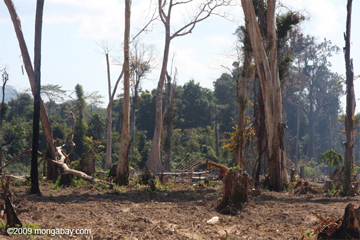
As unlikely as it may sound, this collaboration could become a reality under a far-reaching initiative to reduce emissions from deforestation and degradation (REDD), a climate change mitigation mechanism currently under consideration by U.S. legislators and in international discussions for a "framework" on climate change. Supporters say REDD could send billions of dollars a year to developing nations for conserving their rainforests, while preserving biodiversity; protecting ecosystem services like rainfall regulation, watershed functions, and erosion control; promoting rural development in some of the world's poorest, and in some cases, least, governed regions; and breaking a deadlock that has stalled international climate negotiations for over a decade, since the Kyoto Protocol in 1997.
The premise of REDD is straightforward: tropical forests store roughly 25 percent of the planet's terrestrial carbon, more than 300 billion tons. When forests are cut—their vegetation burned and timber converted into wood products—much of this carbon is released in the atmosphere as carbon dioxide. The clearing of 50,000 square miles of tropical forest annually accounts for roughly 20 percent of global emissions from human activities—a share larger than all the world's planes, ships, cars, and trucks combined. In other words, despite the attention given to the fuel efficiency of cars and the number of flights taken by celebrities, parking all the world's jets and cars still wouldn't offset the annual emissions from global deforestation.
Tropical deforestation rates from 2000-2005, ranked in descending order by the highest amount of average annual forest loss for 25 countries based on data from the U.N. Food and Agriculture Organization (FAO). Click to enlarge
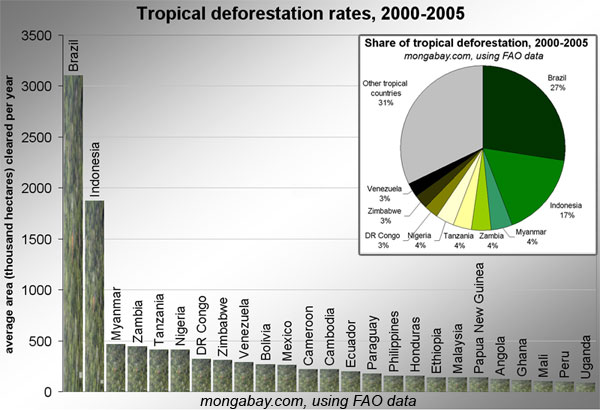
But reducing deforestation is no simple effort. Forests are being destroyed as a consequence of global economic forces—demand for timber, pulpwood, beef, soybeans, and palm oil—as well as subsistence farming. Slowing or eliminating deforestation means addressing these underlying drivers by making forests valuable as living entities, rather than solely for what can be produced when they're cut. And the issue goes beyond economics. Good governance, including law enforcement, recognition of land rights, and fair distribution of benefits, is the issue that will make or break REDD.
Thinking REDD
The idea of forestalling climate change by saving forests is not new, but it has had to win its way slowly. The Kyoto Protocol went a different direction, and critics of REDD fear it would be too complex to manage in a world economic scheme for climate rescue. (Some critics also think most plans don't do enough to address overconsumption by developed nations.)
Draining and clearing of peat forest in Central Kalimantan (May 2009). Photo by Rhett A. Butler.
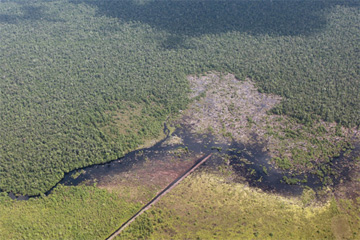
REDD suffers, like all such schemes, from the difficulty of explaining itself in terms non-specialists can understand. Carbons markets, offsets, cap-and-trade—all these have been in the language for years now, but the topics still seem esoteric to many. This "my-eyes-glaze-over" syndrome may be especially acute in the United States, whose government declined to join the Kyoto Protocol. But still, there are the Surui people—and if an Amazonian tribe can get help in saving its home forests by partnering with U.S. states, maybe the rest of us can get some handle on the idea.
What's more, the whole subject of climate change and its mitigation has gotten a renewed boost with the Obama administration's support of cap-and-trade—the concept of legally limiting a region's greenhouse-gas emissions and encouraging trade in the "credits" earned by industries that meet or exceed the standards. (A debate continues, however, over cap-and-trade vis-a-vis what are sometimes seen simply as "pay-to-pollute" offsets.)
The Birth—and death—of forest carbon
Protecting forests as a climate mitigation strategy has a history in the United States. American power companies—including American Electric Power (AEP), PacificCorp, BP Amoco, and others—spent millions of dollars in the 1990s to protect at-risk forests in Belize, Bolivia, and Brazil in hopes of getting early-action credit for "offsetting" their greenhouse gas emissions by preventing deforestation.
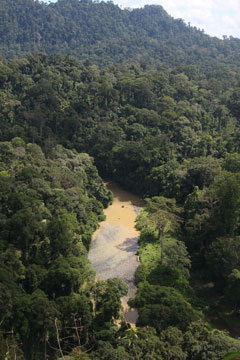
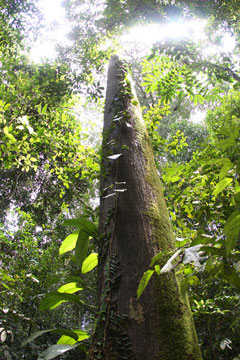
Rainforest in Borneo (April 2008). Photos by Rhett A. Butler
The Noel Kempff Mercado Climate Action Project, as the Bolivian initiative was known, would become model for "avoided deforestation." Project designers carefully calculated a baseline deforestation rate using business-as-usual scenarios; set up monitoring and verification systems; accounted for leakage—deforestation that would be displaced to other areas by the protected status of the park; and set up a system of incentives for people in and around the protected area.
Tia Nelson, daughter of the late Gaylord Nelson, the governor and senator who founded Earth Day, is now co-chairwoman of the Governor's Task Force on Global Warming and executive secretary of the Wisconsin Board of Commissioners of Public Lands. She was a key participant in the development of early forest-protection mechanisms as a deputy director of the Climate Change Program at the Nature Conservancy (TNC), a conservation group based in Washington D.C., which provided technical and scientific support for the projects.
"I was fascinated by the idea that companies would pay to conserve forests as a climate change mitigation strategy," she said. "Noel Kempff was particularly well-designed."
But the utility of Noel Kempff and other forest conservation projects was limited by the exclusion of forest conservation from the climate agreement reached in Kyoto in 1997. For many environmental groups, forest carbon was at best a distraction from the key issues of Kyoto, and at worst an insidious way for polluting industries to continue emitting greenhouse gases by paying poor countries to reduce their own emissions. When the United States pushed for inclusion in the Protocol of carbon sinks like forests, opponents saw it as an attempt by the world's largest polluter to avoid emissions cuts.
Stuart Eizenstat, a prominent attorney at Covington & Burling, former U.S. ambassador to the European Union, and the lead U.S. negotiator during the Kyoto talks, said that while justifications for conserving forests seemed strong, bigger concerns loomed over Kyoto, including emissions trading and contributions of developing countries to mitigation.

Deforestation-induced erosion in Madagascar (October 2004)
"We pushed for sinks because we were looking for every conceivable way to both engage developing countries and reduce costs. We knew that cost was going to be the most critical issue as it is today," Eizenstat said.
In the end, the rancor over offsets led to the exclusion of forest conservation from Kyoto. Forests were included in the Clean Development Mechanism (CDM)—Kyoto's attempt to involve developing countries in a climate solution. CDM allowed for afforestation (planting of new lands) and reforestation projects, but not for "avoided deforestation," although the provision was short-lived. Afforestation and reforestation was relegated to temporary credits in the Marrakesh Accords in 2001 and completely excluded from the Emissions Trading System (ETS), the European Union's compliance market for carbon. All this greatly limited the value of forestry credits.
Nelson said the decision not to include forest conservation in Kyoto came as a disappointment, but not a surprise. A lot of environmentalists argued that offsets were not a solution to reducing industrial emissions, a sentiment that remains strong today.
"It was a pretty lonely battle at the time," Nelson said. "I was hopeful that we had a good case but there were only a few voices arguing for avoided deforestation then."
The decision to exclude forests from Kyoto was a controversial one, producing shouting matches and bitter rifts between environmental groups. It would also prove costly to tropical forests and their inhabitants.
Oil palm plantations and logged over forest in Malaysian Borneo (April 2008). While much of the forest land converted for oil palm plantations in Malaysia has been logged or otherwise been zoned for logging, expansion at the expense of natural and protected forest does occur in the country. Reserve borders are sometimes redrawn to facilitate logging and conversion to plantations. Photo by Rhett Butler.
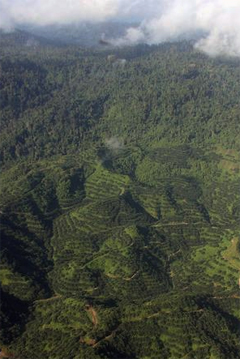
The years following Kyoto saw a surge in deforestation, particularly in two countries with the most extensive forest cover: Brazil and Indonesia. In Brazil, deforestation increased nearly year by year between 1997 and 2004, peaking at 10,600 square miles in 2004, an area the size of Massachusetts. The story in Indonesia was even worse. The collapse of the Suharto regime in 1997 ushered in a period of chaos, resulting in unprecedented destruction of forests. Loggers and oil palm plantation developers cleared and burned vast areas, facilitated by one of the strongest el Niño events on record. When the smoke cleared, more than 25,000 square miles had burned in Indonesian Borneo alone, unleashing upward of 2 billion tons of carbon. All told, since Kyoto's exclusion, the two countries have lost more than 160,000 square miles of forest, an area nearly the size of California, releasing billions of tons of carbon into the atmosphere and placing the two countries among the top emitters in the world—a position far outpacing their industrial output.
But deforestation wasn't limited to Brazil and Indonesia. With no incentives to keep forests standing, deforestation accelerated around the planet, especially in primary forests, the richest biologically and most carbon-dense form of forest and the most irreplaceable. Centuries-old rainforests were cleared for cattle pasture, oil palm plantations, mechanized soy farms, and industrial pulpwood. Environmentalists continued to sound the alarm, perhaps failing to realize their own role in the rising carnage. Meanwhile, supporters of avoided deforestation regrouped, expanded their reach, and explored new ways to include forests in a global climate deal. To be workable, a proposal would need to overcome serious technical, political, and ideological obstacles.
Rebirth of the forest initiative
A breakthrough came from an unlikely source: an academic paper. A team of American and Brazilian researchers analyzed the issues that kept forests out of the Kyoto Protocol and came up with a solution that addressed the most pressing concern, "leakage"—the idea that project-based schemes like CDM couldn't guarantee that shutting down deforestation in one area wouldn't simply shift it to another. The authors, including Márcio Santilli, Paulo Moutinho, Stephan Schwartzman, Daniel Nepstad, and Carlos Nobre, proposed a system of national accounting, meaning that countries would have to commit to national-level, rather than project-level, reductions in deforestation. The concept suggested a mechanism that would look a lot like trading between two capped systems, rather than just offsetting emissions.
Pastureland and transition forest in Mato Grosso, Brazil (April 2009). Since 2003 Brazil has set aside 523,592 square kilometers of protected areas, accounting for 74 percent of the total land area protected worldwide during that period. Photo by Rhett Butler.
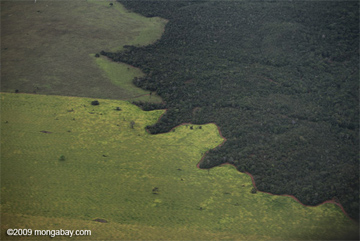
"The publication of ‘Tropical deforestation and the Kyoto Protocol" was a very important development because it created a scientific space—and a policy space—where you could actually talk about reducing emissions from deforestation and put the leakage question to one side. It didn't completely resolve the leakage question but it greatly tempered it." Annie Petsonk, a policy expert at the Environmental Defense Fund (EDF), said.
A crucial parallel development was the emergence of a negotiating block—later to become known as the Coalition for Rainforest Nations—that would enable developing countries to participate meaningfully in reducing emissions and would help quiet complaints that Kyoto didn't do enough to include all countries.
In 2005 Papua New Guinea joined forces with other forest countries to form the Coalition of Rainforest Nations with Kevin Conrad as executive director. A key member of the coalition was Costa Rica, a country lauded by the international community for transforming itself from a high deforester to a model of conservation.
"One of my first official delegations was to Costa Rica to find out how they turned their deforestation rate around," Conrad said. "They said, 'Yes, we did it, but we've been taxing ourselves. No one's been helping us with it.' Well, we knew Costa Rica might be able to do that but for most of us, there was no way. We would need a source of funding."
The Coalition went to the U.N. Conference of the Parties (COP) meeting in Montreal in 2005 and immediately met opposition from the United States, which was content doing nothing on climate. The U.S. delegation told Conrad it would kill the Coalition's proposal, fearing that if developing countries put forth a plan committing to robust and meaningful reductions in greenhouse gases, the United States would no longer have an excuse not to take action on climate.
"The U.S. was going to block us simply for that," Conrad said.
Conrad engineered a strategy for delaying U.S. action during the Montreal talks, persuading dozens of countries supportive of the proposal to push their voting buttons ahead of the United States.
"If the U.S. went first, all the naysayers would pile on," he said. "But if they were fortieth following a long trail of positives I was hoping they wouldn't be able to kill the proposal."
Sure enough the United States agreed to give the proposal two years, sending it out to committee with the expectation that it would collapse under the technical challenges of measuring, verifying, and monitoring emissions from deforestation. Should the proposal make it to COP 13 in Bali in December 2007, the U.S. delegation promised to kill the measure then.
History took a different turn, though.

Lowland rainforest in Costa Rica (March 2009). Photo by Rhett Butler.
By 2007 advancements in science had shown that not only were verification and monitoring of forest carbon possible, but that emissions from deforestation and degradation were so significant that they couldn't be excluded and keep atmospheric carbon dioxide levels under 450 parts-per-million, a level seen by many scientists as a critical climate tipping point. The Rainforest Coalition had a strong case that actions on forests by tropical countries could make a substantial contribution to the battle against climate change. But the Coalition still had to go up against the United States In Bali, where the U.S. delegation was attempting to block progress towards a post-Kyoto agreement. Conrad issued a direct challenge:
"We ask for your leadership, but if for some reason you're not willing to lead, leave it to the rest of us. Please get out of the way."
Minutes later the U.S. delegation capitulated, paving the way for the Bali Action Plan, which recognized the critical role tropical forests play in regulating climate.
Bali proved to be a watershed moment for REDD. During the meeting, Norway unveiled its International Climate and Forests Initiative, a plan to commit some 3 billion krone ($500 million at the time) per year to rainforest conservation, a sum still unmatched by any other donor. The World Bank announced a $300-million fund, the Forest Carbon Partnership Facility (FCPF), to jumpstart REDD projects in developing countries, and several other countries voiced support for the concept of REDD. Since Bali, momentum has only grown. In 2008, Britain and Norway put $200 million towards the Congo Basin Forest Fund to fund forest conservation activities in Central Africa; the U.N. has launched it own REDD fund; and Prince Charles made saving rainforests his signature cause, developing the Prince's Rainforest Project to bring business and political leaders around to supporting conservation. His efforts culminated in a historic meeting between heads of state to discuss rainforest conservation ahead of the G20 summit in April 2009.
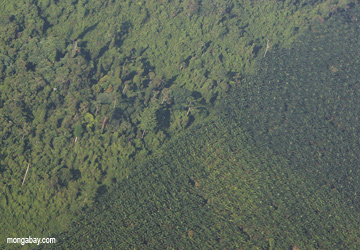
Oil palm plantation and logged-over forest in Borneo (April 2008).
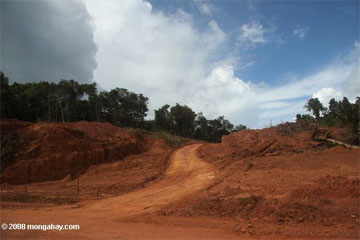
Mining road in Suriname (June 2008). Photos by Rhett Butler.
Developing countries have also become involved. Ecuador offered up a large tract of rainforest in the eastern Amazon as a giant forest carbon offset, while a group of 26 African countries in East, Central and Southern Africa announced the African Climate Solution, a plan to seek carbon financing for forest conservation, rural development, and poverty alleviation. Meanwhile, dozens of other countries have applied to the U.N. REDD program and the FCPF to begin receiving funds for REDD readiness activities. But the biggest news came from Brazil, which announced the formation of a $21 billion fund to reduce deforestation in the Amazon by 70 percent within 10 years, preventing an estimated 4.8 billion tons of carbon that would have been emitted under a business-as-usual scenario.
Owning to its lack of a climate policy, the United States has been slow to move on the concept of avoided deforestation, but a broad base of interests, including conservationists, development experts, scientists, and industry groups, has helped pushed it to the front of the climate agenda. Groups like Forest Carbon Dialog and Avoided Deforestation Partners, have played a critical role in working through difficult policy questions, fostering partnerships and strategic alliances between sometimes adversarial parties, helping draft legislative language, and informing policymakers of the multiple benefits of REDD.
"Having a dialog among companies, NGOs, and other stakeholders about how to get forest carbon on the table in a U.S. policy context have been very important," said Petsonk of EDF.
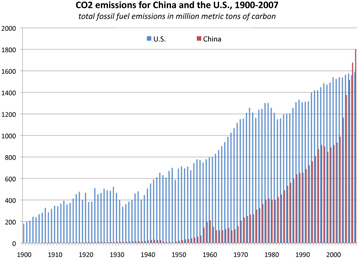
Emissions from fossil fuels for the U.S. and China, 1900-2007
The efforts have paid off, with REDD figuring into last year's failed Lieberman‐Warner Senate Bill and the American Climate and Energy Security Act (ACES) narrowly passed by the House of Representatives in June. The current version of ACES, which is now in the Senate, seeks to achieve supplemental emissions reductions of at least 720 million tons of carbon dioxide in 2020 and a cumulative amount of at least 6 billion tons carbon dioxide by the end of 2025 through avoided deforestation. The proposal is equivalent to the United States conserving 34,000 square miles of rainforests in developing countries and would boost U.S. emissions reductions targets from 17 percent below 2005 levels by 2020 to 27 percent if fully exploited.
U.S. climate legislation is particularly important for progress on REDD. Without it, the U.S. delegation to the December 2009 Conference of Parties (COP15) in Copenhagen will not be able to bring much to the negotiating table, Eizenstat said.
"It is impossible for the U.S. delegation to go beyond the emissions targets that Congress will set in legislation," he said. "The administration cannot go further than Congress will allow. Congressional legislation will thus be a very important step."
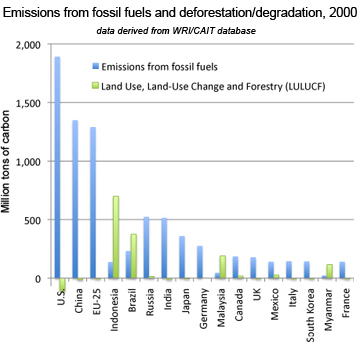
National GHG emissions from industrial sources (electricity generation, transportation, buildings, etc) and LULUCF, 2000. Note that some countries have negative emissions from LULUCF meaning they these sources are a net carbon sink. Also note that the E.U. is listed in addition to its individual member countries.
Supporters say that beyond the environmental benefits of REDD, there are good reasons for the U.S. Congress to include REDD provisions in climate legislation, including reducing compliance costs for American business under a cap-and-trade system, engaging developing countries in a climate framework, and bolstering security in potentially worrisome areas through sustainable development and climate change mitigation.
"Climate change impacts could include crop failures and drought, creating instability and the potential mass movement of ‘eco-migrants,'" Eizenstat said. "But strong forest provisions would offer multiple co-benefits."
Tracy Johns, a forest policy expert who is co-leader of the Woods Hole Research Center's REDD Initiative, agrees.
"From a domestic standpoint one of the things that makes REDD a really attractive policy option is that it is a mechanism to encourage developing countries to take on emissions reductions goals," she explained. "At the same time it offers to these developing countries a potential pathway to use forests in a sustainable matter for development. Finally REDD offers a very interesting and potentially very effective cost containment measure U.S. businesses under cap-and-trade program. REDD will make it easier for the U.S. to reduce emissions further at a lower cost."
Clearcutting in the Peruvian Amazon (October 2005). Photo by Rhett Butler.
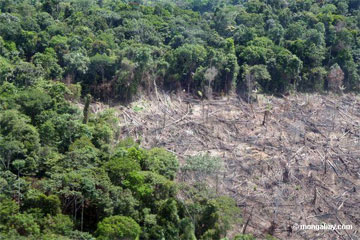
While still evolving, the U.S. position appears to be leaning towards a financing mechanism for REDD that includes both fund-based and market-based financing mechanism for REDD, a position shared by the Coalition for Rainforest Nations and by Australia. Financing remains one of the most contentious issues for REDD, with Brazil calling for an aid-based fund and Europe hesitant to allow forest carbon into its compliance market for fear it could cause the price of carbon to fall. Market advocates say that fund-based approaches will be subject to political whims and won't generate the kind of money needed to reduce deforestation at the scale and pace necessary to meet emission reduction targets.
But the critical issue in the market debate really is the fungibility of credits—whether countries can count carbon credits against their emissions. ("Fungibility" means that economic assets are exchangeable in the satisfaction of obligations.) Some Europeans countries are worried that the REDD credits will undermine low-carbon technologies without meaningfully reducing emissions, while Brazil doesn't like the idea of letting industrialized countries off the hook for their emissions. Environmental groups are split. Some call any sort off offsetting a "false solution" to climate changes; others say strong caps will greatly reduce the risk of the market for carbon credits being flooded.
"The central issue that is a critical impediment to progress on REDD and really to anything dealing with global warming is that the United States is not in the international game," Stephan Schwartzman, co-author of the seminal paper on compensated reduction of emissions from deforestation, said. "The U.S. has not actually begun to reduce its emissions nor created a cap-and-trade system. As long as that's the case, European policymakers are justifiably concerned about guarding the integrity of their carbon market."
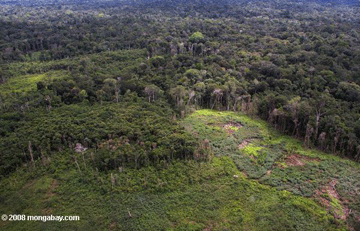
Small-holder deforestation in Suriname (June 2008). Photo by Rhett Butler.
"In the international discussion, among some NGOs there's still a sense that we can somehow avoid the risks of the market funding all of this with one version or another of public funding. But government priorities change and public funds are limited," Schwartzman said.
"A robust market mechanism is going to be critical to having this work. If there are too many good, real reductions from avoided deforestation out there, then tighten the cap. How hard is that?"
William Boyd, a professor at the University of Colorado Law School who has worked closely on REDD policy issues, agrees that a capped system can help avoid market flooding. A Greenpeace study, released at Bonn, has warned that in an unlimited market, carbon prices could drop by up to 75 percent.
"This isn't an extension of pure project-based offsets," Boyd said "The system is moving towards a national accounting framework where a country only get credits if it reduces emissions below a baseline that could progressively ratchet down over time—it might go to zero deforestation at some point. At that point you're trading between two capped sectors or two capped systems. Very different than the idea of offsets."

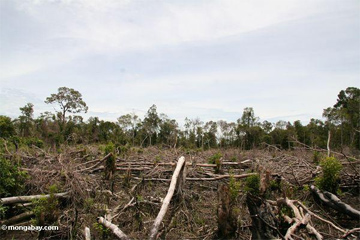
Healthy forest and recently cleared forest adjacent to Tanjung Puting National Park in Kalimantan (Indonesian Borneo) (February 2006). Photos by Rhett Butler
Regardless of the eventual source of funding, there is no question that considerable funds need to be generated to effectively reduce deforestation. A recent report from the Meridian Institute on behalf of the Norwegian government estimates that to achieve a 50 percent reduction in deforestation by 2020, REDD will need a commitment of 2 billion per year in 2010, increasing to 10 billion per year in 2014 for capacity building, readiness activities, and demonstration projects. The report suggests financing could come through a global fund, financed through donations generated by auctioning of emission allowances, fuel surcharges, or development aid. Prince Charles has suggested a different approach: a rainforest bond issue to provide emergency funding.
Beyond the money
Beyond the issue of financing, there are other points of contention, including how to establish baselines, especially in countries and regions that have managed to maintain forest cover or have already reduced deforestation rates dramatically. Some countries—like Costa Rica—want credit for early action, while others are pushing for elevated baselines to account for potential deforestation, positions that raise eyebrows among those concerned about the integrity of REDD. But as Kevin Conrad of the Coalition for Rainforest Nations puts it, "If we don't provide incentives for countries that have so far maintained their forests, but otherwise have land suitable for conversion, then those forests are going to fall."
Negotiators must further work out whether to include emissions from degradation of other carbon-dense ecosystems like peatlands, which in some years may contribute more than 2 billion tons in emissions. Wetlands International is adamant that peatlands be part of a climate pact—especially in light of Indonesia's recent announcement that it will open millions of hectares of swampy wetlands to oil palm cultivation. The move—ostensibly to expand production of palm oil, which can be used as a feedstock for biofuels—could trigger millions of tons of emissions and destroy habitat critical for endangered species, including the orangutan and Sumatran tiger.
Another issue—known as permanence—stems from the integrity of forest carbon stocks and the capacity of a forest to retain carbon in the future. Critics ask how it can be assured that a forest protected for REDD won't be logged, accidentally burned, or damaged by a storm, flood, or drought, reducing its capacity to store carbon. The issue is a significant one given the forecast impacts of climate change in places like the Southern Amazon. The 2005 drought—caused by abnormally high temperatures in the Atlantic, rather than el Niño—killed millions of trees and turned large expanses of the Amazon into a tinderbox. Thousands of square miles of forest went up in smoke, releasing more than 100 million metric tons of carbon into the atmosphere.
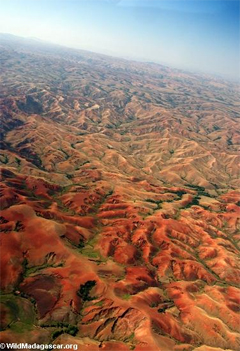
Eroded hillsides in Madagascar (October 2004). Photo by Rhett Butler
REDD advocates say this issue can be addressed partly through safeguard required under criteria like the Voluntary Carbon Standard (VCS) and the Climate, Community, and Biodiversity Standards (CCB) as well as emerging insurance products and national reserve accounts proposed by the Coalition for Rainforest Nations. But the best protection may be the forests themselves. Studies suggest that reducing deforestation can be one of the most important factors in increasing forests' resistance to the effects of climate change.
New technology, including a new class of remote sensing applications, will help scientists and forest managers monitor forests for degradation. Satellites and high-altitude aircraft equipped with lasers and high-resolution sensors can map the structure of the forest, greatly increasing the accuracy of carbon estimates as well as documenting changes in carbon stock. CLASLite, an advanced processing application for monitoring tropical deforestation, and Google Earth are greatly expanding the availability of forest cover data to scientists, policymakers, and the general public.
An issue of payment
But great satellite imagery won't resolve a thorny issue arising from the need to directly address drivers of deforestation. Given that industrial activities today account for the bulk of deforestation, a successful REDD mechanism may mean paying agents of deforestation—forestry firms and agribusiness—to cease their activities. The concept doesn't sit well many environmentalists, but in cases where landowners are within the law, REDD becomes a way to encourage loggers, oil palm plantation developers, large-scale farmers, and ranchers to leave their forests standing.
"Without economic incentives, standing forest will always lose out to pressures from the market," explained John Carter, an American rancher in the Brazilian Amazon, who heads Alianca da Terra, an NGO that works to encourage environmental stewardship among beef producers in the Amazon. "Land appreciation and production value are at the end of the day what determine land use. In order for REDD to work, all landowners—whether they be Indians, ranchers, or farmers—should be allowed to participate."
Carter believes that forest reserves—required under Brazilian law for landowners in the Amazon—should be eligible for payments under REDD.
Some environmentalists worry that REDD could become a tool for "greenwashing," whereby firms mask their environmental damage by buying REDD credits. This concern touches on the entire debate about "offsets," a concept that activist groups like the World Rainforest Movement and the Rainforest Foundation UK find deeply troubling. Buying REDD credits, however, will not offer environmental transgressors sanctuary from environmental campaigns and freely accessible satellite imagery. Green groups are already putting Google Earth to use for monitoring deforestation and other activities.
Forestry remains a controversial issue in REDD discussions. Some environmental activists complain that REDD may allow selective logging in old-growth forests, the most biodiverse and carbon-dense ecosystems. Others argue conversely that sustainable logging should be allowed as a source of income for forest holders, including indigenous communities. Recent reports of the International Panel on Climate Change (IPCC) highlight the value of reduced-impact logging as a mitigation strategy. But the impact of logging depends largely on forestry rules and governance structures, an area of particular concern to the Ecosystems Climate Alliance (ECA), a coalition of eight environmental and rights groups.
Issues of consumerism, governance
The Environmental Investigation Agency (EIA), a member of the ECA that works on international trade and demand issues, believes REDD should incorporate rules for demand in consuming countries, since deforestation is as much driven by market demand in industrialized nations as it is by poverty in developing nations.
"My major concern is that until we talk about these demand issues in a meaningful way, we aren't talking about a real solution," EIA Forest Campaigns Director Andrea Johnson said.
Johnson believes funds for supplemental activities under the Waxman-Markey bill could be directed towards joint implementation of demand-side laws like the U.S. Lacey Act, which is used to fight illegal logging by requiring companies to respect environmental laws in the countries from which they obtain plant and wildlife products.
Jihan Gearon of the Indigenous Environmental Network, an indigenous rights coalition, said, "Offset mechanisms, including REDD, do not address the real problem causing climate change. The major driver of climate change is the historical and current burning of fossil fuels—coal, oil, and gas—to feed the unsustainable consumption needs of industrialized countries, like the United States. We have to prioritize and focus on changing these unsustainable consumption patterns, which are responsible for not only climate change but also a host of other issues including pollution to land, water, air, animals, and people."
Governance also is a critical issue for the success of REDD—it ranks among the top priorities among REDD designers, but good governance is difficult in frontier areas where most deforestation is occurring. Development agencies are positioning REDD as a vehicle to deliver services and protections that vast amounts of aid have so far failed to provide—a tall order for a conservation initiative. Still, REDD has at least two advantages over prior mechanisms: it offers a wide range of benefits and will be performance-based. If a country fails to reduce deforestation by meaningfully addressing drivers of deforestation, it won't collect.
But this new governance regime raises other questions, especially in areas where rights are poorly defined. This is particularly important for forest-dwelling communities and indigenous people, who despite having occupied lands for years or generations may still lack formal title, or even basic rights, to land and resources. Many groups fear that regulation could cause them to be further disadvantaged, depriving them of their land as well as leaving them out of carbon payments. Some paint a nightmare scenario of forced displacement at the hands of carbon speculators.
"REDD projects do not help indigenous peoples and forest peoples," Gearon said. "In fact they hurt these communities and take away access and rights to forests, traditional territories, and medicines. Our principal hope and concern for the REDD mechanism, as well as other market-based solutions to climate change, is they be rejected because they are false solutions to climate change."
School children in Madagascar (October 2004). Half of Madagascar's children under five years of age are malnourished. Photo by Rhett A. Butler
The Indigenous Environmental Network and other groups have called for the inclusion of the U.N. Declaration on the Rights of Indigenous Peoples, a treaty signed by the majority of the world's countries in 2007, in REDD. But REDD designers say the stipulation is unlikely because negotiators from countries that haven't signed the Declaration (Canada, Australia, New Zealand, and the United States) can't sign an agreement that binds them to a treaty their countries have not ratified. Many native leaders are lobbying for a mandate that all REDD programs seek the "free, prior, and informed consent" of local people.
But in spite of these concerns, the consensus among coalitions representing forest people is that forest conservation should be included in a climate framework. Some groups are even supportive of a market mechanism, recognizing that a well-designed mechanism is better than the status quo.
The Surui are an example. The tribe actively sought out its own carbon project, first focusing on reforestation of areas that had been illegally logged, but then exploring REDD as a means to generate income to defend its forest home. Almir Surui, a Surui chief who has become the public face of the tribe, said forest conservation is also a way to maintain culture in a place where there are strong bonds between land and society.
But in pioneering their REDD project, the Surui have run up against some obstacles, indicating that the forest carbon initiative hasn't been designed with indigenous issues in mind. For example, by virtue of being good stewards of their forests the Surui encounter the same problem faced by countries with high forest cover and low deforestation rates: the REDD process doesn't reward them for their success in maintaining their forest cover even as forests around their reservation fell to bulldozers and loggers.
"REDD should enhance recognition that indigenous people have maintained the state of their forests, not penalize them for this stewardship," said Vasco van Roosmalen, director of the Amazon Conservation Team-Brazil, an NGO that has helped the Surui develop an indigenous park-guards program and biocultural maps of their territories. "The Surui are guardians of forest carbon."
And while the debate continues, participants aren't sitting on the sidelines – REDD projects are sprouting around the world. Although these projects are limited to voluntary markets (like the Chicago Climate Exchange) where carbon fetches a fraction of the price seen in compliance markets (E.U. ETS), the number is nonetheless increasing due to the appetite of corporations to appear environmentally responsible. After all protecting habitat for endangered species and providing health and education to forest-dwelling communities is perhaps more compelling to consumers than projects to capture emissions from agricultural waste.
"If you had a choice between carbon credits generated when a commercial factory pig farm reduces its toxic methane emissions, or carbon credits from a threatened natural forest that brings with them protection of elephants, lions, cheetah, giraffe and 54 other large mammal species which one would you prefer?" said Mike Korchinsky, Founder and President of Wildlife Works, a firm that just signed the first REDD deal in Kenya.
The Nhambita project in Mozambique has won acclaims for its levels of transparency and the benefits it is delivering to people in a desperately poor area. The project was initiated by Envirotrade, a London-based carbon finance outfit.
Philip Powell, founder of Envirotrade, explains: "The Nhambita project employs more than 150 people and compensates thousands of farmers who voluntarily sign agreements to confront destructive forest fires, conserve forest and replant trees on their lands. Our greatest long-term challenge is to deliver equitable and significant benefits directly to individuals and communities that are the forest custodians. We believe the best way to advance this is through transparent reporting and a commitment to fair compensation for measured changes in forest and land management."
Meanwhile, the Juma project in the Amazonas state of Brazil, which is the first project in the world to attain the Climate, Community and Biodiversity Alliance's Gold Standard for its safeguards, is compensating 6,000 families who voluntarily agree to limit forest cutting. The project is expected to reduce emissions in an at-risk forest area by 190 million tons of carbon dioxide by 2050.
John O. Niles, a REDD expert with the Tropical Forest Group, a forest policy think tank, said that REDD offers the potential to make the world a lot more aware of indigenous issues.
"REDD will put a microscope on these issues and will be infinitely better than the status quo," he said. "For decades, capitalists, socialists, private companies, governments and local operators have blasted into tropical communities, razed forests and moved on with little concern for the fact that they just denuded the land. I think a UN-driven system of incentives for keeping forests, a system of oversight with some transparency, and the strong voice of critical observers will lead to more positive outcomes more of the time. Anything via the UNFCCC is likely to be an improvement over plantation forestry, industrial logging, large infrastructure projects or commercial agriculture."
Dan Nepstad, an ecologist formerly of the Woods Hole Research Institute but now with the Moore Foundation, agrees.
"We have heads of state listening to indigenous leaders – that is unheard of."
Moving forward
Given myriad issues, will REDD designers be able to develop a workable framework? People involved in REDD discussions think so.
"I think the chances are very strong that if we get a climate agreement in Copenhagen that REDD will be a part of it," said Tracy Johns of the Woods Hole Research Center. "All of the stakeholders that have been involved in the REDD process in recent years—governments, NGOs, the private sector, indigenous peoples—have done a lot of work and made a lot of progress on the issues and challenges for REDD. I think in many ways the REDD negotiation process is more advanced than many of the other lines of negotiation that are under way for Copenhagen."
While the details for REDD are far from settled and obstacles remain, there is growing support for the phased approach proposed by the Coalition for Rainforest Nations and presented in the Meridian report for the Norwegian government. In the first phase, countries would receive funds—as they would through the World Bank's FCPF, the UN REDD Program, or another voluntary mechanism—to develop a national REDD strategy including consultation with indigenous peoples and local communities, capacity building, and pilot projects.
Phase 2 would support reform of land tenure and forestry laws, sustainable forest management initiatives, and payments for environmental services to local communities, indigenous peoples, and other parties. Funding would be performance-based and come from a global fund financed by voluntary donations, auctioning of emissions allowances, and possibly fuel and carbon taxes in some countries.

Rainforest pool in Belize (May 2008). Photo by Rhett Butler.
Phase 3 would include compliance-grade monitoring, reporting, and verification of emissions against agreed reference levels. It would likely be financed by the sale of REDD units within global compliance markets or a non-market compliance mechanism. Supporters of the phased approach say it accommodates both fund- and market-based mechanisms, includes provisions for indigenous people, offers flexibility allowing countries at different levels of capacity to participate, and considers many of the outstanding concerns for REDD.
For conservationists REDD offers the best hope that rainforests—including their biodiversity, ecosystem services, and resident peoples—can be saved.
"REDD is being asked to do a lot of things—improving governance, promoting sustainable development, and mitigating climate change, but the potential benefits are so great, it's a chance worth taking," said Schwartzman, whose paper helped get things started.
"As long as forests are worth more dead than alive, it's going to be extremely difficult, and probably ultimately impossible, to preserve more than fragments of the world's forests. Creating that positive economic value for living forests is a key part of the solution to the global warming crisis."
Box 1: The Coalition for Rainforest Nations
The Coalition for Rainforest Nations was born out of a conflict between the World Bank and Papua New Guinea (PNG), a country better known for its cultural diversity (more than 800 languages are spoken across its rugged mountainous terrain) than its political acumen. But the dispute over a $50 million payment could someday lead to billions of dollars in payments for protecting global rainforests. PNG could be one of the largest beneficiaries.
In 2001 the World Bank came to PNG with a loan proposal: around $50 million over 10 years for the country to cease all logging and transition to sustainable forest management. But PNG turned it down, arguing that the offer was too low to meet the needs of the forest communities that had signed the logging contracts. The loan rejection triggered a standoff between PNG and the bank, leading to damaging accusations and an ugly fight.
"These communities want to save the forests, which are the basis for society and culture in New Guinea," said Kevin Conrad, an American born to parents living in Papua New Guinea and now a lead climate negotiator for the G-77 and China. "But at the same time these communities need schools, health and access to markets to develop."
Conrad went to graduate school at Columbia University with the intention is exploring ways for PNG to capitalize on its forests without destroying them. In New York he met with the World Bank and was surprised to find that it was the world's largest carbon trader. He asked the bank how one of its departments could be demanding that New Guinea stop logging, while another was trading carbon.
"I asked the World Bank, 'Why not put your efforts together and give us something we can work with?'"
The World Bank told Conrad the idea was a non-starter because the Kyoto Protocol didn't allow forest conservation projects.
"So I asked, 'what if we change the Kyoto Protocol?'
The World Bank told him that if he changed the Kyoto Protocol then all options would be open.
"So that was the basis of our submission in 2005."
Box 2: National vs. Sub-National
There is heated debate over the scale and scope of REDD projects. Because few countries are expected to have national REDD programs up-and-running anytime soon, developers are first starting with individual projects within countries—a sub-national approach—that are ready for market-based compensation now. But eventually these projects will need to be integrated into a national system to avoid leakage and other issues. The process of integration remains contentious and some fear that early stage projects will never be recognized in national level accounting, depriving them of access to lucrative compliance markets.
Copyright mongabay 2009
Read more... Sphere: Related Content
Subscribe to:
Posts (Atom)


 Posts